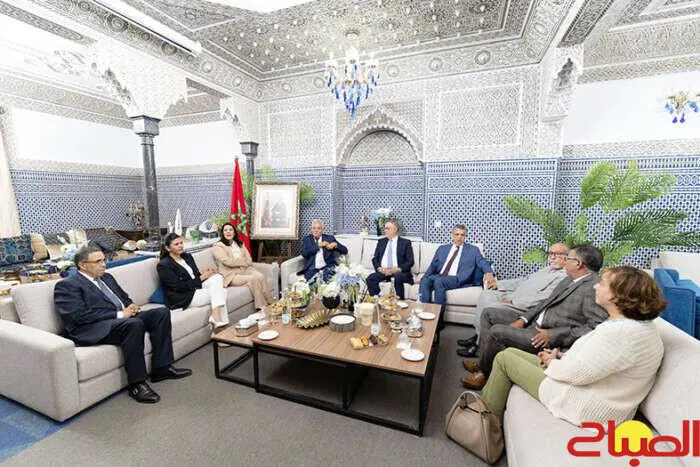
In a recent development, Moroccan political party leaders have begun meetings to discuss the formation of a new government. The talks, led by Aziz Rabbah, a prominent figure in the government, have sparked interest among Moroccans. Little information has been released about the specifics of these discussions. Rabbah's party, the National Rally of Independents, holds significant influence in Moroccan politics. These meetings signal a crucial step towards establishing a stable government.
The talks have seen the participation of notable figures, including former minister and current head of the Istiqlal Party, Nabil Benabdellah, and Abdelilah Benkirane, leader of the Justice and Development Party. Their presence highlights the importance of consensus-building among various political factions. Morocco has faced challenges in forming a government in the past, often resulting in prolonged negotiations. The current discussions aim to overcome these obstacles.
Sources close to the talks have revealed that several key issues are being addressed, including the distribution of ministerial portfolios and the overall direction of the government. With Morocco's economy and social landscape continually evolving, the new government's agenda will likely focus on addressing pressing concerns such as unemployment and economic growth.
The Justice and Development Party, having previously led the government, is expected to play a significant role in the new administration. Their stance on crucial issues will be pivotal in shaping the government's policies. Morocco's monarch, King Mohammed VI, has been closely monitoring the situation, emphasizing the need for a swift and effective government formation.
Despite challenges, optimism remains high among Moroccans that a stable government will be formed. The country's economy has shown resilience, and citizens are eager for progress on long-standing issues. As talks continue, the public is watching closely, hoping for positive outcomes.
Analysts believe that the formation of a new government will not only impact Morocco but also the wider region. As a significant player in North Africa, Morocco's stability and policies have implications for neighboring countries.
While an official timeline for the government formation has not been disclosed, it is clear that all parties involved are working diligently to reach an agreement. Moroccans await the outcome, hopeful that the new administration will bring about much-needed reforms and progress.
Key points
- The talks involve prominent Moroccan political leaders.
- The new government's agenda is expected to focus on economic growth and unemployment.
- The formation of the government has significant implications for Morocco and the wider region.