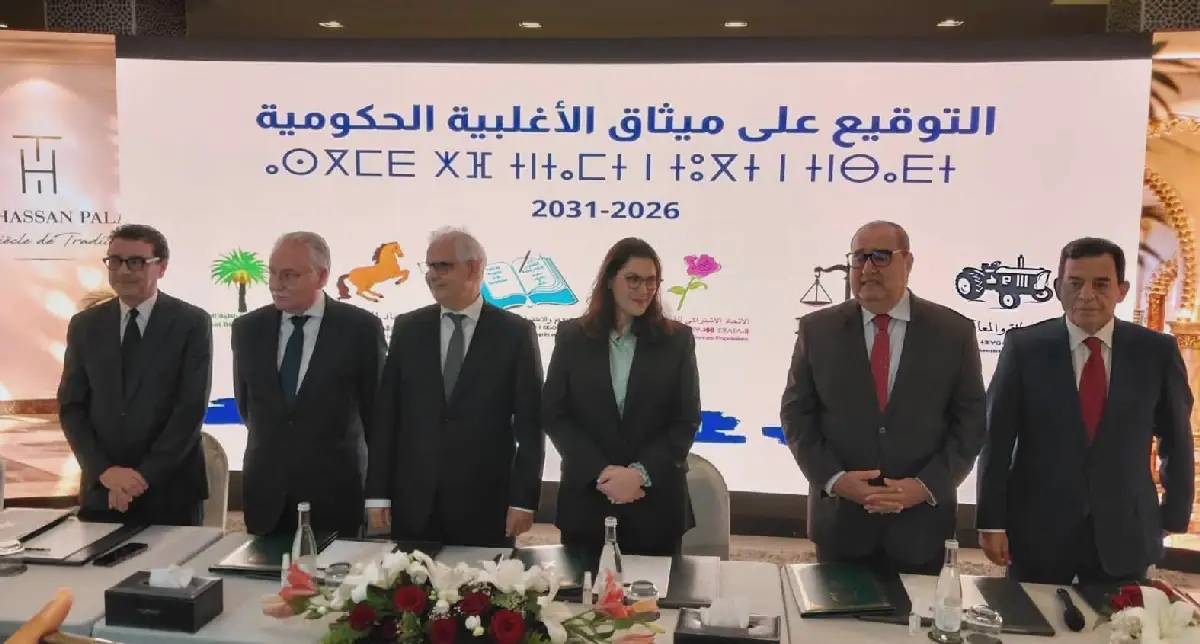
The Moroccan government coalition, comprising several key parties, has signed a comprehensive pact aimed at strengthening cohesion and accelerating reforms. The agreement, signed on November 24, 2026, in Rabat, outlines shared references, objectives, and obligations among coalition members. The pact establishes several bodies to ensure coordination between government and parliamentary work. This move is seen as a significant step towards solidifying the coalition's alliance and advancing the country's strategic projects.
The pact was signed by Fatima Ezzahra El Mansouri, Head of Government and National Coordinator of the PAM, along with secretaries-general from various coalition parties, including Driss Lachguar of the USFP, Nizar Baraka of the PI, Nabil Benabdellah of the PPS, Mohammed Joudar of the UC, and Abdessamad Archane of the MDS. The coalition aims to consolidate its foundations on mutual trust, solidarity, and coherent positions. By signing the pact, the parties demonstrate their commitment to working together to implement the Royal Vision and strategic projects initiated by King Mohammed VI.
The pact is designed to translate electoral commitments into concrete actions, improving the lives of Moroccan citizens. El Mansouri emphasized the importance of making clear choices, accelerating the pace of achievements, and responding pragmatically to economic and social challenges. The coalition has already begun implementing its agenda, with a focus on addressing pressing issues such as purchasing power and hydrocarbons. The discussion of the 2027 Finance Bill is cited as an example of effective coordination among coalition members.
Driss Lachguar of the USFP highlighted the significance of the new government configuration, praising the appointment of Fatima Ezzahra El Mansouri as Head of Government. He described this appointment as a major achievement for the Moroccan people, the feminist movement, and Moroccan women. Lachguar also noted the shift in institutional balance, marking a departure from a previous period characterized by an imbalance between the government and parliament.
The USFP's participation in the coalition is based on the presence of three parties with which the party shares common goals. Lachguar emphasized the importance of cohesion and institutional balance in the new government. The coalition's efforts will focus on implementing key projects, correcting past dysfunctions, and adopting a more solution-oriented approach. El Mansouri called for increased mobilization among coalition members, both in government and parliament.
The signing of the pact marks a significant milestone in the coalition's efforts to strengthen its alliance and advance Morocco's strategic projects. The agreement is seen as a crucial step towards achieving the coalition's objectives and improving the lives of Moroccan citizens. The coalition's success will depend on its ability to work together effectively and address the country's pressing challenges.
Key stakeholders, including coalition members and experts, will be closely watching the implementation of the pact. The agreement's success will be measured by its impact on Morocco's economic and social development. The coalition's commitment to transparency, accountability, and citizen participation will be essential in achieving its goals and enhancing the country's democratic institutions.
Key points
- The Moroccan government coalition has signed a comprehensive pact to strengthen cohesion and accelerate reforms, outlining shared references, objectives, and obligations among coalition members.