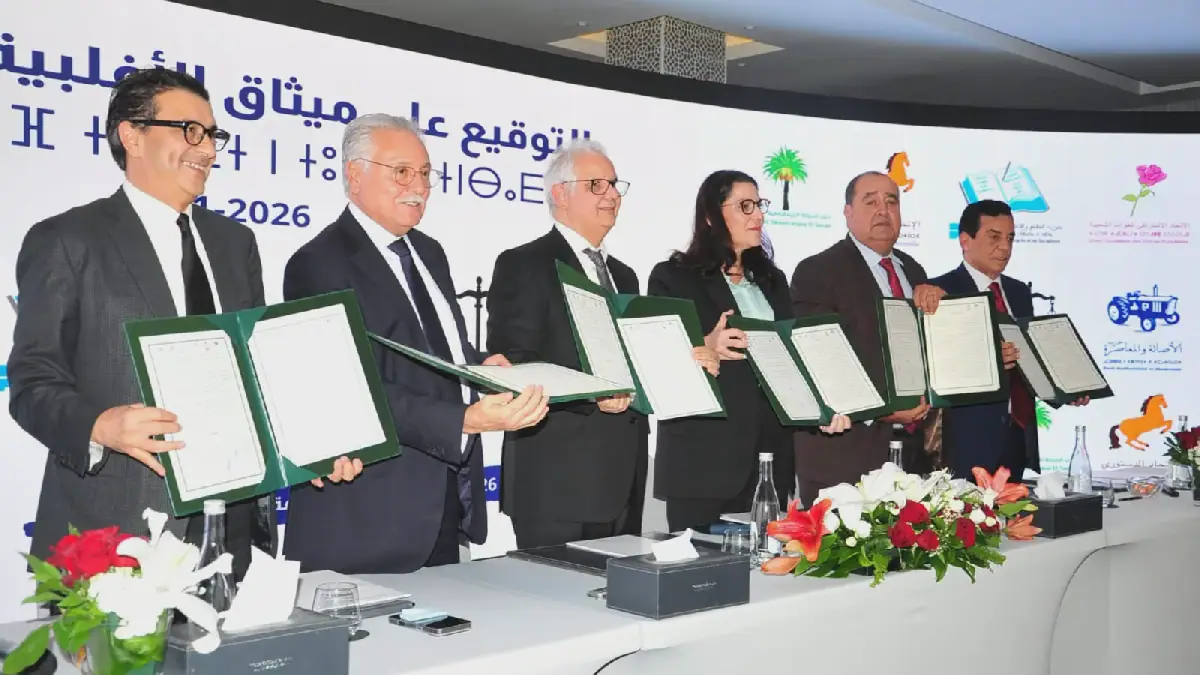
Morocco's ruling coalition, comprising six parties, has signed a charter that sets out the framework for their collaboration over the next five years. The charter, signed on November 24, 2026, in Rabat, aims to promote unity and cooperation among the parties. The coalition, led by Prime Minister Fatima Zahra El Mansouri, includes the Authenticity and Modernity Party (PAM), Istiqlal, the Socialist Forces of Popular Union (USFP), the Progress and Socialism Party (PPS), the Constitutional Union (UC), and the Democratic and Social Movement (MDS).
The charter is a binding political and ethical agreement that outlines the principles and rules governing the coalition's work. It is expected to foster a collaborative environment and ensure a unified approach to governance. By signing the charter, the coalition parties have demonstrated their commitment to working together to achieve their goals. The charter is seen as a crucial step in consolidating the coalition's power and promoting stability in the government.
The coalition parties have diverse ideologies, but they share a common goal of promoting Morocco's development and stability. The PAM, led by Abdelilah Benkirane, has a strong grassroots presence, while the Istiqlal party has a long history of involvement in Moroccan politics. The USFP and PPS have traditionally been associated with leftist and socialist ideologies, respectively. The UC and MDS are smaller parties that have played important roles in previous coalition governments.
The signing of the charter took place in Rabat, the capital city of Morocco. The event was attended by representatives from the six coalition parties, as well as other government officials. The charter is expected to have a significant impact on Morocco's governance and politics over the next five years. It will serve as a guiding document for the coalition's decision-making processes and ensure that the parties work together effectively.
The coalition's agenda for the 2026-2031 term is expected to focus on promoting economic development, social justice, and human rights. The charter's provisions will likely influence the government's policy priorities and budget allocations. Morocco has faced significant challenges in recent years, including economic slowdown and social unrest. The coalition's ability to work together effectively will be crucial in addressing these challenges.
Prime Minister El Mansouri has emphasized the importance of cooperation and unity among the coalition parties. She has stated that the charter is a significant step towards promoting stability and prosperity in Morocco. The prime minister's leadership style and experience will likely play a crucial role in shaping the coalition's dynamics and effectiveness.
The Moroccan government coalition's charter for the 2026-2031 term is a significant development in the country's politics. The charter's impact will depend on the coalition's ability to work together effectively and implement their joint agenda. Key points include the charter's binding nature, the coalition's diverse party composition, and the expected focus on economic development and social justice.
Key points
- The charter outlines the rules and principles governing the coalition's work.
- The coalition comprises six parties with diverse ideologies.
- The charter is expected to promote stability and cooperation in the government.