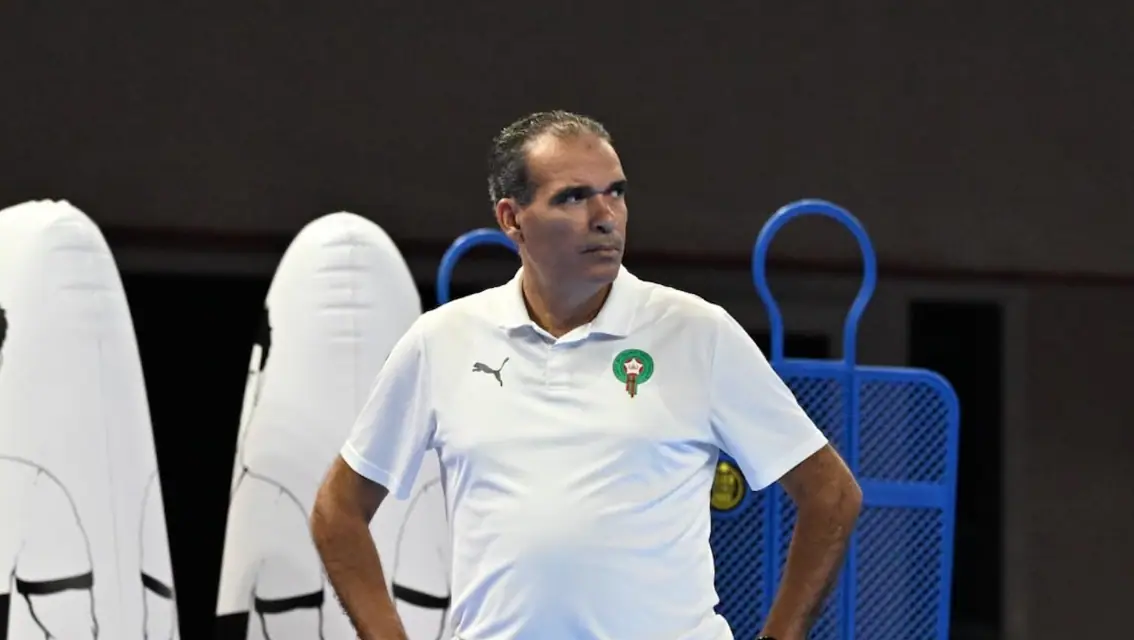
Moroccan national futsal coach Hicham Dguig believes his team has made significant strides, closing the gap with top nations like Argentina and Brazil. In an interview with the Moroccan Press Agency, Dguig attributed the team's success to a long process of continuous work, planning, and training, as well as institutional support. He noted that the project was launched with limited resources, but his confidence in Moroccan players' abilities and potential drove him to push forward.
Dguig recalled that the futsal project was initiated in 2010, and its fruits were quickly realized with numerous titles won at the continental and Arab levels. He emphasized that his approach went beyond the national team, focusing on mechanisms to ensure the continuity of futsal in the long term. This included establishing a participatory approach, launching a coach training process, and developing a game philosophy that aligns with Moroccan players' identity and characteristics.
The team's success has not been limited to the senior national team, with Moroccan futsal achieving significant performances in youth categories and other selections. The Moroccan team won a bronze medal at the 2026 Dakar Youth Olympics, and the women's team won the 2025 African Cup. Dguig also highlighted his role as a FIFA-accredited coach, contributing to the qualification of several Moroccan coaches who have gone on to train others.
Dguig stressed that the team's rise to the top six globally has increased the level of competition, with other teams now considering Morocco a main contender. He emphasized the need for excellence at all levels of the futsal ecosystem, including infrastructure, technical supervision, coach training, and national championships. The Moroccan Football Federation is working on these areas, but Dguig noted that clubs and regions must also be involved.
To maintain competitiveness and reach the top of the global hierarchy, Dguig highlighted the importance of providing clubs with necessary facilities, equipment, and resources. He also emphasized the role of the public in supporting futsal, citing sold-out matches, including those played during the week. The popularity of futsal is growing, driven by the exciting spectacle it offers, with many goals and intense confrontations.
Dguig's approach has focused on building a sustainable and competitive futsal team, with a strong emphasis on coach development and a clear game philosophy. He expressed his satisfaction with the progress made, but acknowledged that there is still work to be done to achieve the team's goals. The coach's vision for the future of Moroccan futsal is centered on continued growth and success.
As Moroccan futsal continues to grow in popularity, Dguig's achievements have raised expectations for the team's future performance. With the right support and resources, he believes that Moroccan futsal can continue to compete with the best teams in the world. The team's success has already inspired a new generation of players, and Dguig is confident that the future of Moroccan futsal is bright.
Key points
- Moroccan futsal team has closed the gap with top nations like Argentina and Brazil.