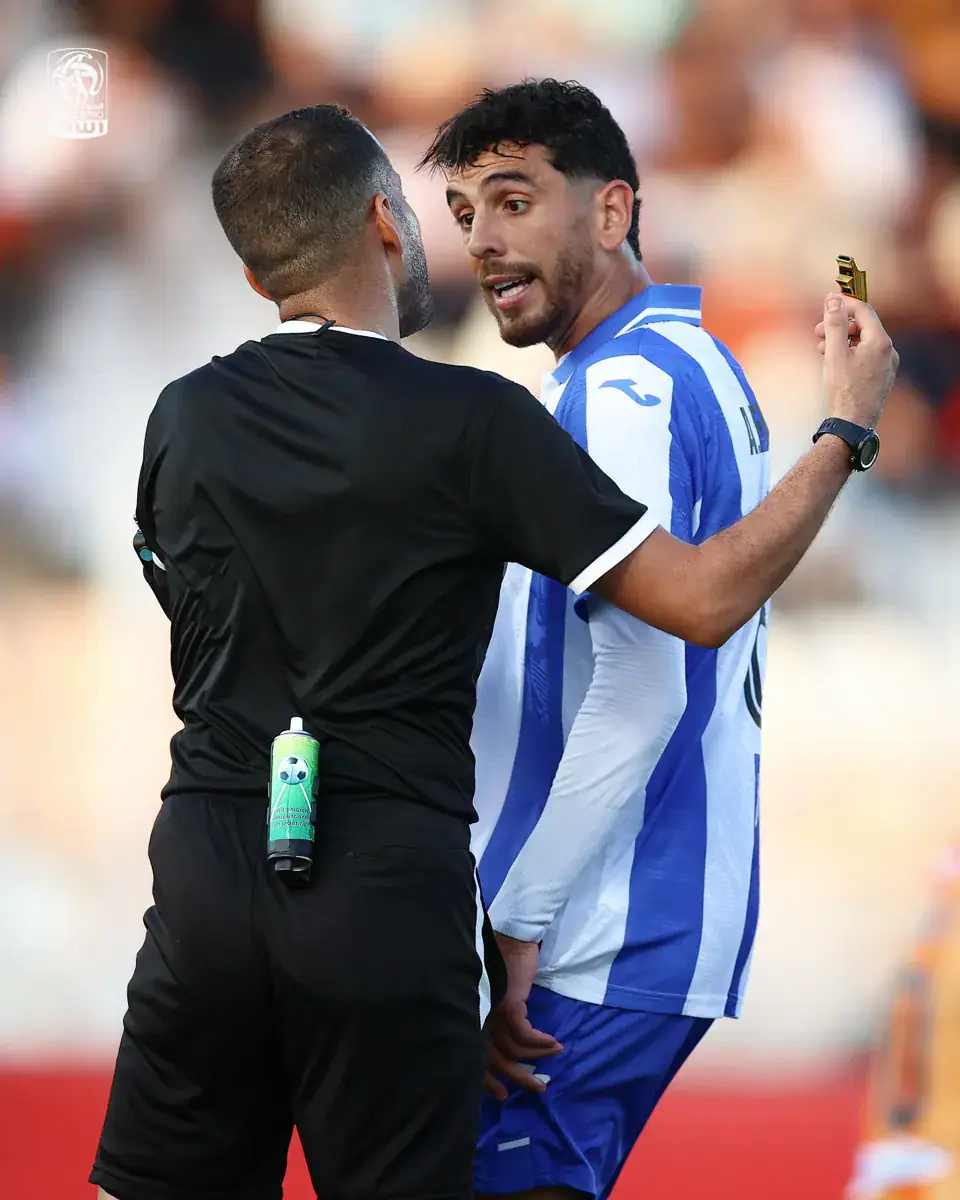
The Moroccan football refereeing system has plunged into a new crisis, extending beyond criticisms of on-field performance to internal conflicts and disputes over management, evaluation, and appointments. The recent dismissal of Refereeing Directorate head, Redouane Jid, has exacerbated the situation. Sources indicate that this crisis reveals the inability of the Royal Moroccan Football Federation and the National Professional Football League to find a lasting solution, despite successive changes and reorganizations within the refereeing body.
The crisis escalated after the National Professional Football League received a protest petition from several referees, requesting a meeting with League President, Abdel Salam Belkashour, to discuss their grievances within the system. This development highlights the strained relationship between the Refereeing Directorate and some referees. Furthermore, the ranking of top-tier referees has sparked controversy, with several referees expressing reservations about the criteria used in the annual classification.
Notable referees, such as Jalal Jid, Mostafa Akarkad, and Zakaria Brinsi, have been ranked in positions that have raised questions about the evaluation criteria and the fairness of the ranking system. These concerns have extended to the distribution of matches and appointments, with doubts about equal opportunities for referees and a lack of transparency regarding the criteria controlling key match assignments.
The files have become focal points of tension within the Refereeing Directorate, particularly as some referees express dissatisfaction with their career management. The discussion around Redouane Jid's departure occurs shortly after changes in the refereeing directorate's composition, aimed at reorganizing the body, but failing to alleviate tensions.
The question has been raised about the effectiveness of continued changes in personnel and responsibilities without a comprehensive review of the system's functioning, specifying responsibilities, and ensuring the independence of refereeing decisions, as well as transparent evaluations and appointments. The current crisis indicates that Moroccan refereeing faces not only errors on the field but also a crisis of trust and management.
The persistence of partial changes and patchwork policies, without accurately diagnosing malfunctions and devising a clear reform plan, threatens to keep the system in a cycle of crises. Each new phase may then merely mark the beginning of another confrontation, rather than a step toward stability. The Royal Moroccan Football Federation and the National Professional Football League must address these deep-seated issues.
The ongoing turmoil in Moroccan football refereeing necessitates a thorough examination and substantial reforms to regain credibility and ensure fairness in the sport. All parties involved must collaborate to devise and implement effective solutions, prioritizing the development of a robust and transparent refereeing system that enjoys the trust of all stakeholders.
Key points
- Redouane Jid's dismissal as head of the Refereeing Directorate has not resolved the crisis in Moroccan football refereeing.
- The ranking of referees and distribution of matches have sparked controversy, with concerns about fairness and transparency.
- The crisis highlights the need for comprehensive reforms to address the deep-seated issues in Moroccan football refereeing.