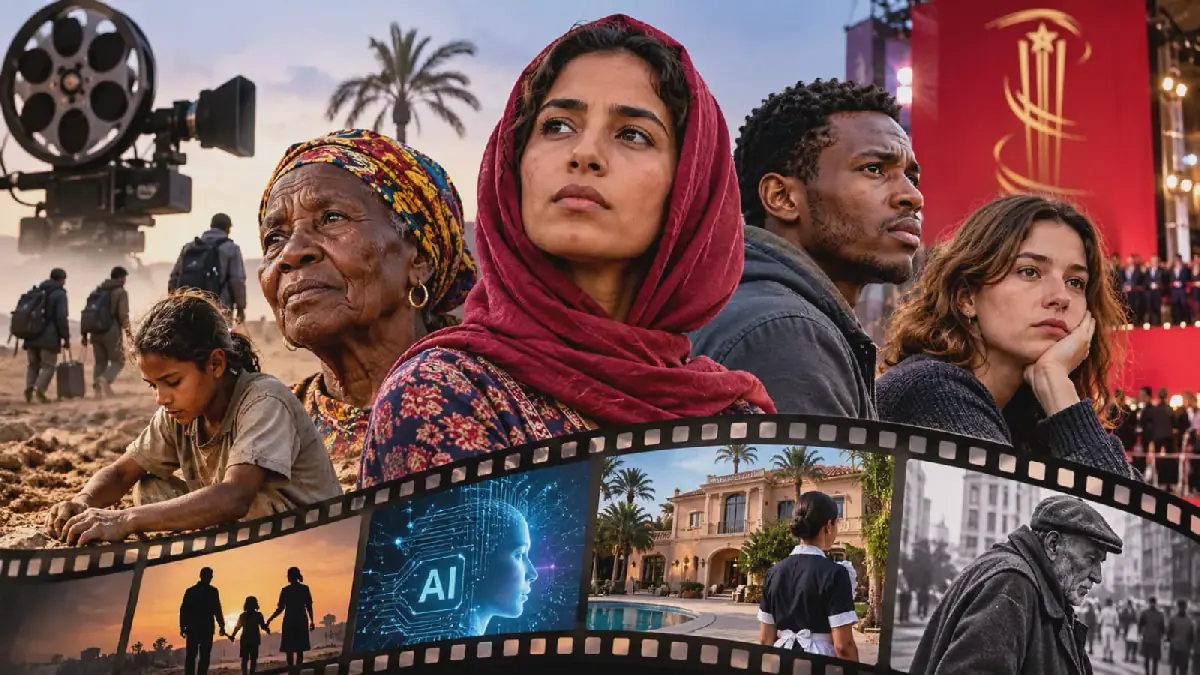
The 23rd Marrakech International Film Festival is showcasing a diverse range of films that tackle pressing social issues affecting contemporary societies. The lineup includes films that explore themes of migration, racism, and social inequality, offering a platform for discussion and reflection. One of the featured films is "بيت الريح" (House of the Wind) by August Bernal Koumou Yangou, which tells the story of a Cameroonian woman struggling to maintain a connection with her children who have migrated to Europe.
The film "نصيبنا من الرمال" (Our Share of Sand) by Shalini Adnani sheds light on the exploitation of children and workers in the sand extraction industry in India. The story follows a young girl who discovers the harsh conditions faced by workers in this sector, which provides a comfortable life for her family but raises questions about morality and responsibility. Another film, "لا يفوز إلا المتمردون" (Only the Rebels Win) by Danièle Arbid, addresses racism and discrimination against migrants through a love story between a Lebanese widow and a Sudanese man without residency papers.
The festival also features films that explore family relationships and self-discovery. "العالم من قبل" (The World Before) by Korean director Yoon Dan-bi tells the story of a 17-year-old girl experiencing her first love, while "يوم من حياة جو: فصل فيدرا" (A Day in the Life of Jo: Phaedra's Chapter) by Jacqueline Lentzou follows a teenage girl's ordinary day, which takes a tragic turn. These films offer a nuanced portrayal of the challenges faced by young people in today's society.
The festival's lineup also includes films that address technological advancements and their impact on society. "اصطناعي" (Artificial) by Luca Guadagnino explores the rapid development of artificial intelligence and the competition among parties vying to develop this technology. In contrast, "آخر نشال على قيد الحياة في نيويورك" (The Last Pickpocket in New York) by Noah Segan observes the life of an elderly man struggling to adapt to the significant changes in New York City.
The films showcased at the festival demonstrate a commitment to highlighting the human experience and the complexities of contemporary society. By exploring themes such as migration, racism, and social inequality, these films offer a platform for discussion and reflection. The festival's diverse lineup ensures that a wide range of perspectives and experiences are represented.
The Marrakech International Film Festival has a long history of promoting cultural exchange and understanding through cinema. This year's edition continues this tradition, featuring a diverse range of films that tackle pressing social issues. By giving a voice to emerging and established filmmakers, the festival provides a platform for storytelling and reflection.
The festival's focus on social issues is particularly relevant in today's world, where these challenges are increasingly pressing. By using cinema as a tool for storytelling and reflection, the Marrakech International Film Festival aims to inspire dialogue and promote understanding. The festival's diverse lineup ensures that a wide range of perspectives and experiences are represented, making it a valuable platform for cultural exchange and understanding.
Key points
- The festival features films that address pressing social issues affecting contemporary societies, including migration, racism, and social inequality.