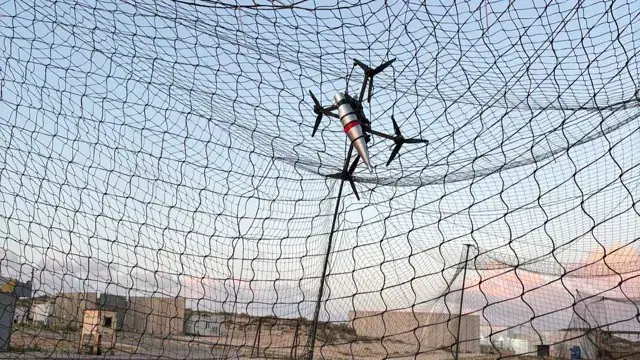
A recent French report has shed light on the previously unknown activities of a factory in Tangier, Morocco. The facility, which has been in operation for years producing nets for fishing, ports, and bird cages, has diversified into manufacturing advanced nets designed to protect against attack drones. These nets are made from Kevlar fibers, known for their high resistance, and are engineered to withstand the impact of explosive objects.
According to the report by French TV channel TV5MONDE, the factory received its first orders for drone defense nets over a year ago. This sudden shift into a new market surprised the factory workers, who had no prior experience or specialized training in producing such products. Despite their long-standing expertise in traditional net-weaving techniques, they had to adapt quickly to meet the new demands.
The nature of this activity requires a high level of secrecy. Factory workers and workshop managers are not necessarily privy to all the details of the products they manufacture. Additionally, designs received from clients often have incomplete specifications, as part of the manufacturing secrecy protocols. This approach ensures that sensitive information about the end-use of these nets remains protected.
The factory has already sent a prototype of these defense nets to a European client for testing, specifically to assess its resistance to explosives. This step indicates the factory's orientation towards exporting its products to countries seeking to bolster their defenses against drone attacks. The growing concern about drone threats, particularly in the context of the Ukraine war, has highlighted the need for such protective measures.
The report also noted the increasing relevance of counter-drone technologies in modern conflicts, particularly in regions like the African Sahel. Armed groups in these areas have begun adapting civilian drones to carry explosive payloads and target military installations. The emergence of industries focused on countering these threats reflects the evolving nature of armed conflicts and the need for innovative defense solutions.
The factory's shift into producing advanced drone defense nets represents a significant diversification of its product line. By leveraging its existing expertise in net production and adapting to new technologies, the company aims to capitalize on the growing demand for counter-drone measures. This development underscores the dynamic nature of modern manufacturing, where companies must continually innovate and adapt to remain competitive.
As the threat posed by armed drones continues to grow, the role of companies like this Tangier factory will likely become increasingly important. Their ability to produce effective countermeasures can significantly impact the security landscape in regions vulnerable to drone attacks. With its export-oriented strategy, the factory is poised to contribute to the global effort to mitigate the risks associated with the proliferation of armed drones.
Key points
- The factory uses Kevlar fibers to produce nets designed to protect against attack drones.
- The production of drone defense nets is a new venture for the factory, which previously produced nets for fishing and other sectors.
- The factory has sent a prototype of its drone defense nets to a European client for explosives resistance testing, indicating its focus on export.