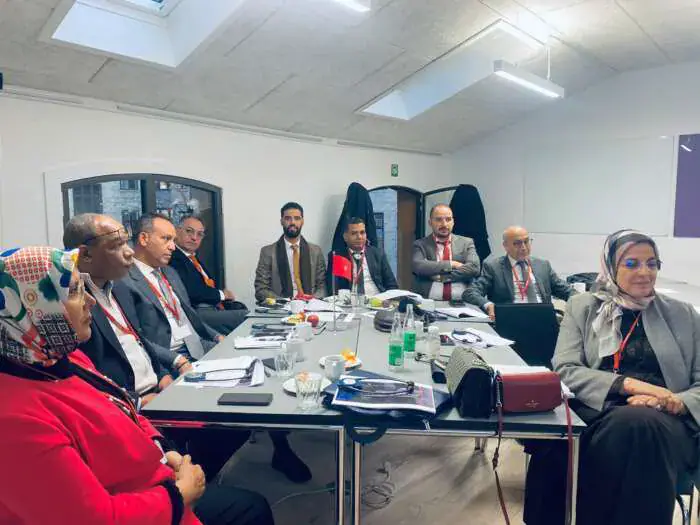
A high-level Moroccan delegation led by Hicham Moulati, Director of Criminal Affairs, Pardons, and Crime Monitoring, recently visited Denmark from November 2-6. The trip was part of a strategic partnership program between Morocco's Ministry of Justice and the Danish organization "DIGNITY". The delegation included representatives from various Moroccan institutions, including the Ministry of Justice, the Supreme Judicial Council, the Public Prosecutor's Office, and the General Delegation for Prison Administration and Reintegration.
The visit aimed to exchange experiences and best practices in implementing conditional release mechanisms, alternatives to detention, and custodial sentences. Morocco is seeking to address prison overcrowding and improve the rehabilitation of prisoners. The delegation's itinerary included discussions on the legal and practical frameworks governing conditional release in Denmark, which is considered a key tool for addressing issues related to custodial sentences.
The Moroccan delegation's visit is part of a broader effort to explore alternative solutions to imprisonment and reduce the financial burden of incarceration. By studying Denmark's approach to conditional release, Morocco hopes to implement similar measures to alleviate prison overcrowding and improve the reintegration of prisoners into society. The visit also reflects Morocco's commitment to reforming its justice system and promoting rehabilitation over punishment.
The strategic partnership between Morocco's Ministry of Justice and DIGNITY aims to promote cooperation and knowledge sharing in the field of justice and prison reform. The visit is expected to contribute to the development of effective solutions to address prison overcrowding and improve the treatment of prisoners in Morocco. The Moroccan delegation's discussions in Denmark focused on the practical application of conditional release mechanisms and their potential impact on the country's prison system.
Morocco's prison system has long faced challenges related to overcrowding, with many prisons operating at or above capacity. The government has been working to address this issue through various reforms, including the introduction of alternative sentencing and conditional release mechanisms. The visit to Denmark is part of these efforts, as Morocco seeks to learn from international best practices and implement effective solutions to reduce prison overcrowding.
The Moroccan delegation's visit to Denmark highlights the country's commitment to justice reform and its willingness to engage with international partners to address pressing challenges in the justice system. By exploring alternative approaches to imprisonment, Morocco aims to promote rehabilitation, reduce recidivism, and improve public safety. The visit is expected to contribute to the development of a more effective and humane justice system in Morocco.
The outcomes of the Moroccan delegation's visit to Denmark are expected to inform future reforms and policy initiatives in Morocco's justice system. By studying Denmark's approach to conditional release and alternatives to imprisonment, Morocco can develop more effective solutions to address prison overcrowding and promote rehabilitation. The visit reflects Morocco's ongoing efforts to modernize its justice system and promote a more nuanced approach to justice and rehabilitation.
Key points
- Morocco's justice officials visit Denmark to explore alternatives to imprisonment and address prison overcrowding.