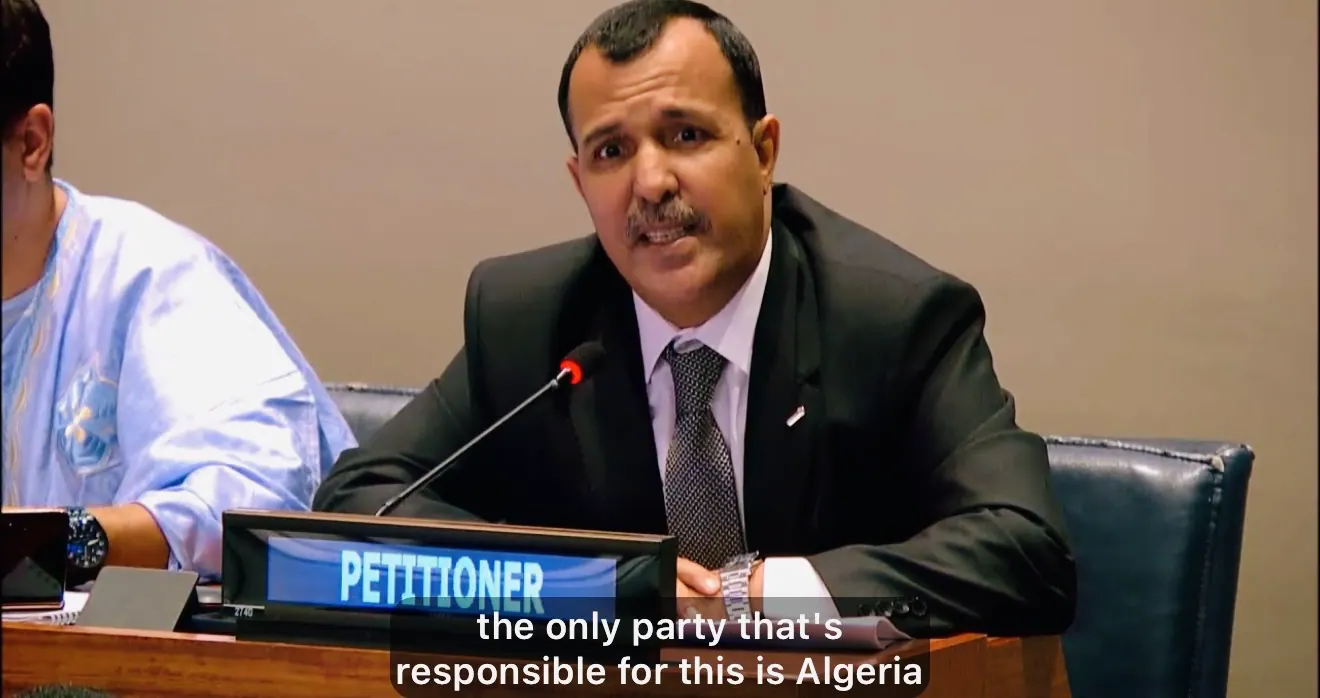
Hamada Al-Beihi, head of the Sahrawi Association for Democracy and Human Rights, addressed the UN's Fourth Committee, sharing his experience as a returnee to his homeland. He attributed the suffering of Sahrawis to Algeria, stating that the country has been responsible for spreading hatred and conflict over the Sahara region for over five decades. Al-Beihi emphasized that he grew up in Tindouf camps, where he witnessed firsthand the struggles of Sahrawis living under Polisario's rule.
Al-Beihi described the harsh conditions in the camps, where he said Polisario's leadership has maintained a system of poverty, dependency on humanitarian aid, and oppression. He questioned how a militant organization could govern civilians and defy international law. The delegate also highlighted the UN's human rights committee findings, which documented continued human rights abuses by Polisario in the camps, allegedly with the support of the host country, Algeria.
Al-Beihi referenced a European investigation that uncovered embezzlement of humanitarian aid intended for Tindouf camp residents. He argued that this corruption underscores the need for reform and greater oversight. The delegate also inquired about the refusal of Polisario and its supporters to subject camp residents to a comprehensive, independent census, suggesting that this resistance may be linked to financial interests.
A census, Al-Beihi argued, would provide each individual with a name, identity, and recognized rights, allowing for a clearer understanding of the needs of vulnerable populations such as families, children, and the elderly. This, he claimed, would undermine Polisario's claims to represent the Sahrawi people. By highlighting these issues, Al-Beihi aimed to shed light on the complexities of the Western Sahara conflict.
Al-Beihi directly implicated Algeria in the conflict, asserting that the country bears historical and moral responsibility for the suffering of Sahrawis. He emphasized that Algeria's actions have contributed to the ongoing crisis and that the international community should acknowledge its role. The delegate's statements reflect the complexities of the Western Sahara issue and the challenges faced by Sahrawis living in Tindouf camps.
The issue of Tindouf camps has been a contentious aspect of the Western Sahara conflict, with concerns raised about human rights, humanitarian aid, and the role of Algeria and Polisario. Al-Beihi's testimony underscores the need for a more nuanced understanding of the situation and the importance of addressing the root causes of Sahrawi suffering.
The Fourth Committee's discussions on the Western Sahara conflict continue, with various stakeholders presenting their perspectives on the situation. Al-Beihi's intervention highlights the human dimension of the conflict and the need for a peaceful resolution that addresses the concerns of all parties involved.
Key points
- Algeria bears responsibility for the suffering of Sahrawis in Tindouf camps.