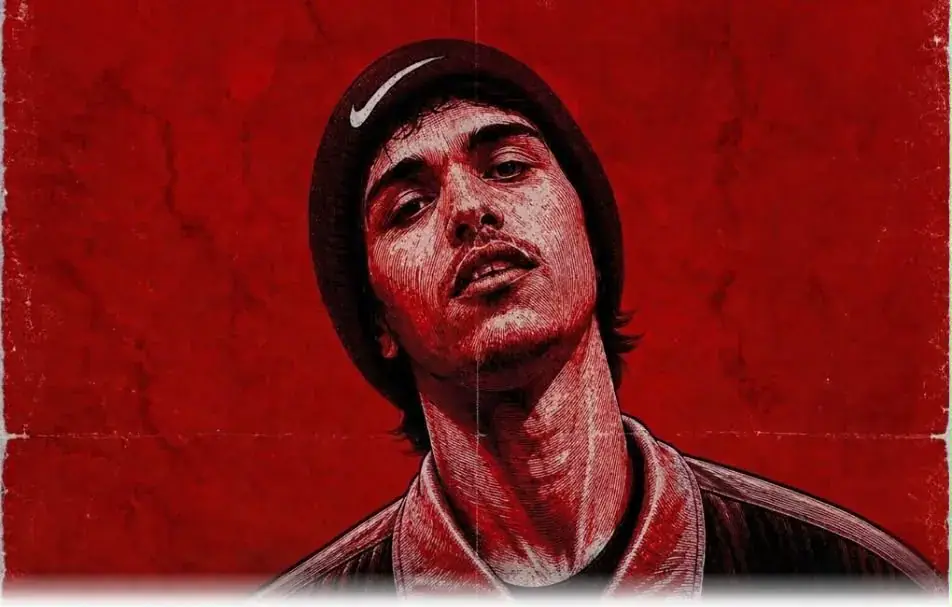
The Casablanca Court of First Instance sentenced Yaser Mounbir, a 22-year-old cartoonist, to four years in prison and a fine of 40,000 dirhams on October 30, 2026. Mounbir was charged with insulting a constitutional institution and spreading false news through his drawings. The case has reignited discussions on the limits of freedom of expression and artistic creativity in Morocco.
The case has drawn attention to the stance of some human rights activists and organizations in Morocco. While some have strongly advocated for freedom of expression and protested against repression and arrests, their reactions have been inconsistent. For instance, they strongly supported rapper Blak Wid, who was arrested and later released on July 31, 2026, after being charged with "insulting a constitutional institution" and spreading false news through his song lyrics.
Mounbir was arrested on June 15, 2026, and held in pre-trial detention at the Aïn Sabaâ prison. His lawyers, Sara Sougar and Farouk El Mehdaoui, argued during the trial that several investigative procedures were flawed, including the circumstances of his arrest, detention, and home search. They also contested the inclusion of interpretations of his drawings in the case files.
The defense team emphasized the need to distinguish between satirical artistic expression and criminal acts. They argued that Mounbir's drawings used symbolism, exaggeration, and irony, and that their publication or attribution to the defendant was not enough to prove intent to commit a crime. The defense cited constitutional provisions related to freedom of expression and artistic creativity, as well as Article 19 of the International Covenant on Civil and Political Rights.
The prosecution and defense presented their arguments during a lengthy trial session on October 28, 2026. The court heard testimony and evidence before delivering its verdict. Mounbir's case has sparked concerns about the application of laws related to freedom of expression and artistic creativity in Morocco.
The sentence has been seen as a test of Morocco's commitment to upholding freedom of expression and artistic creativity. Human rights organizations and activists have expressed concerns about the implications of the verdict for artistic freedom in the country. The case is likely to be appealed, and its outcome will be closely watched by human rights groups and artistic communities.
The case has also raised questions about the consistency of human rights activism in Morocco. While some activists have been vocal in their support for freedom of expression, their reactions have been inconsistent, with some critics arguing that they have not spoken out with equal force on other cases, such as Mounbir's. The case has highlighted the complexities of advocating for human rights and artistic freedom in Morocco.
Key points
- The Moroccan court sentenced Yaser Mounbir to four years in prison for drawings considered insulting to the Prophet Muhammad.
- The case has sparked debate over freedom of expression and artistic creativity in Morocco.
- Human rights activists and organizations have expressed concerns about the implications of the verdict for artistic freedom in the country.