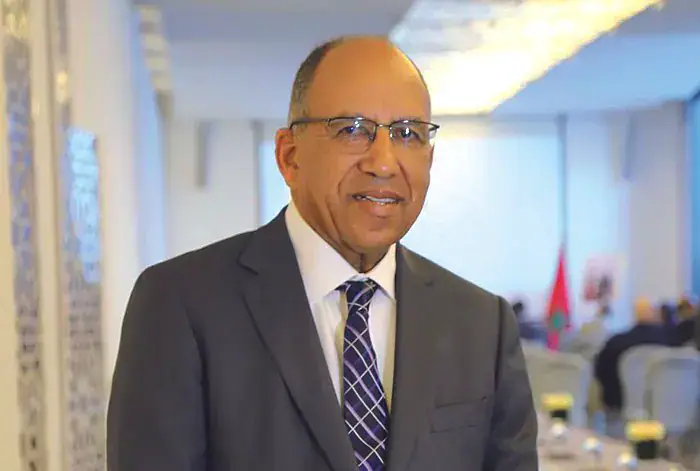
The Moroccan construction sector is set to experience significant growth with a planned investment of 400 billion dirhams ($40 billion) in 2027, as outlined in the country's Finance Bill. This development has raised questions about the sector's readiness to capitalize on this investment. Mohammed Mahboub, President of the National Federation of Building and Public Works (FNBTP), believes that Moroccan companies have the capacity to take advantage of this opportunity. He notes that the sector has already demonstrated its capabilities, having completed major projects such as the country's highway network, dams, and port infrastructure.
The construction sector in Morocco has made significant strides in recent years, with Moroccan companies completing complex projects, including major stadiums, on time and within budget. However, Mahboub emphasizes that the sector faces challenges, including a shortage of skilled labor and rising costs of raw materials. The FNBTP chief notes that the sector's growth will depend on several factors, including better visibility of public contracts, sustainable execution conditions, and improved access to financing. He also calls for a strengthening of the national preference in public procurement and a more balanced partnership with foreign companies.
The Moroccan government's investment plans include several major projects, such as the Nador West Med port, the Dakhla Atlantique project, and the high-speed rail link between Kenitra and Marrakech. These projects offer opportunities for Moroccan companies to gain experience and build their capacity. Mahboub notes that Moroccan companies are already involved in several major projects, including the construction of the Dakhla Atlantique port and the third terminal of Mohammed V airport. He emphasizes that the sector's growth will depend on its ability to create jobs and stimulate economic growth.
To ensure that the sector's growth benefits the local economy, Mahboub proposes several measures, including a national preference for Moroccan materials and products, better subcontracting practices, and partnerships with foreign companies that prioritize technology transfer. He also emphasizes the need for vocational training programs to address the shortage of skilled labor in the sector. The FNBTP is committed to supporting the development of the sector through its training institute in Fez, which provides training programs for young people and professionals.
The Moroccan construction sector faces increasing competition from foreign companies, particularly from China, Turkey, and Europe. Mahboub notes that Moroccan companies have the skills and expertise to compete with these companies, but calls for a level playing field. He proposes that the government introduce measures to support national companies, including a strengthening of the national preference in public procurement and improved access to financing. The FNBTP chief also emphasizes the need for reciprocity in trade agreements to ensure that Moroccan companies have access to foreign markets.
The FNBTP has proposed several measures to support the growth of the sector, including a generalization of the national preference in public procurement to all public establishments and companies. Mahboub notes that this measure would help to create jobs and stimulate economic growth. He also emphasizes the need for a more balanced partnership with foreign companies, which would prioritize technology transfer and create opportunities for Moroccan companies.
The Moroccan construction sector is expected to play a significant role in the country's economic growth in the coming years. With a planned investment of 400 billion dirhams in 2027, the sector is poised for significant growth. However, Mahboub emphasizes that the sector's growth will depend on its ability to address the challenges it faces, including a shortage of skilled labor and rising costs of raw materials. The FNBTP chief calls for a collaborative approach to address these challenges and ensure that the sector's growth benefits the local economy.
Key points
- Moroccan construction sector to benefit from $400 billion investment in 2027
- Sector faces challenges, including shortage of skilled labor and rising costs of raw materials
- FNBTP proposes measures to support growth, including national preference in public procurement and improved access to financing
Reporting sources
- Mohammed MAHBOUB : «La concurrence doit s’exercer à armes égales» · Challenge Hebdo