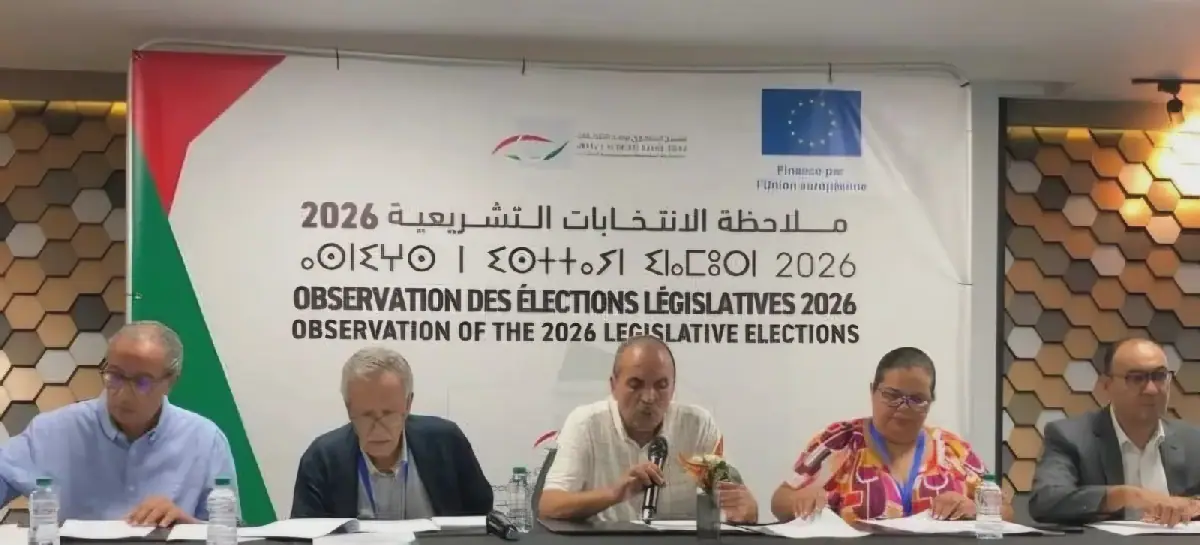
The Moroccan civil society's independent monitoring of the 2026 legislative elections has revealed several irregularities. According to the National Network for Election Monitoring, which comprises 78 associations, 53 cases of public property misuse for the benefit of a candidate or political party were recorded. Additionally, 59 suspected cases of vote buying and 12% of cases of unauthorized electoral advertising in public places were reported.
The monitoring also found that on election day, 40 cases of observers being denied access to polling stations were recorded. Furthermore, around 21% of polling stations, or approximately 975 stations, had voters queuing before the official opening time. However, 87% of polling stations opened on time at 8 am. The monitoring also revealed that in 28% of cases, or over 1,300 polling stations, voters did not collect their ballots themselves.
The National Network for Election Monitoring observed the voting process in 4,645 polling stations across 91 local electoral districts. The monitoring was conducted using a methodology that combined fixed and mobile observation, from the opening of polling stations to the end of the process. The network's findings were presented at a press conference, highlighting various irregularities and concerns regarding the electoral process.
The monitoring also revealed that in 6% of polling stations, or approximately 279 stations, voters were influenced or directed towards a specific candidate or list. The network's coordinator emphasized that the absence of evidence of certain irregularities, such as pre-marked ballots, does not necessarily mean they did not occur. The network called for access to information on cases that have been subject to judicial proceedings.
Before the election campaign began, the monitoring recorded 106 cases, or around 27%, of public projects or properties being used for electoral purposes. Additionally, 70 cases, or around 18%, of activities by civil society organizations that were deemed to be in favor of a particular candidate or party were reported. The network described the authorities' response to these practices as "passive neutrality."
The monitoring also extended to the digital sphere, where 66 cases of artificial intelligence-generated content or fake and manipulated electoral content were recorded. The network noted that the legal framework imposes penalties on such practices. Furthermore, it was reported that one party spent around $150,000 on advertising on Facebook in the 30 days leading up to the election, a figure that allegedly exceeded the combined spending of all other parties.
The National Network for Election Monitoring also highlighted concerns regarding the accessibility of polling stations for people with disabilities. According to the monitoring, 27% of polling stations did not provide suitable access, movement, and voting conditions for this group. The network's findings will be included in a final report that will provide recommendations for improving the electoral process and ensuring respect for the rules governing it.
Key points
- The Moroccan civil society's independent monitoring of the 2026 legislative elections revealed several irregularities, including public property misuse and vote buying.
- The monitoring recorded 53 cases of public property misuse and 59 suspected cases of vote buying.
- The network's findings highlighted concerns regarding the electoral process, including issues with accessibility for people with disabilities and digital manipulation.
Reporting sources
- انتخابات 2026.. 279 مكتب تصويت تحت مجهر الملاحظين و59 حالة اشتباه في شراء الأصوات · Al Ahdath Al Maghribia