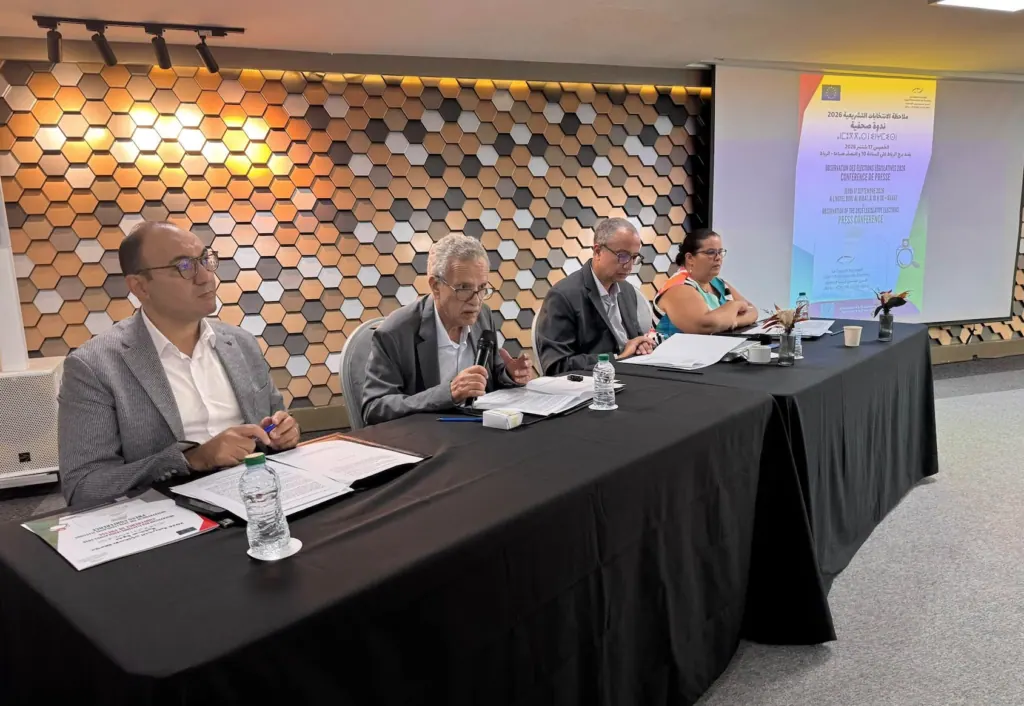
The Collectif Associatif pour l'Observation des Elections (CAOE), a Moroccan civil society organization, has released its preliminary findings on the 2026 legislative elections, which took place on September 23. The CAOE observed the entire electoral process, including the legal and institutional framework, voter registration, candidate nominations, campaigning, and voting procedures. The organization deployed 1,622 observers, including 1,455 accredited ones, across the country to monitor the elections.
According to the CAOE, the electoral context was marked by a 12% decline in voter turnout compared to 2021, with a significant drop in young voters aged 18-24. The organization also noted that the judiciary was in crisis, partly due to a contentious law on the legal profession. Furthermore, the country experienced a surge in irregular migration attempts, particularly from Sebta and Mellila, in July. These factors contributed to a complex environment for the elections.
The CAOE observed several issues during the pre-campaign period, including the misuse of public goods and services for electoral gain. The organization recorded 106 cases of such abuses, which accounted for 27% of its observations. Additionally, 70 cases involved the use of associative activities for partisan and electoral purposes. The CAOE also noted that public authorities tended to adopt a "passive neutrality" in the face of electoral infractions, which may have favored certain parties or candidates.
During the campaign period, the CAOE observed numerous irregularities, including restrictions on publications, arrests of party members, and practices aimed at influencing voters. The organization also reported cases of defamation, unauthorized advertising, and the use of children in campaign activities. Furthermore, the CAOE noted that the electoral campaign was often focused on personalities rather than programs and projects.
On election day, the CAOE observed several issues, including restricted access for observers, propaganda in polling stations, and a lack of party representatives. The organization also reported that, in some cases, voters were not allowed to choose their own ballots, and people with disabilities were not assisted by their chosen representatives. Additionally, some polling stations experienced disruptions, and not all results were properly documented.
The CAOE also monitored the use of digital space during the campaign period and found that 10% of electoral content contained false or misleading information. In 21% of cases, such information aimed to influence voters' choices, while in 14%, it targeted candidates' private lives. The organization also detected the use of artificial intelligence to falsify information in 66 cases.
The CAOE's findings highlight concerns about the integrity and transparency of the electoral process in Morocco. The organization's recommendations may inform efforts to improve the country's electoral framework and ensure more inclusive and fair elections in the future. Key issues to address include voter registration, campaign practices, and voting procedures.
Key points
- The CAOE observed 1,622 observers, including 1,455 accredited ones, across the country to monitor the elections.
- The organization recorded 106 cases of misuse of public goods and services for electoral gain.
- The CAOE reported that, in some cases, voters were not allowed to choose their own ballots, and people with disabilities were not assisted by their chosen representatives.