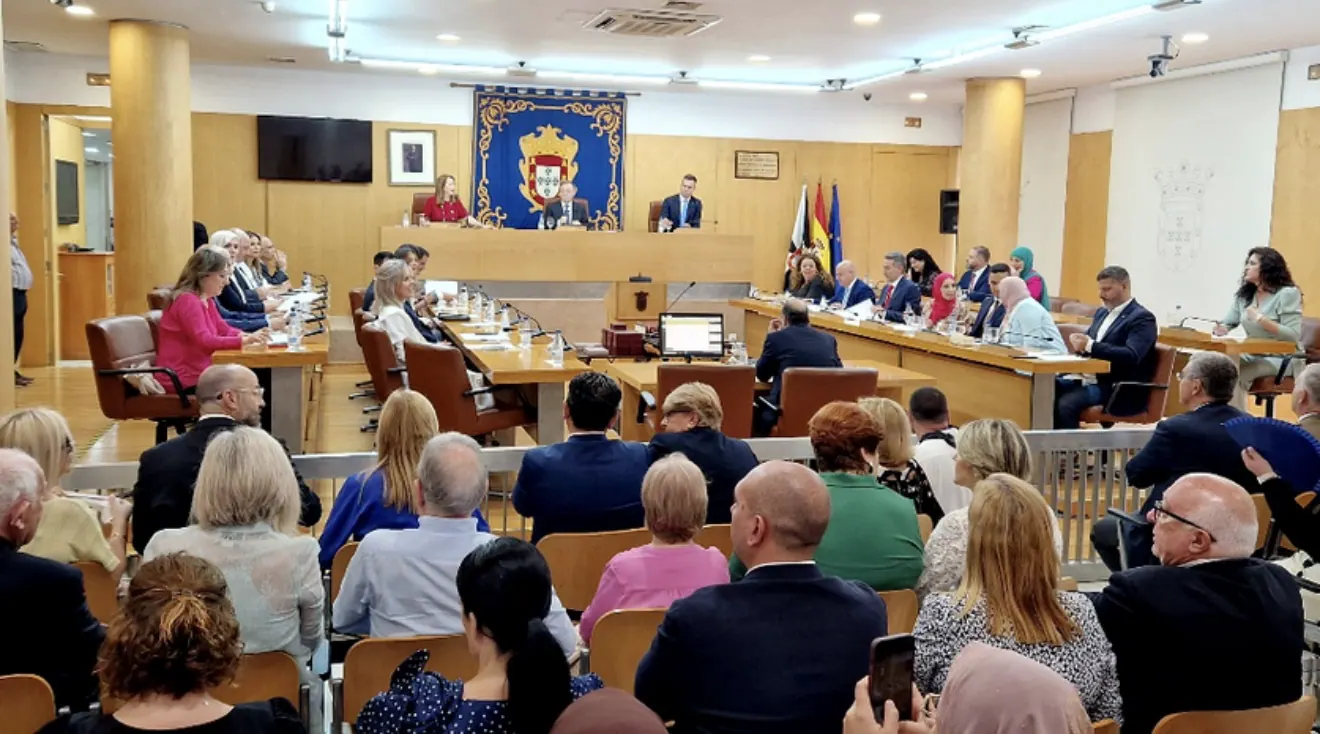
The city council of Sebta, Morocco, convened on Tuesday and voted against a proposal submitted by Juan Sergio Redondo, spokesperson for the Spanish Vox party. The proposal aimed to enforce Spanish sovereignty over Sebta, Melilla, and other North African territories. The council rejected the proposal with 17 votes against, while four members voted in favor.
The rejected proposal included measures to strengthen the Spanish government's stance in response to recent statements from Moroccan government members regarding Sebta and Melilla. These measures included requesting Morocco to issue a public declaration respecting Spanish sovereignty and territorial unity. The proposal also suggested maintaining and enhancing the presence of armed forces and security personnel in Sebta and Melilla.
Additional measures in the proposal involved suspending the Treaty of Friendship, Good Neighborliness, and Cooperation between Spain and Morocco. It also suggested reviewing bilateral cooperation tools and promoting a review of certain agreements and aid packages with the European Union. The proposal included diplomatic measures such as summoning the Moroccan ambassador to Spain and the Spanish ambassador in Rabat for consultations.
The Vox party's proposal was seen as anti-Moroccan and sparked significant debate. The city council's decision reflects the complex and sensitive nature of the territorial disputes between Morocco and Spain. Sebta and Melilla are two Spanish enclaves on Morocco's northern coast, whose status has been a point of contention for decades.
Morocco has long claimed sovereignty over Sebta and Melilla, citing historical and geographical ties. The country's government has repeatedly stated its position on the matter, emphasizing its rights and claims. The Spanish government, on the other hand, maintains that the enclaves are an integral part of Spain.
The rejection of the Vox party's proposal by the Sebta city council is seen as a significant development in the ongoing debate. The council's decision highlights the complexities of the territorial dispute and the need for diplomatic efforts to resolve the issue. The Moroccan government's stance on Sebta and Melilla remains firm, while Spain continues to assert its sovereignty over the enclaves.
The city council's vote against the proposal demonstrates the ongoing tensions and competing claims over the territories. The issue remains a sensitive topic in Morocco-Spain relations, with both countries seeking to assert their positions and protect their interests. The situation continues to unfold, with diplomatic efforts and negotiations likely to play a crucial role in determining the future of Sebta and Melilla.
Key points
- Morocco's Sebta city council rejects proposal by Vox party to enforce Spanish sovereignty over Sebta and Melilla.