Moroccan cities are investing in accessibility, with the recent signing of MAD 76 million in agreements with local authorities to improve public spaces. However, accessibility is not just about installing ramps and accessible features in individual buildings. It is about creating a seamless experience for people with disabilities, older residents, and others with mobility limitations to navigate the city with dignity.
The issue of accessibility is often discussed as a policy for people with disabilities, with Morocco's High Commission for Planning counting 1.73 million citizens with disabilities. However, improvements also serve older residents, parents with prams, people recovering from injury, and anyone carrying luggage or living with a temporary mobility limitation. Universal design is not a charitable addition to urban planning but a way of making public investment work for more of the public.
One of the main challenges in achieving accessibility is coordination among different stakeholders, including municipalities, transport operators, building owners, and technology providers. Each may declare its own task complete, but the resident experiences one connected journey. Cities should therefore audit routes, not just individual buildings, starting with essential destinations such as clinics, schools, municipal offices, and major transit stops.
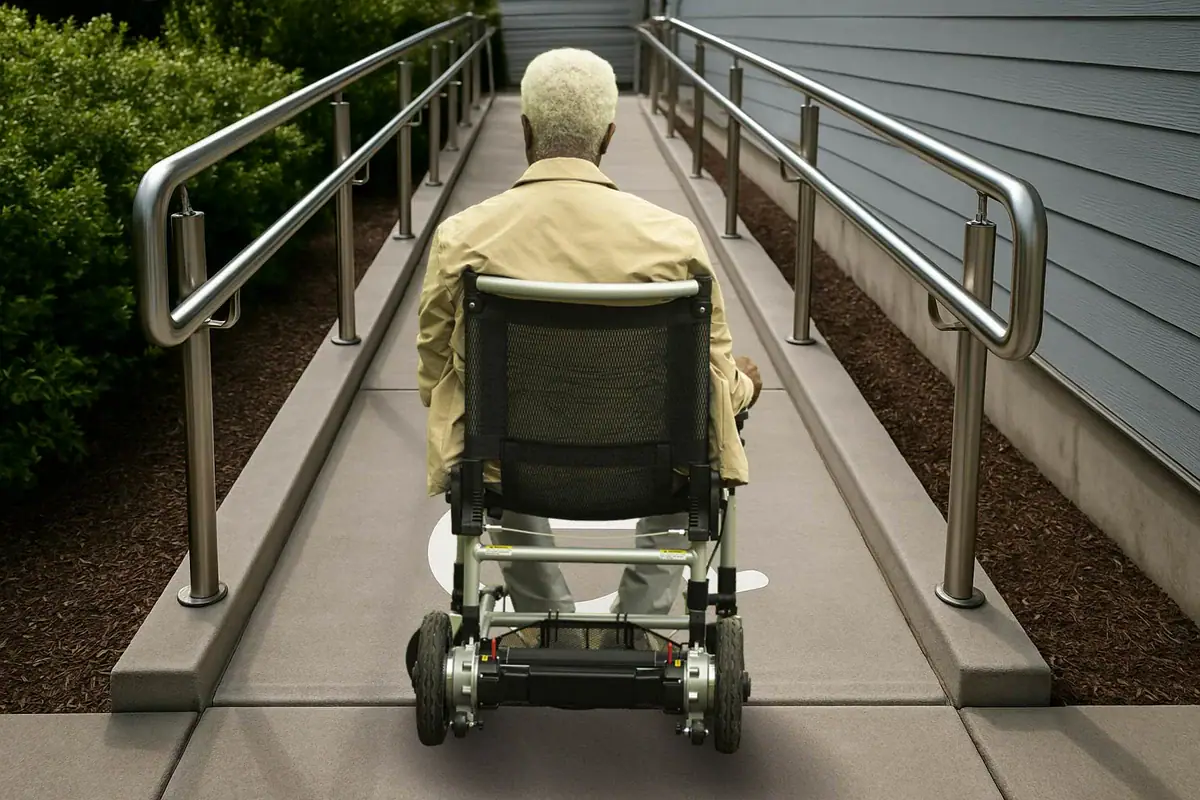
A useful accessibility audit asks more than whether a ramp exists. It also considers the gradient of the ramp, tactile cues and signs, accessible toilets, and staff assistance. Consultation with people who face barriers is also crucial, and they should be involved early in designing and testing services, not merely invited to praise a finished project. Disabled residents bring expertise rooted in daily use, which can reveal details missed by planners.
Public engagement is most meaningful when institutions explain which recommendations they adopted and why others could not be implemented right away. Budget constraints are real, so prioritization matters. Cities can begin by removing obstacles that interrupt major routes and making sure new projects do not create barriers that must later be fixed at greater cost. Maintenance deserves as much attention as inauguration.
Technology can support accessibility through accessible journey information, reporting tools, and clearer service instructions. However, an app is no substitute for a safe pavement, and people who encounter barriers should not have to navigate complicated digital forms just to report them. Accessible public services must offer more than one reasonable channel. A city becomes inclusive when people can move between places, understand information, make decisions, and use services without unnecessary dependence on strangers.
The goal of urban planning should be to enable people to complete journeys safely, predictably, and with dignity. The question is not how many ramps have been installed but how many journeys can now be completed with ease. Moroccan cities have a long way to go in achieving accessibility for all, but with continued investment and a focus on universal design, they can create more inclusive public spaces.
Key points
- Moroccan cities have invested MAD 76 million in agreements with local authorities to improve accessibility in public spaces.
- 1.73 million Moroccan citizens have disabilities, and accessibility improvements also serve older residents, parents with prams, people recovering from injury, and others.
- Universal design is crucial in urban planning to make public investment work for more of the public.
Reporting sources
- Read article: A City Is Not Accessible Simply Because It Has Ramps · Morocco World News