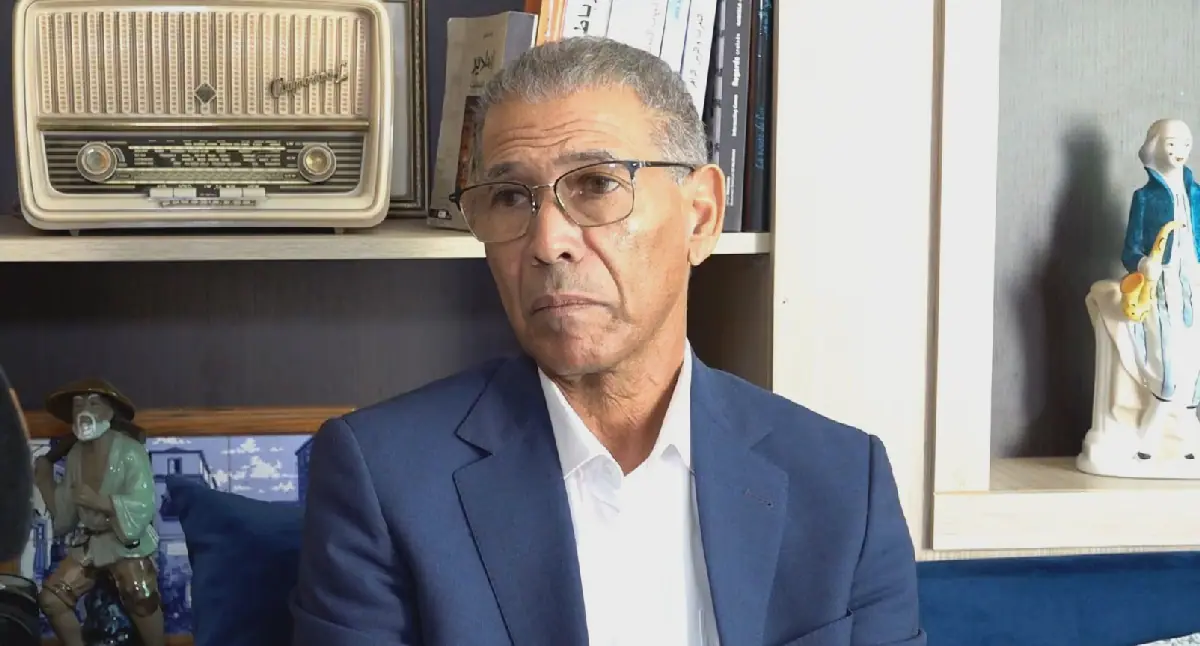
Moussaoui Ajlaoui, a specialist in Sahara affairs and expert at AMES-Center, recently discussed the developments in the Sahara dispute. The Cabinet Royal's communiqué, issued after the UN Security Council meeting on October 30, 2026, marks a significant turning point in the diplomatic management of the issue. Ajlaoui notes that the communiqué took everyone by surprise, including the United Nations. This new development signifies a break from the past approach and opens a new chapter in the UN's handling of the Sahara dispute.
The current situation stems from a decades-long process that began in 1975 when Spain brought the Sahara issue to the UN Security Council. The Council's involvement was based on the Charter's Chapter VI, which deals with peaceful resolution of disputes. Over the years, the issue has been examined by both the General Assembly and the Security Council. A ceasefire was established in 1991, and the MINURSO mission was created with seven initial tasks. However, these tasks gradually lost relevance, particularly after Resolution 1309 in 2000, which emphasized finding a political solution through negotiation.
A significant shift occurred with Resolution 2797 in October 2025, which outlined a new approach to resolving the conflict. The resolution is based on a "positive overcoming" of the regional conflict through a realistic, pragmatic, and durable political solution under Moroccan sovereignty. The Moroccan autonomy initiative of 2007 was revisited, and the Kingdom detailed its implementation modalities. This evolution strengthened international support for a political settlement based on this initiative. The UN Secretary-General's report in October 2026 and the intervention of his personal envoy, Staffan de Mistura, highlighted the need for a realistic and applicable solution.
The United States presented a draft resolution to translate this new international dynamic into more precise political orientations and adapt the Council's approach to the new stage. Eleven members of the Security Council, including the US, supported the amended American project. Their statements emphasized the need to evolve the framework for handling the issue to focus on implementing a political solution. The October 30, 2026 developments mark a critical date, as it is now necessary to draw the political and institutional consequences of the Council's new orientation and adapt UN mechanisms accordingly.
The Russian veto contributed to shifting the situation towards the latter scenario, ending MINURSO's mandate. If this is the case, the legal status of MINURSO needs to be determined. Ajlaoui emphasizes that we have moved from a first phase, opened in 1975, to a new stage initiated by the diplomatic developments of 2025 and confirmed by the discussions in October 2026. This sequence of decisions and diplomatic positions leads to a genuine change in paradigm in the UN's management of the dossier.
The implications of this change are significant, both diplomatically and institutionally. The new approach may lead to a more effective resolution of the Sahara dispute, based on a realistic and pragmatic solution under Moroccan sovereignty. However, it also raises questions about the future of MINURSO and the UN's role in the region. As the situation continues to evolve, it is essential to consider the potential consequences of this new phase and the possible outcomes for the parties involved.
Key points
- The Cabinet Royal's communiqué marks a historic turning point in the Sahara dispute, shifting the UN's approach towards a more political solution under Moroccan sovereignty.