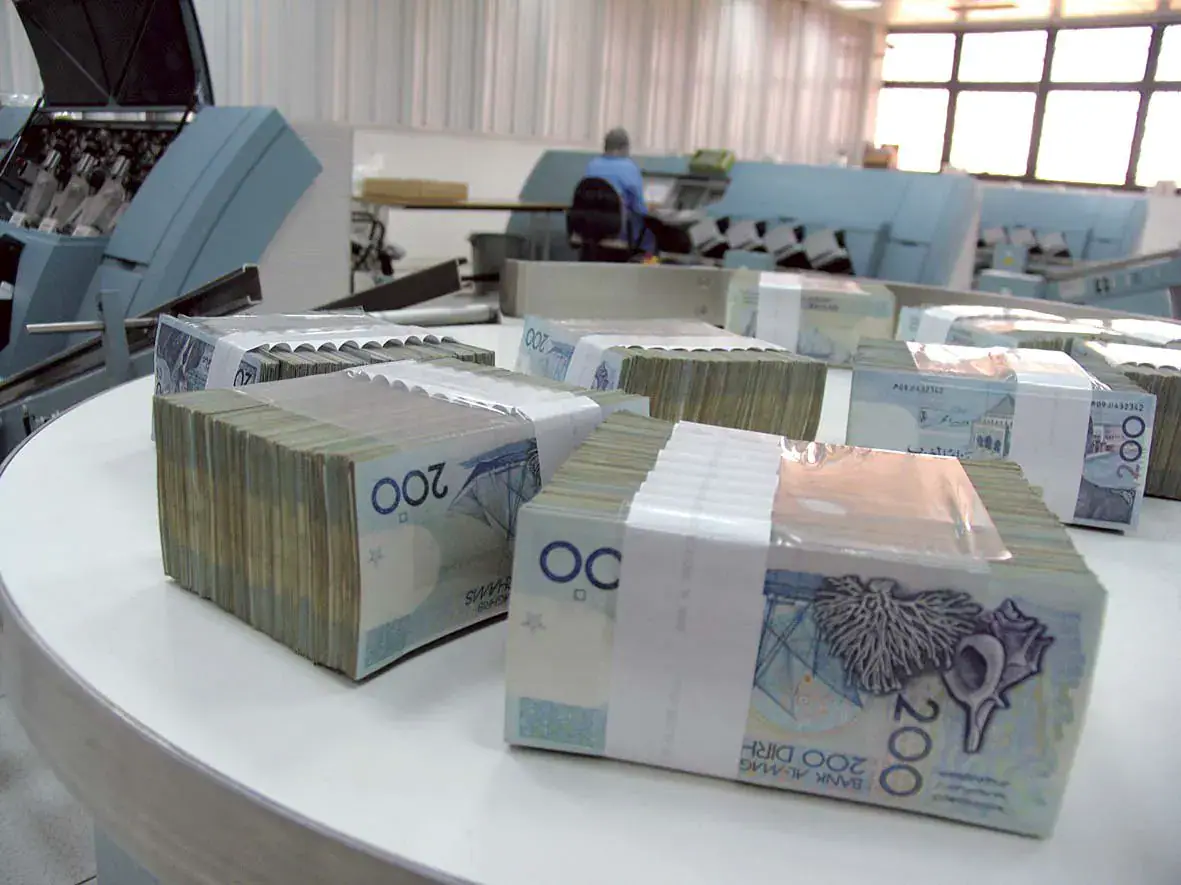
The liquidity needs of Moroccan banks eased slightly in October 2026, reaching an average of 135.8 billion dirhams per week. This represents a decrease from 136.5 billion dirhams in the previous month. As a result, Bank Al-Maghrib reduced its overall injections to 149.3 billion dirhams. These injections were distributed across various forms, including 53.5 billion dirhams in one-week advances and 45.4 billion dirhams in repurchase operations with maturities of one and three months.
The daily average volume of transactions on the interbank market was 3.1 billion dirhams, with a weighted average interest rate of 2.25%. Meanwhile, treasury bond rates increased in both primary and secondary markets, particularly for medium and long-term maturities. The rates on bank deposits also saw changes in September. Specifically, rates for six-month deposits rose by 6 basis points to 2.21%, while one-year deposit rates fell by 9 basis points to 2.56%.
The minimum remuneration rate for savings accounts was set at 1.82% for the second half of 2026. This represents an increase of 21 basis points from the previous semester. According to a Bank Al-Maghrib survey of banks, the average lending rate for the third quarter of 2026 decreased by 24 basis points to 4.57%. This decline was observed across various sectors, including a 24 basis point decrease to 4.47% for loans to non-financial companies.
The lending rates varied by company size, with large enterprises facing rates of 4.31% and small and medium-sized enterprises (SMEs) facing rates of 5.1%. These rates decreased by 25 basis points and 10 basis points, respectively, from the previous quarter. For individuals, lending rates decreased by 3 basis points to 5.56%. However, rates for overdrafts and cash loans increased by 98 basis points to 6.49%.
The rates for mortgage loans and consumer loans decreased by 3 basis points to 4.5% and 13 basis points to 6.68%, respectively. Bank Al-Maghrib's survey also provided insights into the evolution of lending rates across different sectors and company sizes. The central bank's efforts to adjust liquidity and interest rates reflect its ongoing role in managing Morocco's financial landscape.
The adjustments in liquidity needs and interest rates reflect broader trends in Morocco's economy. As the country navigates its economic challenges, the banking sector's performance remains a key area of focus. Bank Al-Maghrib's actions aim to maintain stability and support economic growth through careful management of monetary policy tools.
Going forward, the Moroccan banking sector is likely to continue evolving in response to both domestic and international economic conditions. The central bank's ongoing monitoring and adjustments of liquidity and interest rates will be crucial in shaping the sector's trajectory. As economic conditions change, the responses of banks and financial institutions will play a significant role in determining the overall health of Morocco's economy.
Key points
- The liquidity needs of Moroccan banks decreased to 135.8 billion dirhams in October 2026.
- Bank Al-Maghrib reduced its overall injections to 149.3 billion dirhams.
- The average lending rate for the third quarter of 2026 decreased by 24 basis points to 4.57%.
Reporting sources
- Banques: le besoin de liquidité s’atténue en octobre · Challenge Hebdo