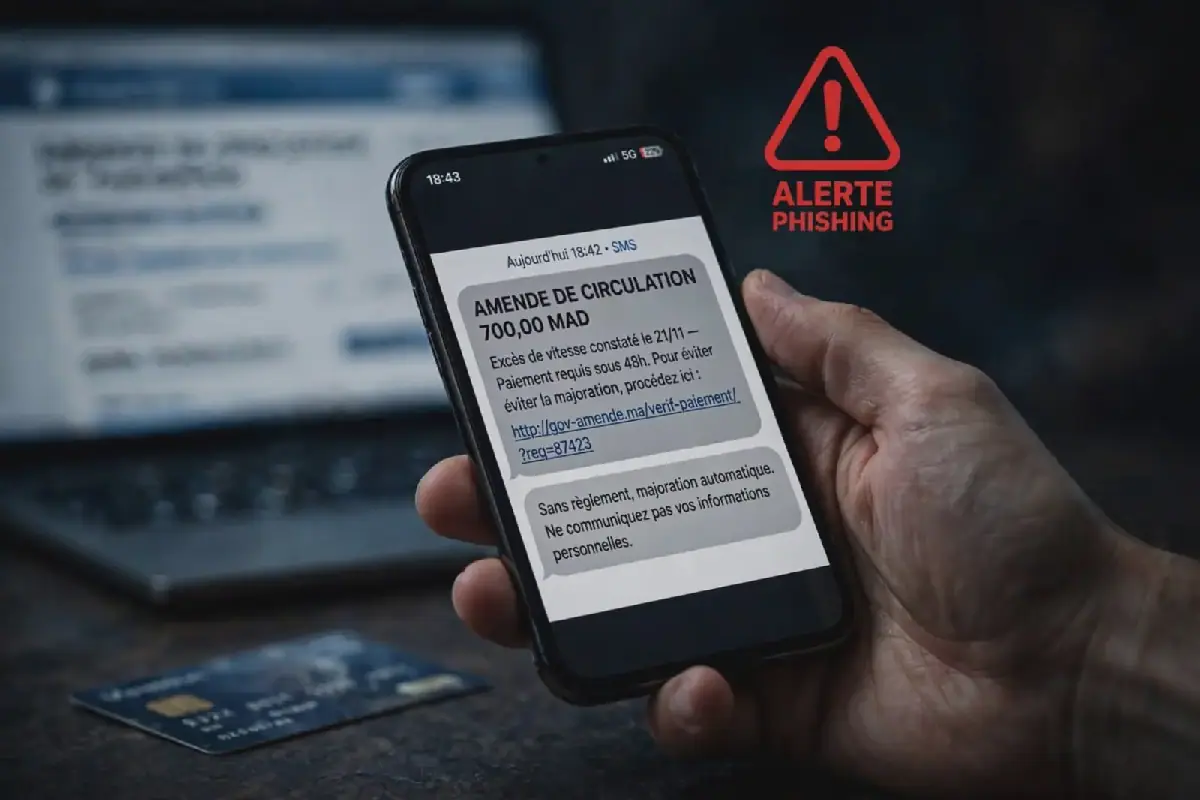
A recent incident in Morocco has highlighted the risks of online scams, where a citizen received a text message claiming he had committed a traffic offense and owed a fine of 700 dirhams. The message included a link to a website that appeared to be the official Ministry of Justice site. The citizen was asked to pay a reduced fine of 350 dirhams immediately. After entering his banking details, 1150 dirhams were withdrawn from his account.
The citizen, who shared his experience in a voice note, warned others to be cautious when receiving such messages and to avoid clicking on suspicious links. He emphasized that the scam site looked legitimate, but was actually designed to steal his banking information. The incident has raised concerns about online security and the need for citizens to be vigilant when interacting with websites and messages.
Moroccan authorities have issued a warning to citizens, advising them not to click on links sent via text messages and to instead visit official websites or relevant authorities to verify any fines or offenses. The authorities are urging citizens to be cautious and to report any suspicious activity. This incident highlights the importance of verifying the authenticity of websites and messages before sharing personal or financial information.
The scam is believed to be part of a larger trend of online phishing attacks, where scammers use fake websites and messages to trick citizens into revealing sensitive information. Moroccan citizens are advised to be cautious when receiving unsolicited messages or emails and to verify the authenticity of any requests for personal or financial information.
The Ministry of Justice has not commented on the incident, but other government agencies have emphasized the importance of online security and the need for citizens to be vigilant. The incident has also raised questions about the security of Morocco's online infrastructure and the need for more effective measures to prevent such scams.
Experts have advised citizens to use strong passwords, enable two-factor authentication, and keep their software and operating systems up to date to protect against online threats. They have also recommended that citizens report any suspicious activity to the relevant authorities and to be cautious when sharing personal or financial information online.
The Moroccan government has announced plans to launch a national alert system via mobile phones to warn citizens of potential risks and emergencies. The system, known as "MA-INDAR", aims to provide citizens with timely and accurate information to help them stay safe. The incident highlights the need for such systems to prevent and respond to online threats.
Key points
- Citizens are advised to verify the authenticity of websites and messages before sharing personal or financial information.
- The incident highlights the importance of online security and the need for citizens to be vigilant when interacting with websites and messages.
- Moroccan authorities are urging citizens to report any suspicious activity and to be cautious when receiving unsolicited messages or emails.