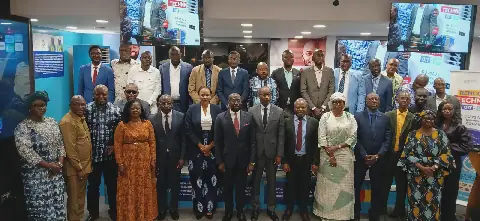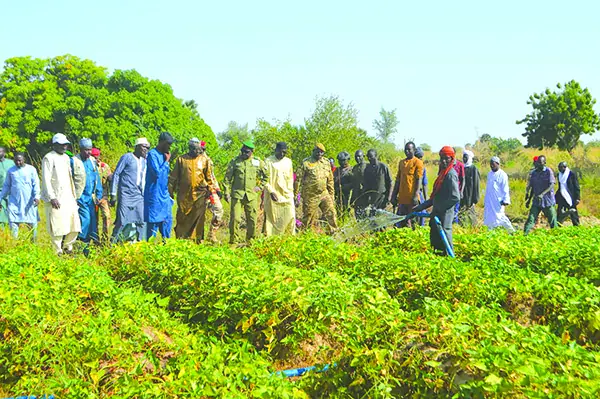
The governor of Niger's Dosso region, Colonel-major Bana Alhassane, recently visited the Falmey department to inspect the implementation of the Grande Irrigation program. The program, initiated by President Abdourahamane Tiani, aims to enhance agricultural production and food security in the region. During the visit, the governor observed the operation of 10 solar-powered boreholes, which have significantly improved irrigation for local farmers. The boreholes, with an average depth of 6 meters and a flow rate of 5 m³ per hour, have enabled farmers to work from 7 am to 5 pm, greatly enhancing their productivity.
The solar-powered irrigation system has alleviated the difficulties faced by farmers in accessing fuel for their motor pumps. According to Abass Abdoul Moumouni, president of the Gomni Gorou group, the new system has allowed them to work in better conditions, and they are committed to increasing their production. The program has also contributed to the region's goal of achieving food self-sufficiency. With 1,000 equipped boreholes distributed across the Dallol Bosso, the region is expected to see a significant boost in agricultural production.
The Grande Irrigation program is part of the government's efforts to develop the socio-economic sector. The program aims to improve the living conditions of the population and enhance food security. According to the governor, the program's impact is already visible, with water flowing abundantly across the Dallol Bosso. He encouraged the beneficiaries to intensify their efforts to achieve food self-sufficiency, especially given the challenges posed by the recent rainy season.
The governor emphasized the importance of a genuine agricultural revolution to address production deficits. He expressed his satisfaction with the progress made, citing the acquisition of 1,000 boreholes as an exceptional opportunity for the Dosso region to boost its agricultural production sustainably. The governor's visit aimed to ensure the effective implementation of the Grande Irrigation program, one of the key initiatives of the Resilience Program for the Safeguard of the Nation.
The solar-powered irrigation program has brought relief to farmers in the Dosso region, who previously struggled with fuel shortages for their motor pumps. With the new system, farmers can now irrigate their crops more efficiently, leading to improved productivity and better working conditions. The program's success is attributed to the government's efforts to enhance food security and improve the living conditions of the population.
The Resilience Program for the Safeguard of the Nation aims to strengthen food security and improve the living conditions of the population. The Grande Irrigation program is one of the key initiatives under this program, and its success is expected to have a positive impact on the region's agricultural sector. The government's commitment to implementing such programs demonstrates its dedication to improving the lives of its citizens.
The implementation of the Grande Irrigation program in the Dosso region is a significant step towards achieving food self-sufficiency in Niger. With the solar-powered irrigation system, farmers can now produce more crops, leading to improved food security and better economic prospects. The program's success will likely serve as a model for other regions in Niger, and its impact will be closely monitored by the government and other stakeholders.
Key points
- The program aims to achieve food self-sufficiency in the Dosso region.
- The solar-powered irrigation system has improved working conditions for farmers.
- The program is part of the government's efforts to develop the socio-economic sector.