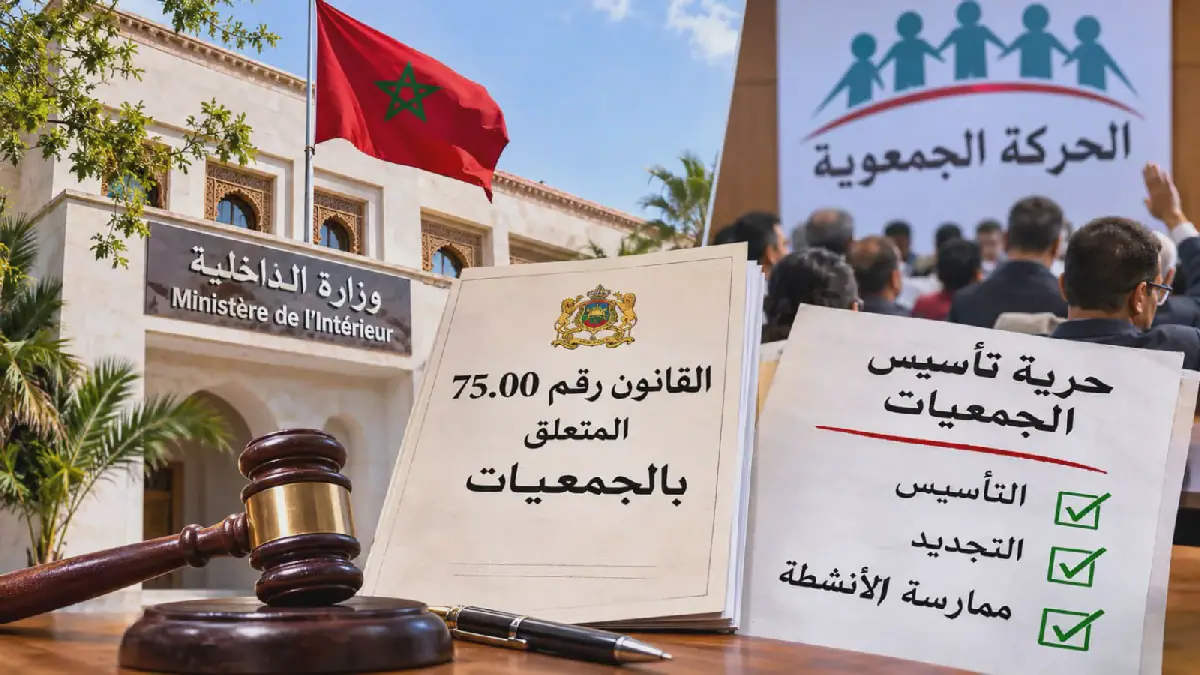
On the 68th anniversary of the 1958 decree regulating the right to form associations, the "Dynamic Call of Rabat" initiative has reignited discussions on the state of associative freedoms in Morocco. In a statement released on November 15, 2026, the group urged the government to lift restrictions on associations, respect their autonomy, and put an end to administrative practices that hinder their establishment, renewal, and activities. This call to action coincides with the evolution of the associative movement since 1958.
The statement highlighted the challenges faced by associations today, necessitating a review of the legal framework and administrative practices. The 1958 decree was a significant milestone in organizing associative work in Morocco, with subsequent amendments in 1973 and a major overhaul in 2002 through Law 75.00. Despite progress, the associative movement faces obstacles that require revisiting the legal and administrative landscape. The "Dynamic Call of Rabat" criticizes certain administrative practices that they believe contravene the legal provisions governing the right to form associations.
One of the main concerns raised is the continued use of a prior authorization system by some administrations, rather than adhering to the declaration system established by law. The group also pointed out that some administrative authorities deliberately refuse to accept association files or delay issuing legal receipts. Furthermore, they noted that certain documents and procedures are requested without legal basis, effectively undermining the principle of freedom of association and creating administrative hurdles that hinder the natural functioning of associations.
The statement also drew attention to court judgments in favor of associations in disputes with territorial administrations, urging administrative authorities to comply with these rulings. This emphasizes the need for respect for the authority of judicial decisions and the principle of administrative accountability to the law. By calling for the revision of Law 75.00, the "Dynamic Call of Rabat" seeks to align it with constitutional principles related to freedom of association and the technological advancements in society, particularly in digital administrative transactions.
The initiative advocates for simplifying administrative procedures and leveraging digitalization to facilitate the establishment and renewal of associations. This approach aims to prevent administrative processes from becoming obstacles to civil initiatives. The issues raised highlight the complex relationship between the associative movement and administrative authorities, which should be governed by clear legal rules that ensure freedom of organization and initiative while respecting the law.
The stakes are particularly high given the renewed debate on the role of civil society in public life, the limits of administrative intervention, and the ability of the current legal framework to guarantee the effective exercise of freedom of association. The "Dynamic Call of Rabat" poses a question that goes beyond the revision of legal texts, focusing on the extent to which the administration respects the principle of freedom of association as a legal and constitutional right.
Ultimately, the core message of the statement is that the development of civil society cannot be achieved solely through official calls to enhance its roles without accompanying legal and administrative guarantees. These guarantees would allow associations to establish, operate, and renew themselves autonomously, putting an end to practices that could turn the right to organize into a lengthy process of waiting and administrative confrontation.
Key points
- Moroccan associations are demanding the lifting of restrictions and revision of laws to enhance their freedom and autonomy.