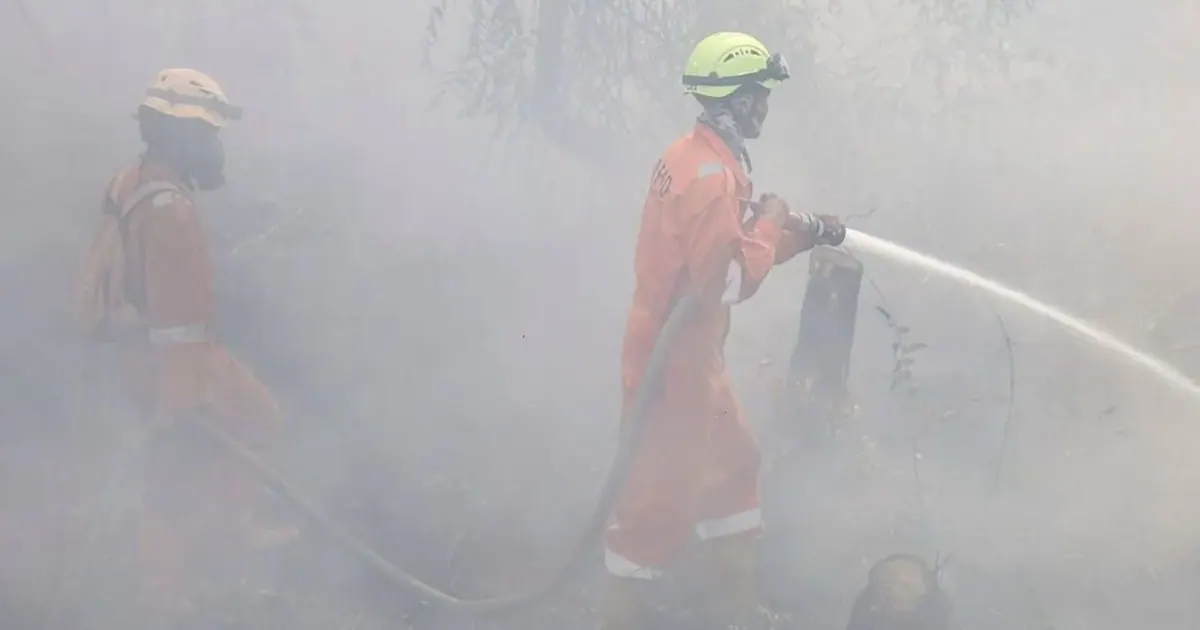
Indonesia is battling a severe health crisis as wildfires and haze have led to over 175,000 reported cases of respiratory illnesses since August. The country's health ministry reported that the cases range from mild coughs to more serious conditions like pneumonia. The situation is particularly concerning for toddlers, with over 40,000 cases reported among this age group.
The wildfires have been raging for weeks, blanketing parts of Indonesia, Malaysia, and Singapore in toxic smog. The air quality indices in these countries have reached "unhealthy" levels, posing a significant threat to public health. In response, Indonesia has deployed over 54,000 officials and dozens of jets to the islands of Borneo and Sumatra for water bombing efforts.
Despite these efforts, the vast territory and challenging peatland conditions make it difficult to extinguish the fires. Indonesia's Cabinet Secretary, Teddy Indra Wijaya, stated that all forces are working together to combat the fires, reduce the impact of the smoke, and protect the public. The country regularly experiences wildfires during its annual dry season, but this year's fires have been exacerbated by a "Godzilla" El Nino event.
The independent forest monitoring platform, Nusantara Atlas, has detected around 734,000 hotspots across Indonesia, a figure that is over 30% higher than that of 2019, one of the country's worst wildfire seasons. Since January, at least 895,657 hectares of land have been burned, nearly six times the size of Greater London.
The wildfires have led to school closures and a surge in hospital admissions across Indonesia. According to the health ministry, the number of people suffering from wildfire-related respiratory illnesses more than doubled to 113,336 by September 9, up from 50,891 on September 1. The toxic smog has also had a devastating impact on wildlife, including critically endangered orangutans.
An Indonesia-based wildlife foundation shared footage of an orangutan that was discovered by a farmer on a palm oil plantation in West Kalimantan, one of the hardest-hit provinces. The great ape was rescued and given emergency treatment for hypoxia but later died. The incident highlights the far-reaching consequences of the wildfires and haze.
The situation in Indonesia is being closely monitored, and efforts are underway to mitigate the effects of the wildfires and haze. The country's health ministry continues to work to address the health crisis, while officials work to extinguish the fires and prevent further damage.
Key points
- Over 175,000 people in Indonesia have suffered from respiratory illnesses since August due to wildfires and haze.
- The wildfires have led to school closures and a surge in hospital admissions across Indonesia.
- The toxic smog has had a devastating impact on wildlife, including critically endangered orangutans.