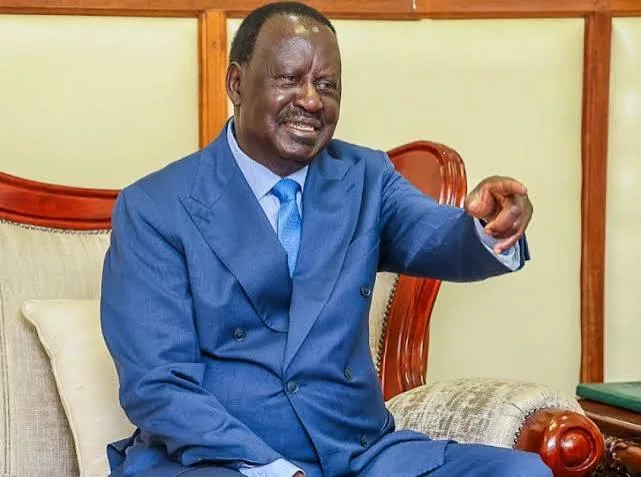
Mombasa county is mourning the loss of Raila Odinga, a leader who formed a deep connection with the city and its people. For over two decades, the island city and the wider Coast region did not just vote for Odinga; they embraced him, defended him, and made his political struggles their own. This bond was not just a slogan, but a description of trust, affection, and political kinship built over years. Mombasa saw in Odinga a leader who understood what it meant to live at the margins of power.
Odinga's politics resonated with Mombasa's diverse population, comprising African, Arab, Asian, Christian, Muslim, and indigenous communities. His language was one of inclusion, equal citizenship, and the right of every Kenyan to belong fully to the republic. The Coast region had long-standing concerns, including land ownership, historical dispossession, marginalization, unemployment, and access to public resources. Odinga consistently brought these issues to the national conversation, advocating for the rights of coastal communities.
Devolution was a key aspect of Odinga's connection with Mombasa. The 2010 Constitution created county governments, empowering local communities to make decisions and manage resources. Odinga championed this constitutional transformation, which enabled Mombasa to shape its own health system, invest in education, improve local roads, and address urban challenges. This connection was evident at the ballot box, with Odinga receiving 189,985 votes in Mombasa county in the 2013 presidential election, representing 69.77% of the county's valid presidential vote.
In the 2017 and 2022 elections, Odinga continued to secure a significant majority of votes in Mombasa. His bond with the city went beyond election seasons, with the Orange Democratic Movement (ODM) growing deep roots in the region. Mombasa produced some of ODM's most recognizable leaders and became one of its most dependable organizational bases. The party's endurance reflected the sense among residents that Odinga and ODM had given their concerns a national platform.
Governor of Mombasa and ODM deputy leader, Nassir, paid tribute to Odinga, highlighting his leadership qualities and the lessons he imparted. Nassir noted that Odinga taught his followers that leadership requires absorbing disappointment without surrendering conviction and that politics should be larger than the individual. As Nassir continues to serve Mombasa and ODM, he emphasized the importance of protecting the democratic space Odinga fought to expand and defending devolution.
Odinga's legacy in Mombasa extends beyond his electoral performance. He was received as one of the city's own, with residents familiar with his voice, mannerisms, battles, and story. In return, Odinga understood the soul of Mombasa: proud, diverse, resilient, sometimes rebellious, but always fiercely conscious of its dignity. As Kenyans remember Odinga, who passed away on October 15, 2022, they recall a leader whose footprints are everywhere in Kenya's democratic journey.
As Mombasa and ODM move forward, they carry the responsibility of honoring Odinga's legacy by protecting the democratic space he fought for and defending devolution. The values that made Mombasa embrace Odinga remain alive, and it is up to his followers to continue his work. With ODM and Mombasa at the forefront, Kenyans can expect to see the continuation of Odinga's vision for a more inclusive and equitable society.
Key points
- Raila Odinga formed a deep connection with Mombasa, championing devolution and inclusion.
- Odinga's bond with Mombasa went beyond election seasons, with the ODM growing deep roots in the region.
- Mombasa and ODM are committed to honoring Odinga's legacy by protecting the democratic space and defending devolution.