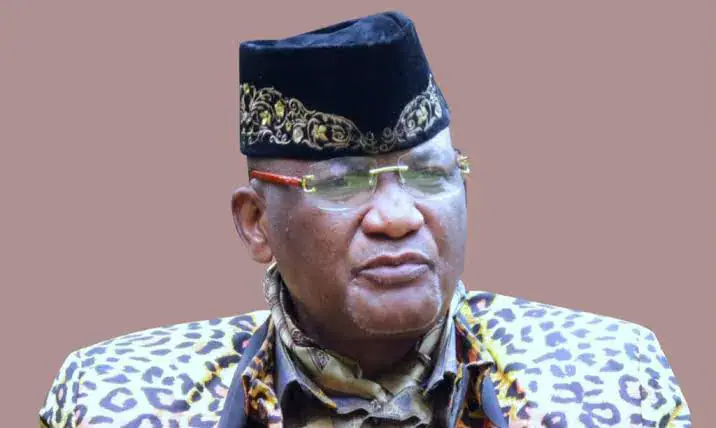
Moïse Moni Della, a prominent political figure in the Democratic Republic of the Congo, has expressed his surprise and approval of the C64 group's decision to meet with President Félix Tshisekedi. According to Moni Della, this move marks a significant shift in the group's stance, as they had previously criticized those who engaged with the president. The C64 group had been vocal in their opposition to Tshisekedi, but their recent meeting with him indicates a change in their approach.
Moni Della recalled his own experience of being criticized by the C64 group when he attended a consultation with President Tshisekedi after the fall of Bukavu. He was labeled a traitor for participating in the consultation, which the C64 group had boycotted. However, Moni Della defended his actions, stating that he responded to the president's patriotic call to address the country's crisis. He emphasized that his actions were guided by a sense of national interest and a commitment to values.
The C64 group's decision to meet with President Tshisekedi has been seen as a move towards mediation in the country's ongoing crisis. Moni Della welcomed this development, stating that dialogue and consultation are essential components of a democratic system. He noted that the C64 group's change in stance is a positive step towards finding a solution to the country's problems.
Moni Della also criticized the C64 group's previous behavior, where they attempted to dictate who could meet with the president and who could not. He argued that this approach was inconsistent with democratic principles and that it was not healthy for a group to claim a monopoly on opposition or proposals.
The C64 group's meeting with President Tshisekedi was held in Rome, a city often associated with diplomacy and dialogue. Moni Della noted that this meeting marked a significant shift in the group's approach, as they had previously been critical of those who engaged with the president. He welcomed the C64 group's conversion to a more pragmatic approach, which prioritizes national interest over ideological purity.
Moni Della's comments reflect a broader debate in the Democratic Republic of the Congo about the role of opposition groups and the need for dialogue in addressing the country's challenges. The C64 group's decision to meet with President Tshisekedi has been seen as a positive step towards finding a solution to the country's crisis.
The country's crisis has been marked by ongoing tensions between the government and opposition groups, as well as external factors such as the influence of neighboring countries. The situation remains complex, with many stakeholders vying for influence and power.
Key points
- The C64 group's decision to meet with President Tshisekedi marks a significant shift in their approach, as they had previously been critical of those who engaged with the president.
- Moïse Moni Della welcomed the C64 group's change in stance, stating that dialogue and consultation are essential components of a democratic system.
- The country's crisis has been marked by ongoing tensions between the government and opposition groups, as well as external factors such as the influence of neighboring countries.