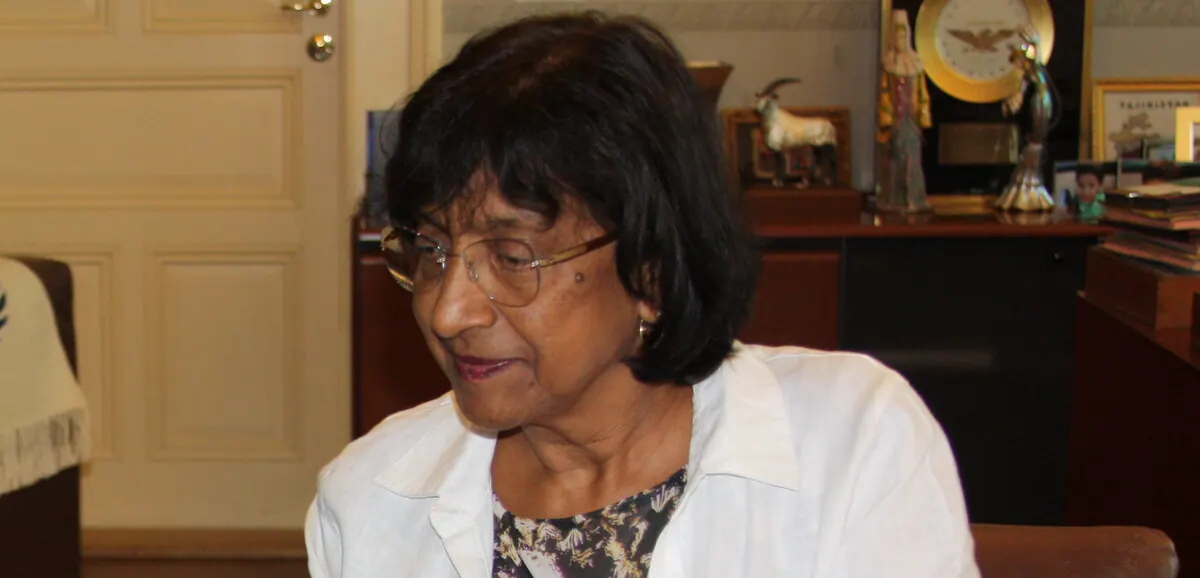
The Nobel Peace Prize was awarded to Navanethem "Navi" Pillay, a South African jurist, on October 9, 2026. The award has sparked varied reactions globally. Pillay was recognized for her commitment to human rights, particularly her work with the International Commission of Inquiry, which concluded that Israel's actions in Gaza constituted genocide.
The United Nations and South Africa have praised Pillay's dedication to human rights. Volker Türk, UN High Commissioner for Human Rights, stated that the Nobel Prize is a testament to the importance of human rights, the rule of law, and justice. He lauded Pillay as a true embodiment of international law and a fierce advocate for women's rights and feminism.
In contrast, Israel has strongly condemned the award. Israeli Prime Minister Benjamin Netanyahu expressed his indignation, stating that the Nobel Committee had lost its moral compass. He accused Pillay of contributing to the "diabolization of Jews." The Israeli Ministry of Foreign Affairs also denounced the award, claiming it legitimized anti-Israeli sentiment and hatred.
South African President Cyril Ramaphosa has welcomed the award, praising Pillay's courage, integrity, and lifelong commitment to justice. He noted that Pillay joins a distinguished group of South African Nobel Peace Prize laureates, including Albert Luthuli, Desmond Tutu, Nelson Mandela, and Frederik Willem de Klerk. Ramaphosa emphasized the significant impact South Africans have had on global peace, justice, and human progress.
The international community has largely applauded the award. Tomoko Akane, President of the International Criminal Court, highlighted the importance of Pillay's work in promoting international justice and the rule of law. Shabia Mantoo, spokesperson for the UN High Commissioner for Human Rights, described the award as "wonderful" and a testament to the necessity and value of human rights.
Other global leaders have also praised Pillay's achievements. Ursula von der Leyen, President of the European Commission, hailed Pillay as a defender of the persecuted, vulnerable, and marginalized. She noted Pillay's extensive experience in addressing some of humanity's darkest chapters, from apartheid in South Africa to the Rwandan genocide.
The Nobel Peace Prize award to Navi Pillay has sparked a range of reactions, reflecting the complexities of her work and its impact on global human rights.
Key points
- The Nobel Peace Prize was awarded to Navanethem "Navi" Pillay for her commitment to human rights.
- The award has elicited mixed reactions, with praise from the UN and South Africa, and condemnation from Israel.
- Pillay's work has had a significant impact on global human rights, and her award has been welcomed by many international leaders.