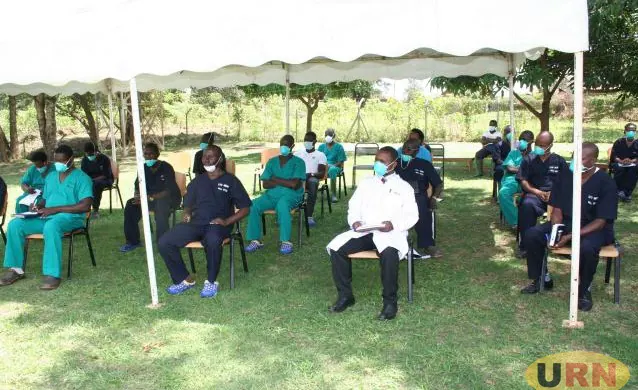
The World Health Organization's decision to remove Uganda from its list of countries facing severe health worker shortages has elicited mixed reactions. Stakeholders are divided over the opportunities and risks associated with exporting Ugandan health professionals. The WHO's Health Workforce Support and Safeguards List identifies countries with critical shortages of health workers where active international recruitment is discouraged. This measure aims to protect vulnerable health systems from losing essential medical personnel.
Uganda's indicators have improved sufficiently for the country to be removed from the list, according to Christabel Abewe, Technical Officer for Health Financing at the WHO Uganda office. The country is now producing more health workers in some cadres than the domestic health system can absorb, while shortages persist in others. This means Uganda can consider exporting some categories, particularly nurses and midwives. The country has previously received requests from countries like the UK and Germany to facilitate the recruitment of its health workers.
The prospect of exporting health professionals is not new, with discussions on labour export among medical professionals beginning about a decade ago. Dr Ekwaro Obuku, a former President of the Uganda Medical Association, claims efforts to establish a labour union and an exclusive labour export company for health workers were blocked by the government. This left some trained health professionals struggling to find employment, with some taking up petty jobs in Kampala. Obuku argues that the initiative should be driven by the private sector for Uganda to benefit financially.
Researchers at the Makerere University-based Economic Policy Research Centre have released findings on Uganda's potential for health service exports. They found that reliable data on Ugandans providing health services abroad is limited. However, available data indicates that 27.8% of Ugandan health professionals work in East Africa, 26.2% in Europe, and 19.8% elsewhere in Africa. Asia accounts for 16.7%, while only 3.2% work in North America. Kenya is the leading destination in East Africa, accounting for 71% of Ugandan health workers who have migrated within the region.
Philemon Okillong, a Research Analyst at the Economic Policy Research Centre, emphasizes the need for better data to understand and maximize the potential of health service exports. Brenda Kabasinguzi, Manager for Export Marketing Services at the Uganda Free Zones and Export Promotions Authority, says Ugandan health professionals have significant opportunities in international markets if properly positioned. Uganda needs to package its health services and provide clear information about the expertise and services available to compete effectively in the global market.
Dr Frank Asiimwe, President of the Uganda Medical Association, proposes that health workers should have at least three years of professional practice in Uganda before being allowed to take up jobs abroad. He emphasizes the need for greater coordination among stakeholders to ensure that exporting professionals does not undermine Uganda's health system. The removal of Uganda from the WHO safeguards list presents an opportunity, but the country must ensure that it does not export professionals prematurely.
The debate on exporting health professionals comes at a time when Uganda is seeking to formalize health worker exports. Abewe says health worker exports could potentially become a significant source of foreign exchange for Uganda if properly organized. With the country now removed from the list, there is an opportunity to formalize health worker exports, particularly given the mismatch between the number of professionals being trained and the number being recruited locally.
Key points
- The WHO removed Uganda from its health worker recruitment red list due to improved health worker indicators.
- Stakeholders have mixed reactions to Uganda exporting health professionals, citing both opportunities and risks.
- Better data is needed to understand and maximize Uganda's potential for health service exports.