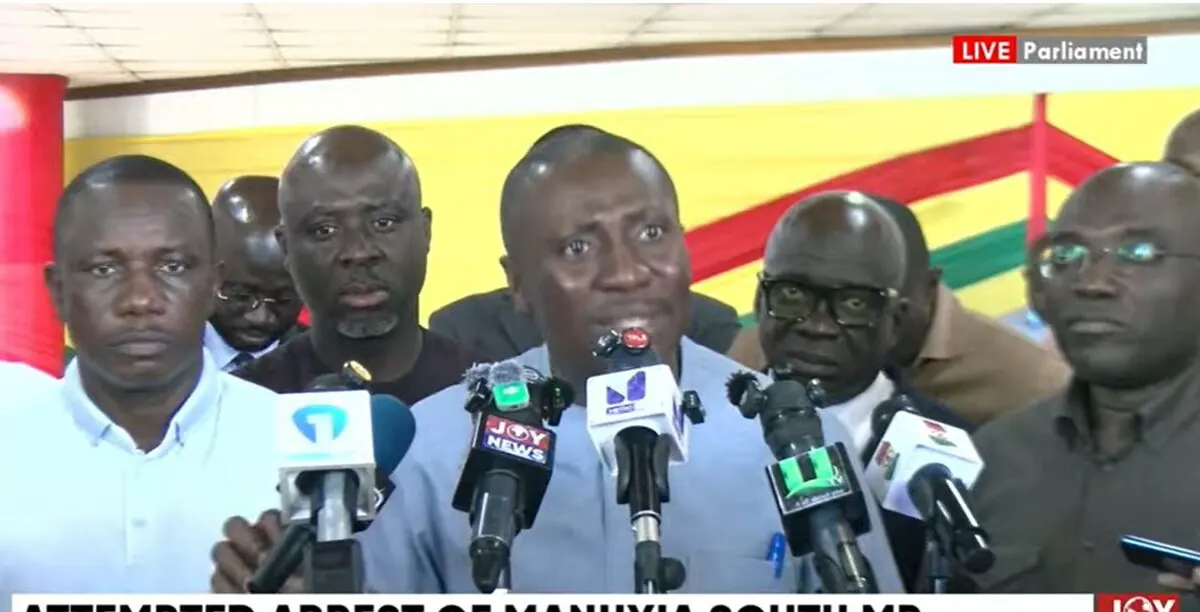
On September 23, 2026, Ghana's Minority Leader, Alexander Afenyo-Markin, addressed a press conference to clarify the established procedure for state security agencies seeking to have Members of Parliament appear before investigating bodies. According to Afenyo-Markin, agencies such as the Office of the Special Prosecutor, the Police Service, and the Economic and Organised Crime Office must formally write to the Speaker of Parliament to request the release of an MP.
The Speaker subsequently refers such requests to the leadership of Parliament, which works with the Legal Directorate to make arrangements for the affected MP to avail themselves to the investigating agency. Afenyo-Markin stressed that this arrangement does not amount to preferential treatment for MPs but is based on the nature of parliamentary work. He therefore questioned whether there had been a change in the procedure, given a recent incident involving an MP.
The incident in question involved an alleged attempt by officers believed to be from the Economic and Organised Crime Office to arrest Manhyia South MP Nana Agyei Baffour Awuah after he appeared at the Accra High Court on September 23, 2026. Afenyo-Markin's comments follow this incident and are aimed at clarifying the protocol for security agencies when dealing with MPs. The Minority Leader emphasized the importance of adhering to established procedures.
According to Afenyo-Markin, the procedure for arresting MPs involves a formal request to the Speaker of Parliament, who then coordinates with the leadership of Parliament and the Legal Directorate. This process ensures that the rights of MPs are protected while also allowing investigating agencies to carry out their duties. The Minority Leader's statement is seen as an effort to promote transparency and accountability in the handling of such cases.
The incident involving Baffour Awuah has sparked debate about the relationship between security agencies and MPs. While some have argued that MPs should be treated like any other citizen, others believe that their position requires special consideration. Afenyo-Markin's statement is an attempt to provide clarity on this issue and ensure that established protocols are followed.
Other stakeholders, including Deputy Speaker of Parliament, Philip Dafeamekpor, have also weighed in on the issue. Dafeamekpor warned that Parliament will resist breaches of arrest protocol for MPs. This statement underscores the importance of adhering to established procedures when dealing with MPs. The issue is likely to continue to be a topic of discussion in the coming days.
The clarification provided by Afenyo-Markin is seen as a positive step towards promoting understanding and cooperation between security agencies and Parliament. By outlining the established procedure, the Minority Leader hopes to prevent similar incidents in the future and ensure that the rights of all parties are protected. The incident has also raised questions about the need for security agencies to be aware of and respect the protocols in place.
Key points
- The Minority Leader has outlined the procedure for security agencies seeking to arrest MPs, which involves a formal request to the Speaker of Parliament.
- The incident involving Baffour Awuah has sparked debate about the relationship between security agencies and MPs.
- Other stakeholders, including Deputy Speaker Dafeamekpor, have also weighed in on the issue, emphasizing the importance of adhering to established protocols.