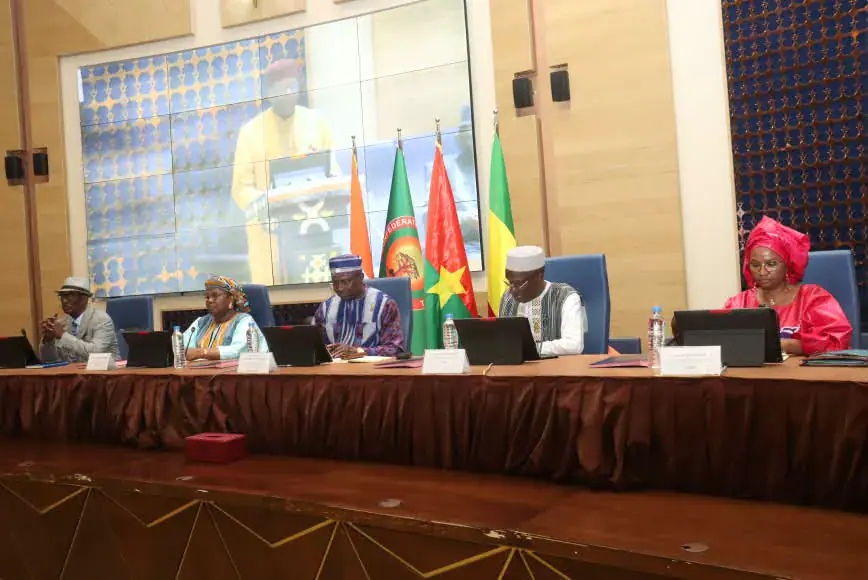
The ministers of education and training from the Sahel states, comprising Niger, Mali, and Burkina Faso, convened in Niamey on November 11, 2026, to adopt crucial documents aimed at bolstering educational cooperation among the three nations. The meeting, which marked the first ministerial session of the Conference of Ministers of Education, resulted in the adoption of a framework document and internal regulations for the Conference. These documents outline the vision, missions, objectives, and priority areas for cooperation in education.
The adopted framework document focuses on several key areas, including the gradual harmonization of curricula, promotion of national languages, enhancement of teacher training, access to inclusive and quality education, and development of technical and vocational training. The internal regulations of the Conference were also adopted, alongside the establishment of a technical committee to oversee the cooperation efforts. The committee will play a pivotal role in ensuring the effective implementation of the agreed-upon decisions.
In his closing remarks, Jacques Sosthène Dingara, the Burkinabé Minister of Basic Education, Literacy, and Promotion of National Languages, and President of the Conference, commended the outcomes of the meeting. He emphasized that the gathering represents a significant milestone in concretizing educational cooperation within the confederal space of the Sahel states. Dingara underscored the importance of education and training as essential levers for sovereignty, economic transformation, and endogenous development.
Minister Dingara called for the swift translation of the adopted decisions into concrete and measurable actions, ensuring the regular and effective functioning of the Conference. He also praised the commitment of experts from the three countries and expressed gratitude to the Nigerien government and people for their hospitality. The meeting resulted in several recommendations, including the establishment of an Experts Committee for the Conference of Ministers, the formal nomination of national focal points, and the formalization of the technical secretariat.
The ministers also agreed to establish a shared digital platform for the confederation and to develop an activity program for 2027. They emphasized that the construction of an integrated educational and training space should respect national specificities while promoting the gradual convergence of policies, standards, and qualification systems. Regular consultation will be maintained to monitor the implementation of the adopted decisions and to continue the operationalization of the Conference.
The next ordinary session of the Conference will be held in Burkina Faso, with the date to be communicated later. The ministers reaffirmed their commitment to strengthening solidarity among the three states and to enhancing cooperation in the education sector. This cooperation aims to improve educational outcomes and contribute to the socio-economic development of the Sahel region.
The successful conclusion of the Niamey forum marks a significant step towards achieving the objectives of the Sahel states' educational cooperation. The implementation of the agreed-upon documents and recommendations is expected to have a positive impact on the education sector in Niger, Mali, and Burkina Faso. The cooperation will focus on improving access to quality education, enhancing teacher training, and promoting national languages.
Key points
- Adoption of foundational texts for educational cooperation among Sahel states.
- Establishment of a technical committee to oversee cooperation efforts.
- Development of a program of activities for 2027 to implement agreed-upon decisions.