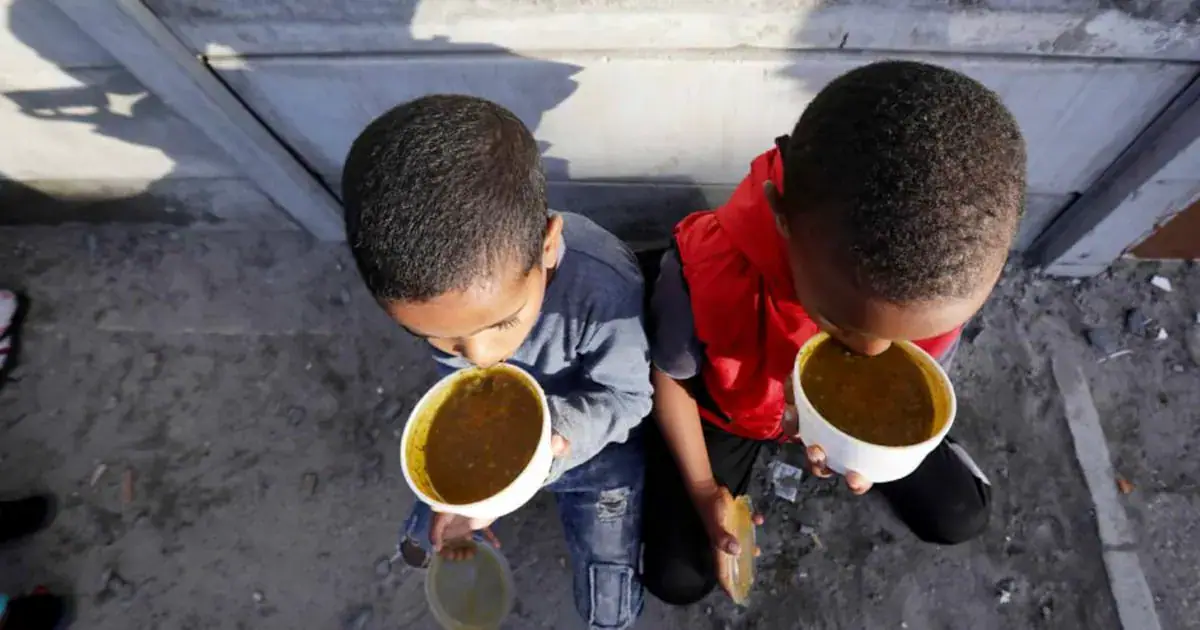
Despite three decades of democratic progress in South Africa, millions of children continue to grow up in poverty, face violence, and experience severe inequalities. The latest South African Child Gauge 2026, released by the University of Cape Town's Children's Institute, paints a concerning picture of childhood in the country. The report highlights that poverty, unemployment, violence, and inequality continue to undermine children's development and life chances.
According to the report, 68% of children live below the upper-bound poverty line, while 37% live below the food poverty line. Spatial, racial, gender, and income inequalities, high unemployment, violence, and fragmented families continue to shape the lived experiences and life chances of millions of children and their caregivers. The report also found that 42% of children had experienced some form of violence or maltreatment.
The South African Child Gauge monitors the state of children in the country, tracing the evolution of policies, laws, and practices while assessing the extent to which services and outcomes for children have improved over the past three decades. While significant progress has been made in improving children's living conditions and access to essential services, the report warns that structural inequalities inherited from apartheid remain deeply entrenched.
The report highlights that 28% of children under the age of five were stunted, and only 54% of children attending early learning programmes were developmentally on track. Additionally, the proportion of young people aged between 15 and 24 who are not in employment, education, or training (Neet) remains stubbornly above 30% for the past 20 years.
Paula Proudlock, one of the editors of the 19th edition, noted that improvements in access to services had contributed to better outcomes for children, including a decline in the proportion of children living below the food poverty line and a reduction in the under-five mortality rate. However, she warned that progress was stalling, with fiscal austerity increasingly threatening gains made over the years.
The authors of the Child Gauge 2026 are calling on government and its partners to build on existing successes, strengthen programmes that have demonstrated their potential to reach children at scale, and provide greater support to frontline services in districts with particularly poor child outcomes. They emphasize that investments in children today have far-reaching consequences for their lifelong health, development, and employment prospects.
The editors stress that efforts to improve children's wellbeing should go beyond national averages and focus on addressing inequalities between communities. They argue that progress requires government to narrow the gap between the best- and worst-served children over time, and that it is crucial to recognize that progress is not simply about improving the national average.
Key points
- 68% of South African children live below the upper-bound poverty line.
- 42% of children have experienced some form of violence or maltreatment.
- Progress in improving children's living conditions is stalling due to fiscal austerity.