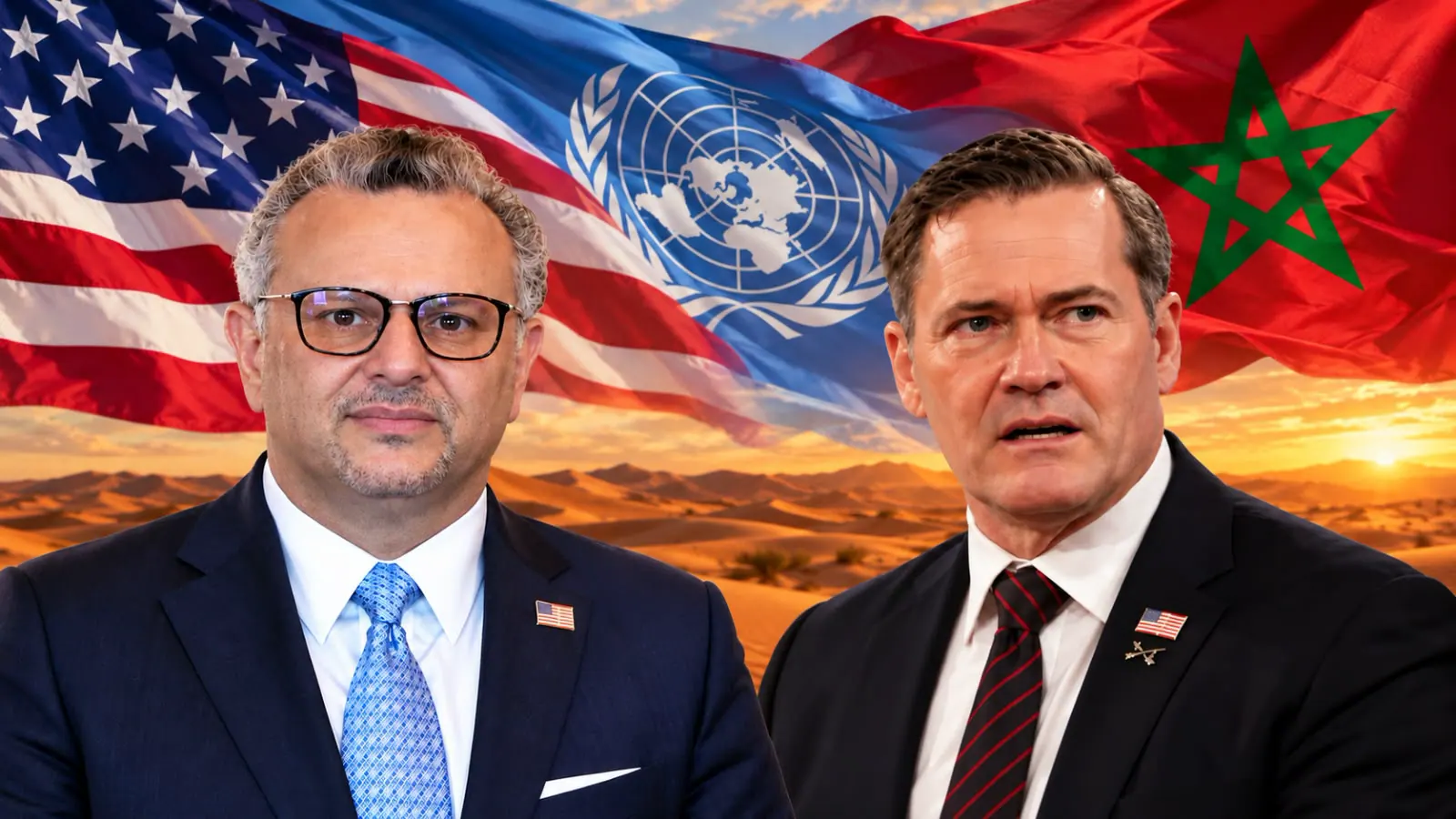
In a recent statement, US Ambassador to the United Nations Mike Waltz countered remarks made by Masood Pulus, US President Donald Trump's advisor for the Middle East and Africa, on the Western Sahara conflict. Pulus had stated that a resolution to the conflict did not seem imminent. Waltz reaffirmed the US position, pushing the Western Sahara negotiations in the right direction. He met with a Polisario Front delegation in New York.
Waltz told the Polisario Front delegation that Tindouf camp residents have waited 50 years for a solution and deserve real options, not another decade of waiting. He emphasized that the basis for a solution is already on the table. This reaffirms US support for Morocco's autonomy proposal under Moroccan sovereignty. The US recognizes the difficulty in reaching a near-term settlement but remains committed to this approach.
Many observers see Waltz's comments as a correction and re-evaluation of Pulus's message. The Polisario Front and Algeria's rejection of Morocco's proposal does not make a solution impossible or justify restarting negotiations from scratch. Waltz's statement underscores that the foundation for a settlement exists, and the next step is to transition from waiting to serious negotiations.
The timing of Waltz's statement is significant, coming after a direct meeting with a Polisario Front delegation. Emphasizing that the basis for a solution is on the table reflects a US push for parties to engage with the existing political process rather than maintaining a stalemate. This approach aims to encourage serious negotiations.
The difference between Pulus's comments and Waltz's clarification not only confirms the stability of the US position but also reiterates the necessity of finding a solution despite obstacles and delays from certain parties. The US urges the Polisario Front and Algeria to engage seriously in the settlement process, stressing that prolonged waiting is no longer an option.
Waltz's statement appears to counter Pulus's remarks and redirect Western Sahara negotiations towards the correct path. This reflects the Trump administration's desire to continue the diplomatic process to end the longstanding conflict rather than leaving it open to further rounds of waiting and negotiation.
The US stance, as conveyed by Waltz, encourages parties to work towards a negotiated solution based on Morocco's autonomy proposal. This approach seeks to bring about a peaceful resolution to the Western Sahara conflict, which has endured for decades.
Key points
- US Ambassador to the UN Mike Waltz emphasizes the need for a solution to the Western Sahara conflict.
- Waltz's statement counters remarks by Masood Pulus, US President Trump's advisor for the Middle East and Africa.
- The US supports Morocco's autonomy proposal under Moroccan sovereignty as the basis for a solution.