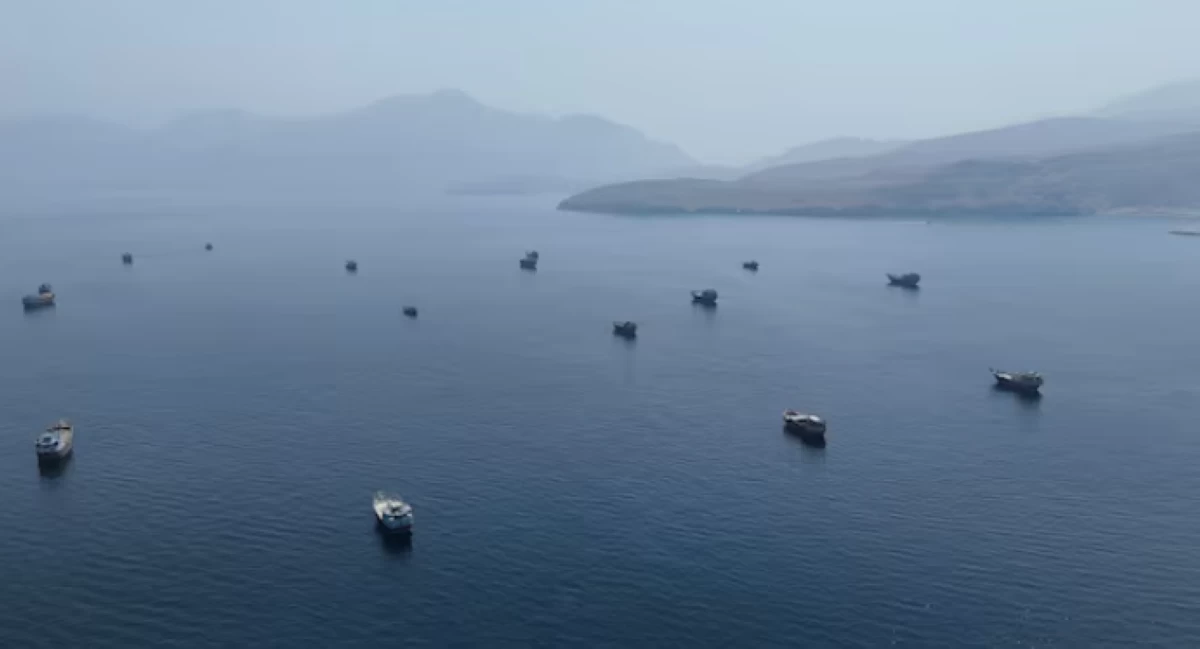
Despite continued attacks on vessels traversing the Strait of Hormuz, Middle East crude oil exports have surpassed pre-war levels. According to shipping data released by Kepler, a company specializing in vessel tracking, exports exceeded pre-war levels on September 24 and between September 27-29. During this period, exports ranged from 19.5 million to 22.5 million barrels per day, compared to an average of 18 million barrels per day from March 2025 to February 2026.
The seven-day moving average of exports stood at 18.5 million barrels per day as of October 1. The total exports of crude oil, petroleum products, chemicals, and non-gaseous liquids averaged 22.4 million barrels per day during the seven days ending on September 30. This uptick in exports occurs against the backdrop of heightened tensions in the region, with ongoing attacks on oil tankers within the Strait of Hormuz and its surroundings.
The number of liquefied natural gas (LNG) shipments departing via the Strait of Hormuz in September reached its highest monthly level since February. However, it is noted that the data does not include vessels that may have crossed the strait after disabling their automatic identification systems to avoid detection. Prior to the outbreak of war on February 28, the strait saw approximately 125 large commercial vessels passing through daily.
These vessels included oil and gas tankers, cargo ships, and container ships, with around 20% of the world's daily crude oil and LNG supplies passing through the strait. Despite this, attacks on oil tankers have continued, with at least seven incidents reported, according to a report by maritime intelligence firm Marissec. The British Maritime Trade Operations reported at least one attack per day in the Strait of Hormuz or the Gulf of Aden since October 2.
Marissec warned that commercial vessels transiting the strait face increasing and unpredictable military threats. The firm's intelligence suggests that some incidents may be the result of Iranian forces launching missiles towards predetermined engagement zones. These missiles can detect and target available radar signals, making the mere presence of vessels in those areas during the time of attack a primary risk factor.
The situation in the Strait of Hormuz remains volatile, with concerns over the safety of vessels and the potential for further escalation. The ongoing conflict and its impact on global oil supplies have raised concerns among industry stakeholders and policymakers. As the situation continues to unfold, vessel tracking and maritime intelligence will play a crucial role in understanding and mitigating the risks associated with transiting the strait.
The development highlights the complex interplay between geopolitical tensions, maritime security, and global energy supplies. As the region continues to navigate these challenges, the international community will be closely monitoring the situation to assess the potential implications for global oil markets and the safety of maritime trade.
Key points
- Middle East oil exports have surpassed pre-war levels despite ongoing attacks on vessels in the Strait of Hormuz.
- The seven-day moving average of exports stood at 18.5 million barrels per day as of October 1.
- The Strait of Hormuz remains a critical chokepoint for global oil supplies, with around 20% of the world's daily crude oil and LNG supplies passing through it.