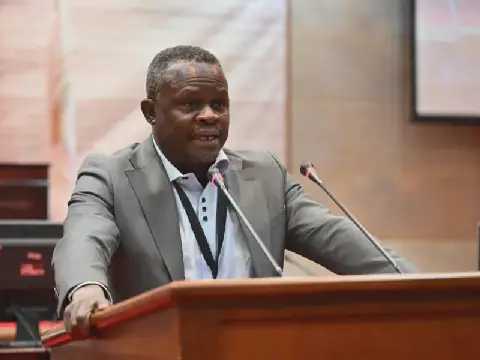
Abdul El-Sayed, a 42-year-old epidemiologist and public health administrator, made history by becoming the first Muslim elected to the US Senate. He defeated Republican Mike Rogers in the Michigan Senate race on Tuesday night. El-Sayed ran on a platform of universal healthcare, economic populism, and civil rights. His campaign was marked by fierce criticism of the US war in Iran and calls for an end to all US military aid to Israel. El-Sayed's victory speech included a dig at President Donald Trump and Vice President JD Vance.
During his victory speech, El-Sayed addressed President Trump, saying, "I know you struggled with my name. So after JD swears me in in January, you can just call me Senator." This remark was a clear reference to Trump's repeated mispronunciation of El-Sayed's name during the campaign. El-Sayed also turned to Vice President JD Vance, stating, "JD, habibi, there is this delicious irony in the fact that you're constitutionally obligated to swear me in in January." El-Sayed's tone was seen as a mix of humor and defiance.
El-Sayed also took aim at the American Israel Public Affairs Committee (AIPAC), which spent $42 million against his campaign. He said, "Thank you for the opportunity to beat you twice." El-Sayed has been critical of US military aid to Israel, arguing that taxpayer funds should be spent on domestic needs such as education and healthcare. He emphasized that his campaign was about promoting equal rights to peace, dignity, and self-determination, which he believes is not hate but love.
El-Sayed's campaign was marked by controversy, with critics accusing him of promoting hate speech. However, El-Sayed argued that advocating for Palestinian kids to grow up in their ancestral land without being murdered by US tax dollars is a matter of human rights. He emphasized that his campaign was about promoting a more equitable distribution of resources, saying, "We want our taxes spent here, for schools here, healthcare here, and infrastructure here."
Despite last-minute support for Rogers from Rep. Haley Stevens, whom El-Sayed had beaten in the Democratic primary, El-Sayed emerged victorious. His campaign was seen as a long shot, but he was able to mobilize a strong grassroots effort. El-Sayed's victory is seen as a significant milestone for Muslim Americans and a testament to the diversity of the US electorate.
El-Sayed's election has significant implications for US politics, particularly in the areas of foreign policy and social justice. As a public health administrator, El-Sayed brings a unique perspective to the Senate. He has called for a more nuanced approach to US foreign policy, particularly in the Middle East. El-Sayed's commitment to social justice and human rights has earned him a reputation as a progressive leader.
El-Sayed will be sworn in as a US Senator in January, alongside Vice President JD Vance. His election marks a new chapter in US politics, one that is characterized by greater diversity and a more nuanced approach to foreign policy. As the first Muslim elected to the US Senate, El-Sayed's victory is a significant milestone for Muslim Americans and a testament to the power of grassroots politics.
Key points
- El-Sayed becomes the first Muslim elected to the US Senate.
- El-Sayed campaigned on universal healthcare, economic populism, and civil rights.
- El-Sayed criticized US military aid to Israel and called for a more equitable distribution of resources.