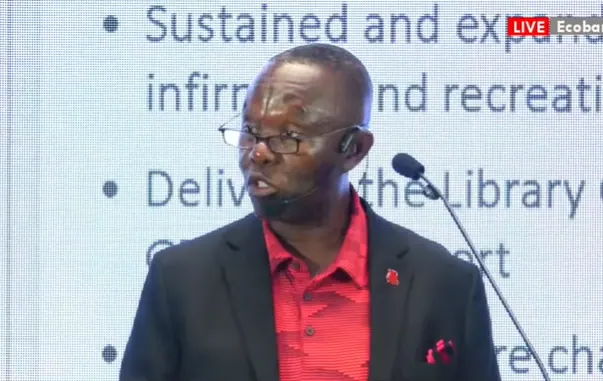
Professor B.K. Baiden, a Professor of Construction Project Delivery at the Kwame Nkrumah University of Science and Technology (KNUST), has emphasized the need for broader stakeholder involvement and innovative funding mechanisms to address Mfantsipim School's infrastructure needs. He made this call at the 11th MOBA Annual Engagement Series at the Ecobank Ghana Head Office on September 30, under the theme “Sustaining Mfantsipim's Legacy Beyond 150 Years.”
Mfantsipim School's growing population could place pressure on its existing infrastructure stock, making it necessary for the school and its stakeholders to plan ahead and identify sustainable sources of funding for future projects. Professor Baiden noted that infrastructure planning must account for both present needs and future generations. He stressed that infrastructure was central to the effective functioning of any society and required continuous planning as societal needs changed.
Professor Baiden traced Mfantsipim's infrastructure development to the school's relocation to Kwabotwe Hill in 1931. The move was a deliberate step towards establishing a permanent and well-planned environment for learning and boarding. The layout provided space for core academic and boarding activities, supported by facilities including an infirmary, library, ICT facility, and dining hall, while teachers' accommodation was situated in quieter areas around the hill.
The Methodist Church was initially the major stakeholder in providing infrastructure for the school before the Education Act of 1961 increased the government's responsibility in the sector. The Old Boys Association (MOBA) has also remained an important stakeholder in expanding and maintaining the school's infrastructure. MOBA has supported the expansion of classrooms, the infirmary, and recreational and learning facilities, including a library complex jointly delivered with GETFund support.
However, Professor Baiden said the scale of Mfantsipim's future infrastructure needs required stakeholders to reconsider how projects were funded. He questioned whether the current infrastructure stock would be sufficient over the next 20 or 30 years and whether MOBA's support could adequately fill gaps left by the government. He called for greater involvement of the Parent-Teacher Association (PTA), well-wishers, and other stakeholders in financing infrastructure projects.
Professor Baiden proposed discussions with the government on incentives for corporate institutions that support infrastructure development at the school. He suggested tax breaks for corporate institutions that partner with the school in the provision of much-needed infrastructure. Additionally, he proposed the establishment of an endowment fund to provide additional financial resources for the school's long-term infrastructure needs.
Professor Baiden concluded by calling for stronger engagement and consultation among stakeholders before infrastructure projects are finalised. He welcomed the recently launched Legacy Project, describing it as a “bold and laudable” initiative that deserved full support. Key points include the need for broader funding partnerships, innovative funding mechanisms, and greater stakeholder involvement to address Mfantsipim School's infrastructure needs.
Key points
- Mfantsipim School requires broader funding partnerships to address its growing infrastructure needs.
- Professor B.K. Baiden proposes innovative funding mechanisms, including tax breaks for corporate institutions and an endowment fund.
- The school's infrastructure planning must account for both present needs and future generations.