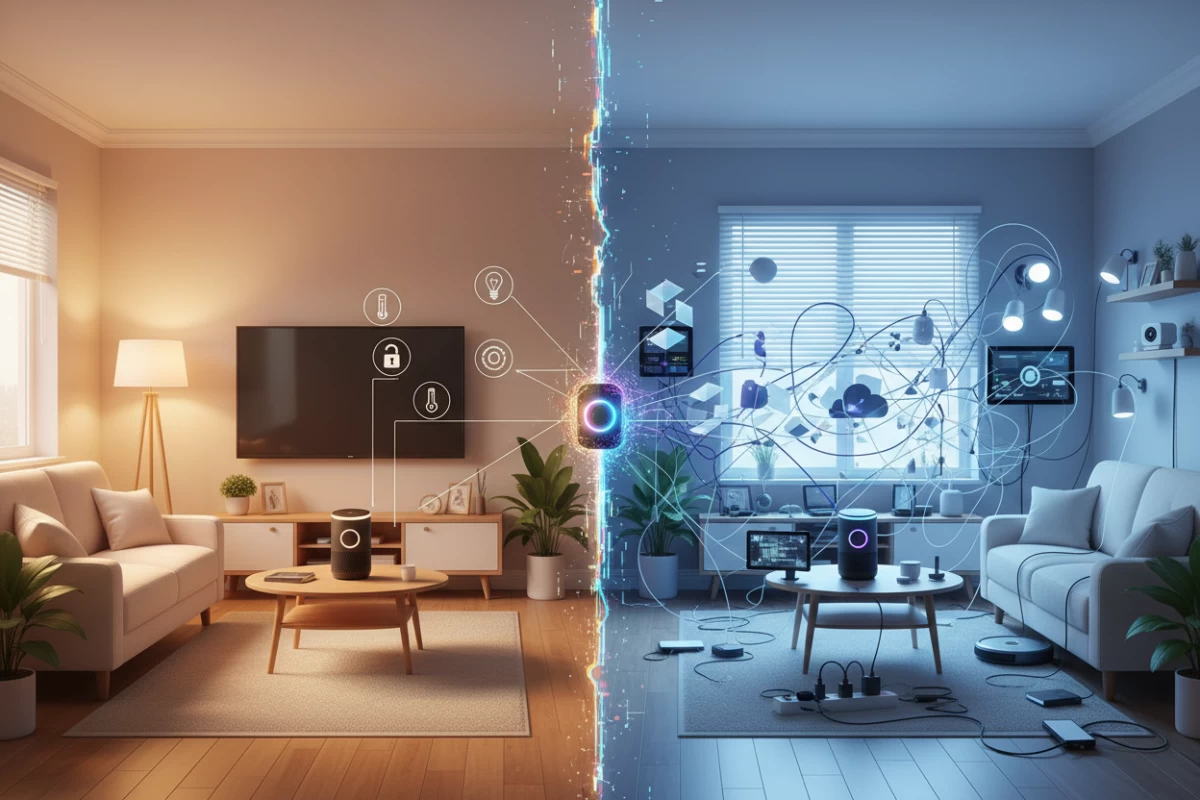
Meta has introduced a new project called "Muse Gadgets," which allows developers to create smart home devices that can be controlled using voice commands. The devices can be integrated with various home appliances, such as lighting, TVs, and sound systems. This technology aims to make it easier for users to control their smart home devices with a single interface.
Meta has released open-source software tools that enable developers to build smart devices using small computers like Raspberry Pi or ESP32 boards. These devices can be equipped with screens, microphones, and sensors to create unique home assistants. This development has the potential to revolutionize the way people interact with their homes, making it more convenient and automated.
To connect these devices to the home network, Meta has introduced the "Muse Home Link" device, which allows the assistant to communicate with compatible devices. However, this device is currently only available for free to subscribers in the United States, with no announced plans for release in the Arab markets. This limited availability raises questions about the accessibility of this technology in other regions.
One of the main benefits of this technology is that it eliminates the need for multiple applications to control different smart devices. With a single AI-powered assistant, users can control all their devices and give them commands to turn on or off, or adjust settings like lighting. This streamlined approach can make it easier for users to manage their smart homes.
However, concerns arise regarding privacy and security, particularly if the AI assistant makes a wrong decision. For instance, if the assistant mistakenly locks the doors, it could have serious consequences. Meta has warned against relying on these devices for critical functions like home security, medical emergencies, or other sensitive tasks, due to the potential for malfunctions.
The connection of these devices to the internet also raises concerns about data security, as some data will be processed in the cloud. Therefore, it is crucial for users to be aware of the applications and devices they grant access to. The success of smart homes depends on the ability of different devices to communicate with each other using standardized protocols, which remains a challenge for this technology.
As the market moves towards integrating AI into daily life, it is likely that we will see more advanced smart home devices that can suggest actions and request user approval before execution. The adoption of this technology in the Arab world will depend on factors like language support, data protection, and user control.
Key points
- Meta's new smart home devices can be controlled using voice commands and integrated with various home appliances.
- Concerns arise regarding privacy and security, particularly if the AI assistant makes a wrong decision.
- The success of smart homes depends on the ability of different devices to communicate with each other using standardized protocols.