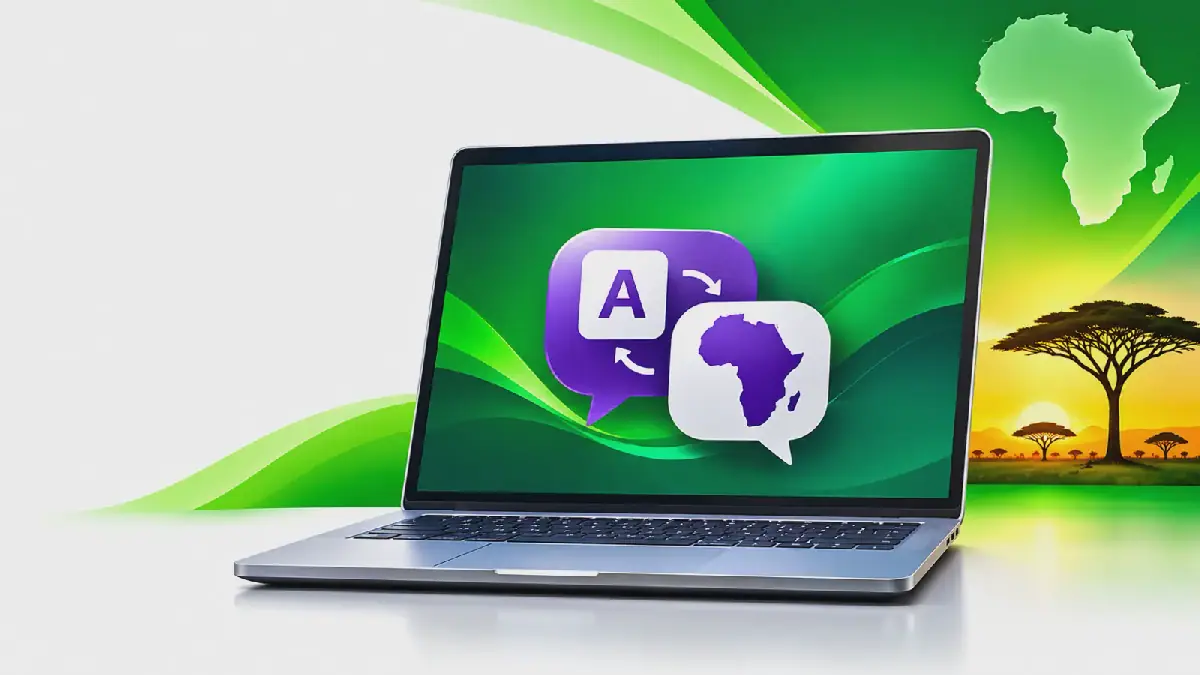
For millions of Africans, accessing digital services is closely tied to internet availability and cost. Artificial intelligence is transforming communication across languages, but many translation tools require an internet connection, leaving users with limited connectivity at a disadvantage. Kenyan software developer Ruth Shallom is addressing this issue with Lugha Desk, a free, open-source Windows application that translates text offline in 19 African languages.
Lugha Desk comes with its AI translation model bundled into the application, allowing users to install the software once and continue translating without internet access. The approximately 1.1 GB download enables users to keep their text on their own computers. Shallom focused on making existing technology more accessible, addressing translation errors, and simplifying installation for everyday users. Lugha Desk is available for Windows through the Microsoft Store.
Shallom's inspiration for Lugha Desk stemmed from the limitations of existing translation tools. She wanted to create an application that could translate text offline, without relying on internet connectivity. The application currently supports 19 African languages, including Kiswahili, Luganda, Kinyarwanda, Somali, Wolof, and Yoruba. These languages are experimental, with translation quality varying by language and sentence.
Lugha Desk works offline by including the translation model and software in the Microsoft Store package. After installation, the application loads the model from disk and translates using the computer's processor. One of the biggest technical challenges was getting the complete package through Windows Store checks while keeping installation straightforward. Bundling the model makes the first download larger but enables offline translation.
Shallom is addressing translation accuracy and the shortage of African-language datasets by focusing on specific mistakes and checking what each fix improves. Lugha Desk uses a small local dictionary for exact matches on selected Wolof and Luganda greetings. The shortage of high-quality datasets remains a wider challenge, and evaluating more examples with fluent speakers would help identify areas for improvement.
Lugha Desk's biggest competitor is Google Translate, but the application offers a unique value proposition. It is free and open source, and its focus is on offline desktop translation involving African languages. Shallom believes that African developers can compete with global AI companies by understanding local conditions and building practical solutions tailored to these challenges.
Shallom's priority for the next five years is improving accuracy. She aims to find more cases where translations sound fluent but change the meaning, fix what she can, and be clear with users about where the app still falls short. Lugha Desk will remain free and open source, and translation will continue to work offline.
Key points
- Lugha Desk is a free, open-source Windows application for offline AI translation in 19 African languages.
- The application addresses translation errors and simplifies installation for everyday users.
- Shallom's priority for the next five years is improving accuracy and addressing the shortage of African-language datasets.