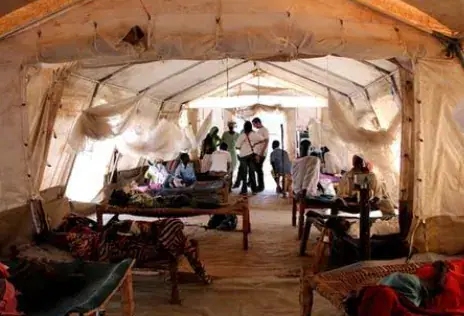
Severe shortages of medical personnel, medicines, and healthcare resources are exacerbating the plight of thousands of displaced people at Al-Karama 3 camp in Damazin, Sudan's Blue Nile State. The camp accommodates people displaced from the western part of the Blue Nile Region and the Tadamun and Kurmuk localities. Its deteriorating healthcare conditions have raised concerns about a potential worsening health crisis among its residents.
According to Babiker Osman, the chairman of the camp, just one doctor is available to provide healthcare to more than 3,500 displaced families, comprising over 24,000 people, severely restricting access to medical consultations and essential treatment. Several diseases have been reported in the camp, including allergies, malaria, and schistosomiasis, also known as bilharzia, with an increasing number of cases among children, particularly those suffering from allergic conditions.
Dr. Khadija Dafallah said the camp's clinic was receiving patients with a wide range of medical conditions every day, including malaria, diarrheal diseases, schistosomiasis, respiratory infections, and giardiasis, alongside cases of malnutrition, most of which were classified as moderate. The clinic receives approximately 120 patients every day, in addition to critical cases, and patients requiring treatment beyond the clinic's capacity were transferred by ambulance to the main hospital in Damazin.
The consequences of inadequate healthcare extend beyond difficulties accessing treatment, as deteriorating living conditions and the suspension of some forms of humanitarian assistance have further compounded the suffering of displaced families, particularly women and children. Hamida Ahmed, a camp resident, said her family had been forced to flee their home on foot following drone attacks and that food and medical assistance had initially been available but had ceased approximately two months ago.
Dr. Taj Al-Sir Amer, a medical doctor and activist, called for a comprehensive healthcare intervention to address the crisis, emphasizing that the response must go beyond the provision of medicines. He recommended expanding malnutrition prevention and treatment programmes, conducting regular nutritional screenings, and strengthening reproductive healthcare services, including antenatal care and monitoring of newborn babies.
The deteriorating humanitarian situation comes amid escalating military confrontations between the Sudanese Armed Forces and forces affiliated with the Tasis Alliance in Kurmuk, Geissan, and Wad Al-Mahi localities. The fighting has also extended to Bau locality, where the Mayful and Jebel Al-Tin areas witnessed renewed hostilities on 13 November, raising fears of further displacement and additional pressure on the region's already overstretched healthcare facilities and displacement shelters.
Residents and health advocates are calling for urgent intervention to restore access to basic healthcare and prevent further deterioration in the health and well-being of displaced communities. With medical personnel in short supply, essential medicines increasingly scarce, and food assistance declining, thousands of displaced people at Al-Karama 3 camp face worsening humanitarian and health conditions.
Key points
- Severe shortages of medical personnel and essential healthcare resources are exacerbating the plight of thousands of displaced people at Al-Karama 3 camp in Damazin.
- The camp's healthcare conditions have raised concerns about a potential worsening health crisis among its residents, with several diseases reported, including allergies, malaria, and schistosomiasis.
- Health advocates are calling for urgent intervention to restore access to basic healthcare and prevent further deterioration in the health and well-being of displaced communities.