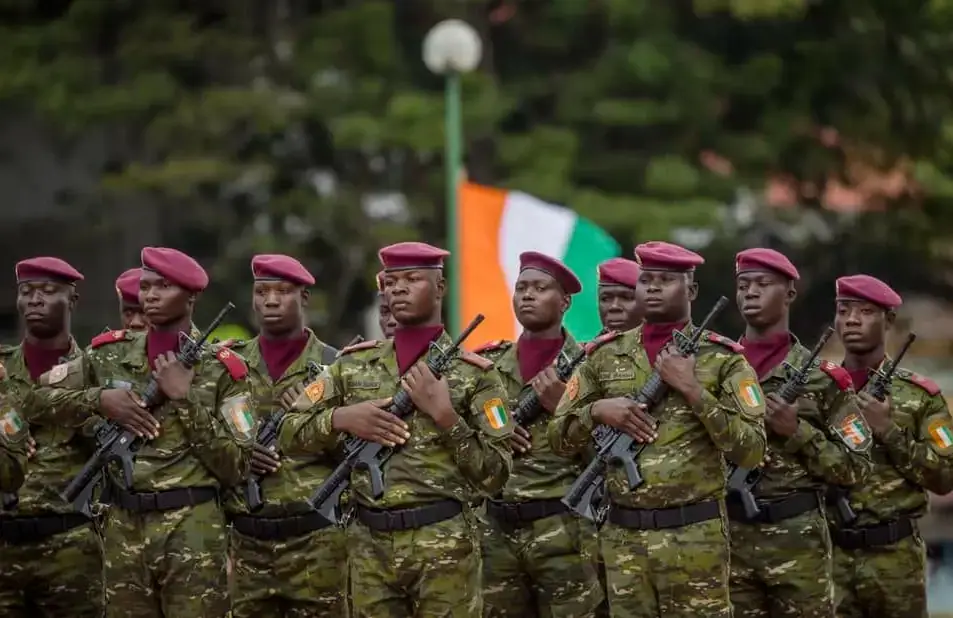
The government of Côte d'Ivoire has announced plans to deploy 812 soldiers to Haiti as part of an international effort to combat armed gangs and restore security to the country. The deployment, which is set to last for six months, will involve specialized units and military and linguistic training. If confirmed, this would be the largest deployment of Ivoirian troops outside of Africa.
The decision to send troops to Haiti has raised questions about the priorities of Côte d'Ivoire's government and the concept of African solidarity. While supporting the Haitian people, who have been affected by violence and a severe security crisis, is understandable, some have criticized the government for not prioritizing African issues. Haiti and Côte d'Ivoire share a common history of resistance and struggle for freedom.
Critics argue that Côte d'Ivoire's government is more willing to engage in international efforts than to address African issues. The country's relations with other African states, particularly those in the Alliance des États du Sahel (AES), are marked by distrust. The deployment to Haiti has sparked concerns about the government's priorities and the principles guiding its diplomatic decisions.
The issue is not about helping Haiti, but about understanding why some African leaders can find the resources and political will to respond to international requests, but struggle to put aside their differences when it comes to building continental solidarity. Côte d'Ivoire's government must explain to its citizens why it considers Haitian leaders to be credible partners, while its relations with AES countries are strained.
The concept of solidarity, security, and sovereignty should not be applied selectively, depending on the partner or interest at stake. Africa cannot continue to be generous externally while being divided internally. It is essential for African states to prioritize their relationships with each other and work towards a more cohesive and cooperative continent.
The deployment of 812 Ivoirian soldiers to Haiti raises questions about the role of African leaders in promoting continental solidarity and defending the interests of their people. The Haitian people deserve security and dignity, but so do African populations. Solidarity should not be a diplomatic posture that is abandoned when it requires putting the interests of one's own people first.
Ultimately, the decision to deploy troops to Haiti will have implications for Côte d'Ivoire's relationships with other African countries and its reputation as a champion of African solidarity. The government must ensure that its actions align with its values and priorities, and that it is not compromising its relationships with other African states in the process.
Key points
- The deployment of 812 Ivoirian soldiers to Haiti has raised questions about African solidarity and the priorities of Côte d'Ivoire's government.
- Critics argue that Côte d'Ivoire's government is more willing to engage in international efforts than to address African issues.
- The concept of solidarity, security, and sovereignty should not be applied selectively, depending on the partner or interest at stake.