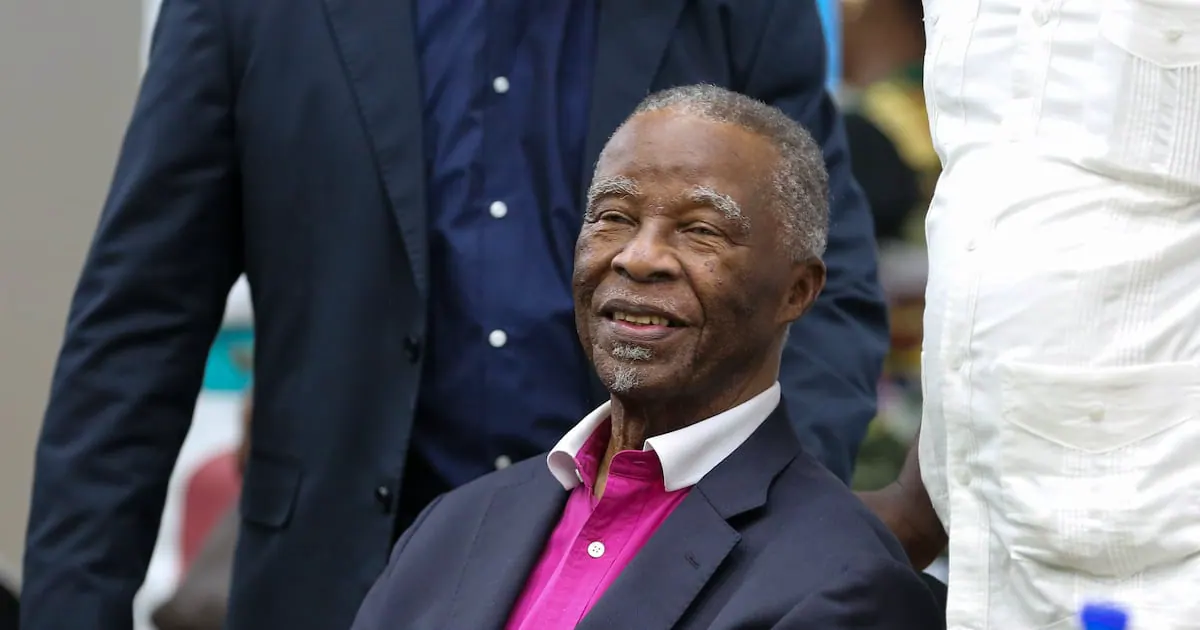
The Thabo Mbeki Foundation has released a 123-page paper titled "The United States of America and the Future of the Afrikaners in South Africa," warning that US support for Afrikaner organisations and their demands for greater cultural and political autonomy could exacerbate racial divisions in South Africa. The paper argues that the diplomatic tension between Pretoria and Washington cannot be solely attributed to disputes over land expropriation, BEE, farm attacks, or South Africa's foreign policy. Instead, it places the dispute within the context of the unresolved "national question" in both countries.
The paper examines the visits to Washington by Afrikaner organisations, including the Solidarity Movement and AfriForum, as well as a June 2025 delegation comprising FF Plus MP Corné Mulder, Southern African Agri Initiative president Theo de Jager, and National Employers' Association of SA CEO Gerhard Papenfus. The delegation's demands included the classification of farm attacks as priority crimes, an ANC denunciation of the Kill the Boer chant, opposition to land expropriation without compensation, and exemptions for US companies from BBBEE requirements.
The Solidarity Movement's "Washington Memorandum" called for greater recognition of Afrikaner cultural autonomy and proposed US assistance for an Afrikaner development fund to finance community infrastructure. The memorandum also referred to the establishment of a place where Afrikaners could resettle in concentrated numbers. The foundation argues that these demands amount to an attempt by sections of the Afrikaner community to secure a degree of separate political and cultural existence within South Africa.
The foundation draws a distinction between Afrikaner organisations and Afrikaners as a whole, noting that prominent Afrikaners have rejected the portrayal of the community as a persecuted minority. A 2025 statement signed by 46 prominent Afrikaners, titled "Not In My Name!", rejected the narrative that Afrikaners were victims of racial persecution and argued that portraying them as victims distorted South Africa's complex social and historical realities.
The foundation cites research attributed to Frans Cronje and Hermann Giliomee, which estimated that Afrikaner living standards had risen faster during the first two decades after 1994 than during any comparable 20-year period since the end of World War 2. The paper also notes substantial growth in the income of commercial agriculture between 2007 and 2023. However, the paper acknowledges the serious failures of the democratic state, including high levels of poverty, unemployment, crime, inequality, and weak service delivery.
The paper compares South Africa's experience with the US response to its own history of slavery and segregation, tracing the US government's use of affirmative action and other targeted programmes aimed at addressing racial inequality. The foundation uses this history to challenge opposition to BBBEE and other forms of redress in South Africa, arguing that the US itself has repeatedly recognised that formal legal equality does not necessarily eliminate the socioeconomic consequences of historic discrimination.
The foundation warns that the pursuit of racially separate political and economic structures could increase social instability and undermine the constitutional vision established through the negotiations that preceded democracy. The paper identifies two objectives it attributes to Afrikaner organisations involved in the US campaign: protecting the standard of living and quality of life achieved by Afrikaners, and securing legal recognition for Afrikaner cultural autonomy.
Key points
- The Thabo Mbeki Foundation warns that US support for Afrikaner autonomy risks entrenching racial divisions in South Africa.
- The foundation argues that the pursuit of racially separate political and economic structures could increase social instability.
- The paper compares South Africa's experience with the US response to its own history of slavery and segregation.