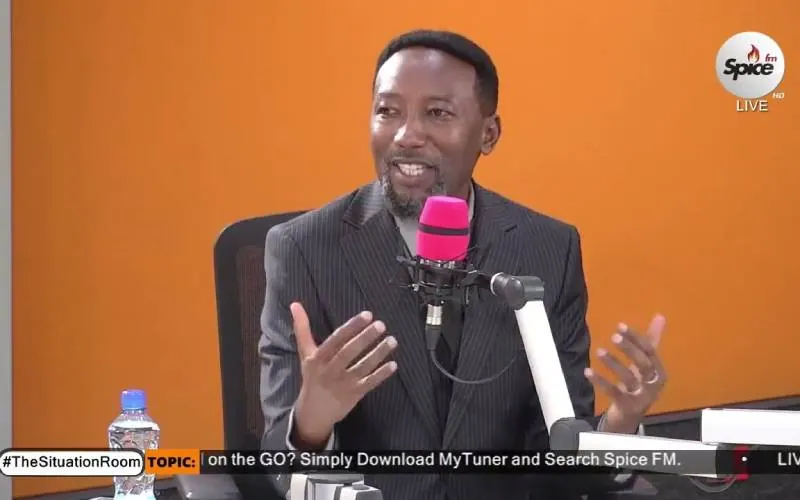
Mbeere North Member of Parliament, Leo Wa Muthende, has called for a shift away from kingpin politics in Kenya, warning that it can lead to dictatorship. In an interview on Spice FM, Wa Muthende emphasized the need for community representatives to speak for their people without assuming unchecked political authority. He highlighted the differences between a spokesperson and a kingpin, noting that a spokesperson represents a community in a measured manner, while a kingpin can become a dominant figure with little challenge within their political base.
Wa Muthende's comments come ahead of the 2027 General Election, which he believes will test whether voters still follow political leaders based on regional influence or examine what individual candidates have delivered. He urged voters to assess leaders based on their records, vision, and plans rather than their association with a political kingpin or dominant party. According to Wa Muthende, kingpins are often viewed as people who speak on behalf of a community or region, but in Kenyan politics, some spokespersons end up representing themselves.
Wa Muthende's remarks drew a response from Ol Kalou MP Sammy Kamau, who defended the role of kingpins as community leaders who provide political direction. Kamau identified former Deputy President Rigathi Gachagua as the political kingpin of the Mt Kenya region, arguing that Gachagua is advocating for the interests of the people in the region. Kamau's Democracy for Citizens Party (DCP) is led by Gachagua, and Kamau believes that kingpins play a crucial role in mobilizing voters and providing leadership.
The exchange between Wa Muthende and Kamau reflects the ongoing debate over alliances and voter mobilization ahead of the 2027 General Election. Wa Muthende also accused Kamau's party of using intimidation to secure his victory in the Ol Kalou by-election, alleging that voters received threats both leading up to the election and on Election Day. Kamau rejected the accusation, saying his approach to leadership is based on serving residents rather than exerting authority over them.
Wa Muthende won the Mbeere North parliamentary seat in a November 2025 by-election on a United Democratic Alliance (UDA) ticket, securing 15,802 votes against Democratic Party candidate Newton Kariuki's 15,308. Kamau won the Ol Kalou seat in Nyandarua County in July 2026 on a DCP ticket, defeating UDA candidate Samuel Muchina Nyagah. The two MPs are now preparing for the 2027 General Election, which is expected to be a crucial test of their leadership and influence.
The debate over kingpin politics and leadership styles is significant in Kenya, where regional influence and alliances often play a crucial role in shaping electoral outcomes. Wa Muthende's call for a shift towards spokesperson-style leadership reflects a desire for more inclusive and representative politics. However, Kamau's defense of kingpins highlights the importance of strong leadership and direction in mobilizing voters and achieving political goals.
As Kenyans prepare for the 2027 General Election, the discussion over kingpin politics and leadership styles is likely to continue. The election will be a critical test of the country's democratic systems and the ability of leaders to represent their constituents effectively. Ultimately, the outcome will depend on the choices made by voters, who will decide whether to follow traditional leaders or opt for new approaches to politics.
Key points
- Mbeere North MP Leo Wa Muthende is advocating for a shift away from kingpin politics, warning that it can lead to dictatorship.
- Ol Kalou MP Sammy Kamau defends the role of kingpins as community leaders who provide political direction.
- The debate over kingpin politics reflects the ongoing discussion over alliances and voter mobilization ahead of the 2027 General Election.