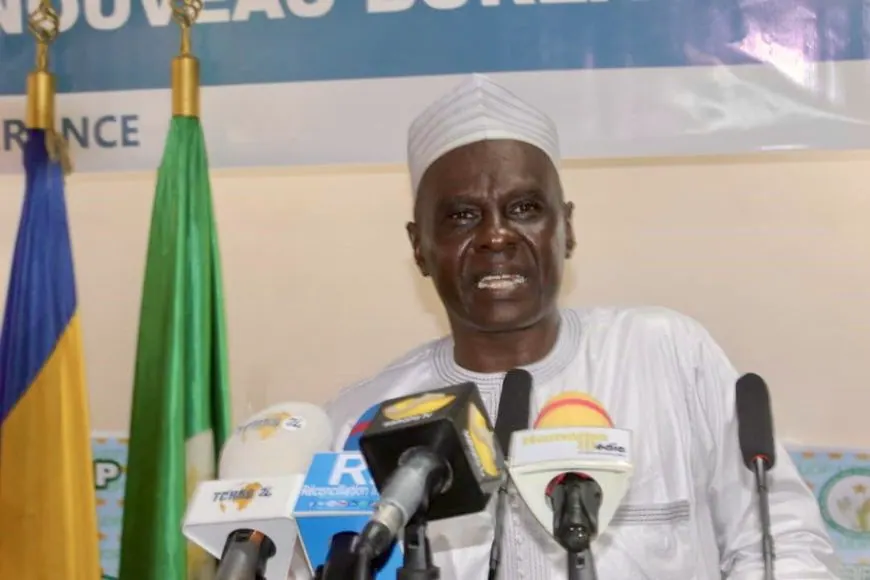
On September 26, 2026, Max Kemkoye, president of Chad's Union of Democrats for Development and Progress (UDP), held a press conference in N'Djamena. He discussed his recent release from prison, the consequences of his conviction, and his political rights. Kemkoye was sentenced to eight years in prison and a fine of 500,000 CFA francs earlier in 2026. He received a presidential pardon several months later, but questions the circumstances surrounding the pardon.
Kemkoye disputes the idea that his conviction results in the loss of his civil and political rights. He cites the Chadian Penal Code, which classifies infractions and prescribes ancillary penalties. According to Kemkoye, a correctional conviction does not automatically lead to the loss of these rights. He argues that his conviction does not meet the conditions for loss of rights as outlined in the code.
The UDP president also rejects the interpretation of Article 11 of the Charter of Political Parties, which could prevent him from continuing to lead the UDP. Kemkoye claims that the party has the full capacity to exercise its rights. He disputes the characterization of himself as a "common-law prisoner," asserting that his incarceration was directly related to his political engagement.
Kemkoye believes his conviction may compromise his participation in upcoming elections. He references Article 5 of the Electoral Code, which outlines conditions for inscription on electoral lists for convicted individuals. According to Kemkoye, the regime has successfully eliminated him from all electoral races. The UDP president has initiated démarches with several UN mechanisms, including those related to arbitrary detention and freedoms of assembly, association, and expression.
Kemkoye's case has been taken up by the Chadian League of Human Rights (LTDH) and the World Organization Against Torture (OMCT). He mentions that the case will be pursued at the UN, the European Union, and in Geneva. Kemkoye does not believe that the presidential pardon will be enough to erase the political consequences of his conviction.
During his detention at Klessoum prison, Kemkoye reports difficulties accessing medical care and inadequate food. He also highlights the case of detainees who have been waiting for years to be brought before a judge. Kemkoye requests that the President of the Republic intervene and proposes organizing on-site hearings to examine the cases of detainees.
Kemkoye's proposed on-site hearings would allow for case-by-case examination of detainees' files. He believes this would lead to the release of innocent individuals. The UDP president's statements come as Chad continues to navigate complex issues related to politics, human rights, and electoral processes.
Key points
- Max Kemkoye disputes loss of rights after presidential pardon
- Kemkoye believes his conviction may compromise his participation in upcoming elections
- The UDP president requests intervention from the President of the Republic regarding prison conditions