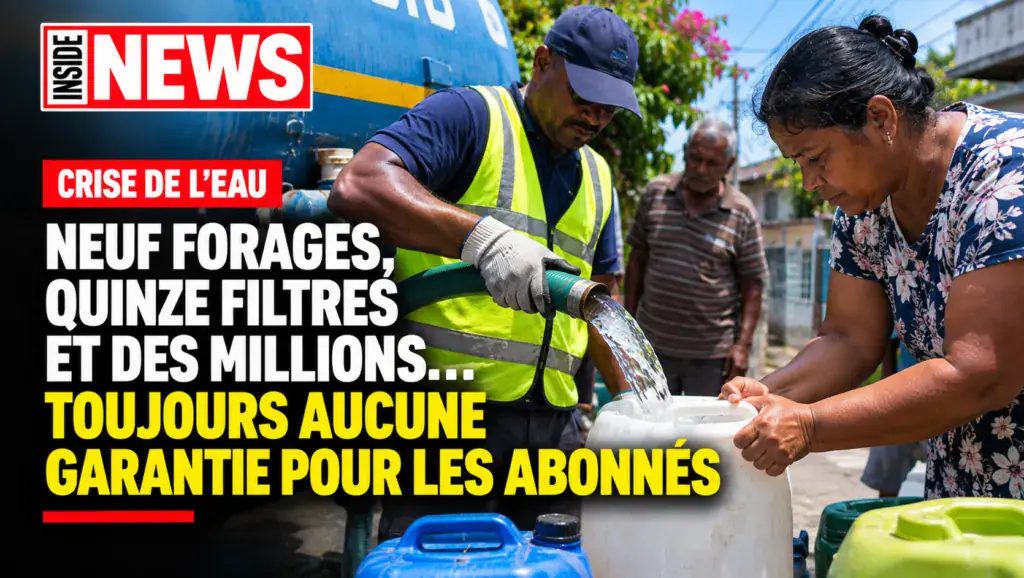
Mauritius is grappling with a severe water crisis, with the country's main reservoirs showing a significantly low water level. As of October 8, the reservoirs had a filling rate of 57.1%, down from 87.4% during the same period in 2025. The Mare-aux-Vacoas reservoir, a crucial infrastructure for the central plateau's water supply, was only 35.7% full.
In response to the crisis, the government has announced a series of emergency measures to augment the water supply. Nine new boreholes are expected to provide an additional 30,000 cubic meters of water per day to the area served by Mare-aux-Vacoas. The government will also extract around 4,000 cubic meters of water from the Petrin and Papayes rivers.
The government has also announced plans to increase the capacity of a pipeline connecting Mare-Longue to the La Marie plant from 15,000 to 30,000 cubic meters per day. Fifteen pressure filters are expected to be operational by the end of November. Private water tankers, fire services, and ten liaison agents have been mobilized to provide assistance to affected regions.
To mitigate the effects of the crisis, the government has extended aid for the installation of domestic water tanks. Households can receive up to Rs 10,000 for two qualifying water tanks, Rs 4,000 for a pump, and up to Rs 1,000 for connections. The measures aim to address the urgent need for water but highlight the significant adaptations required to ensure access to basic services like clean water.
Despite these efforts, concerns remain about the effectiveness of the measures and the underlying issues with the national water distribution network. Questions have been raised about the rate of water loss in the pipelines and the actual capacity of the announced boreholes. The government is expected to provide transparent updates on the progress of its projects, including regional breakdowns of outages, completed projects, costs, and results.
The water crisis in Mauritius will not be considered under control until households no longer have to adjust their daily routines around water outages. The government is now expected to deliver measurable results rather than making new promises. The crisis has highlighted the persistent weaknesses in the country's water infrastructure and the need for sustained investment to address these issues.
The government's response to the crisis has been comprehensive, but it remains to be seen whether it will be sufficient to address the scale of the problem. The crisis has significant implications for the country's residents, who are eager for a reliable water supply.
Key points
- The government has announced emergency measures to address the water crisis, including the development of new boreholes and the extraction of water from rivers.
- The crisis has highlighted the weaknesses in Mauritius' national water distribution network and the need for sustained investment.
- The government is expected to provide transparent updates on the progress of its projects to address the water crisis.