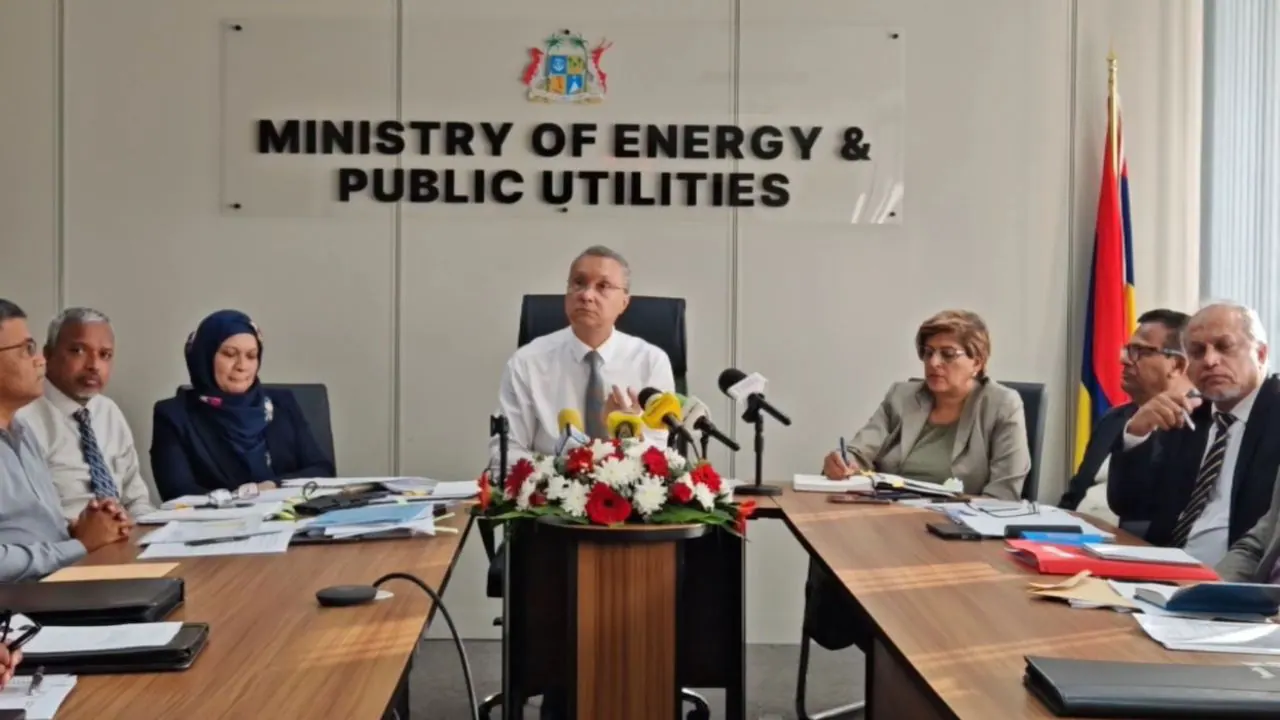
The water crisis in Mauritius has taken a critical turn, with the Mare-aux-Vacoas reservoir, a key source of water for the La Marie station, currently at 35.9% capacity, down from 88.6% at the same time last year. Minister of Public Services, Patrick Assirvaden, addressed the situation in a press conference on October 6, stating that as the water level in Mare-aux-Vacoas decreases, the La Marie station will be severely impacted. The La Marie station currently receives 61,000 cubic meters of water from Mare-aux-Vacoas, significantly less than the normal 110,000 cubic meters.
To mitigate the effects of the water shortage, the government has announced several emergency measures. Ten boreholes will be deployed in affected regions to pump an additional 31,000 cubic meters of water into the network by the end of October. This will help compensate for the loss of water at the La Marie station. The boreholes will be used for urgent pumping exercises to address the immediate needs of the affected areas.
In addition to the boreholes, the government has also ordered 15 containerized pressure filtration units (CPF), which can provide an additional 33,000 cubic meters of water. Seven of these units have already been received, and they will be deployed in regions facing water supply problems. These units will enable the pumping of water to supplement the network and alleviate the pressure on the La Marie station.
Another measure announced by the government is the installation of a second pipeline from the Mare-Longue reservoir, which supplies water to the La Marie station. The existing pipeline has limited capacity, and the new one will provide an additional 15,000 cubic meters of water to the station. This move aims to augment the water supply to the La Marie station and minimize the impact of the water crisis.
The situation at Mare-aux-Vacoas remains a significant concern, with the reservoir's water level continuing to drop. Minister Assirvaden emphasized that the government is working on medium and long-term solutions to address the water crisis. A plan, dubbed a "Marshall plan," is being developed to tackle the issue, which includes exploring alternative sources of water and implementing measures to mitigate the effects of climate change.
Minister Assirvaden also highlighted the potential of treated wastewater as a viable alternative source of water. He noted that the Wastewater treatment plant discharges around 55,000 cubic meters of treated water daily, which could be used for irrigation purposes. The government is exploring ways to harness this resource to supplement the island's water supply.
The water crisis in Mauritius has prompted the government to think outside the box and explore innovative solutions. Minister Assirvaden stressed that the country must find new ways to extract water from alternative sources, as the situation is expected to deteriorate due to climate change. The government's emergency measures aim to provide temporary relief, while long-term solutions are being developed to address the root causes of the crisis.
Key points
- The government has deployed emergency measures, including boreholes and filtration units, to address the water crisis in Mauritius.
- The Mare-aux-Vacoas reservoir is currently at 35.9% capacity, down from 88.6% at the same time last year.
- The government is exploring medium and long-term solutions, including alternative sources of water and measures to mitigate the effects of climate change.