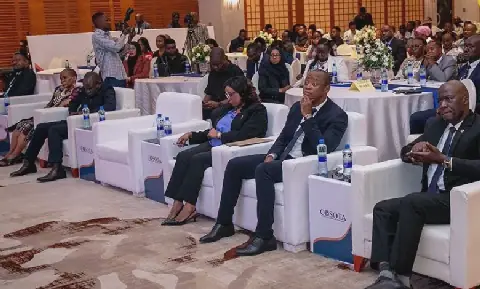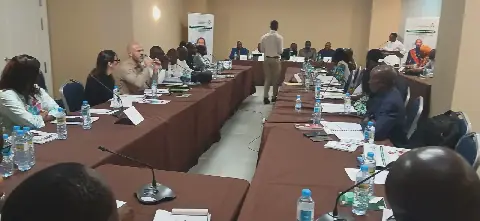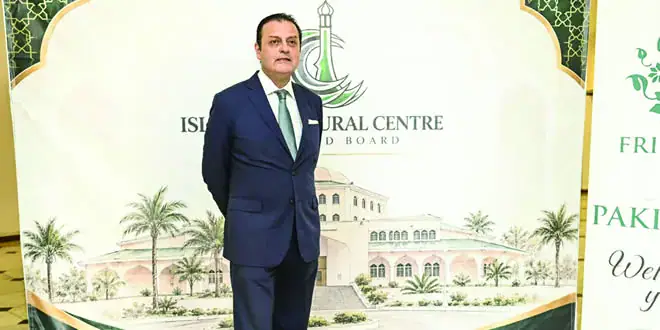
Me Walid Iqbal recently spoke at the Islamic Cultural Centre in Port-Louis, Mauritius, about his grandfather Allama Iqbal's message of unity. The event was organized by Friends of Pakistan and the ICC as part of their celebrations. Iqbal's grandson highlighted his grandfather's emphasis on the importance of protecting places of worship and promoting education. He shared anecdotes and poems to illustrate Allama Iqbal's commitment to interfaith understanding and respect.
Allama Iqbal's 1930 speech at Allahabad, where he advocated for a separate territory for Muslims in India, is often cited as a key moment in his career. However, Me Walid Iqbal noted that his grandfather also condemned hostility between communities and emphasized the importance of respecting other groups' customs and institutions. Iqbal believed that defending places of worship was a duty dictated by the Quran, citing a passage from the sourate Al-Hajj.
Me Walid Iqbal also discussed his grandfather's emphasis on education and personal development. Allama Iqbal encouraged his daughter to attend a school where the Bible was taught, despite his own Muslim faith. He believed that understanding and respect for other faiths were essential for building a harmonious society. This approach was reflected in his poetry, including the collection Bal-e-Jibreel, which explores themes of human potential and spiritual growth.
The concept of "khudi," or the development and affirmation of the self, was central to Allama Iqbal's philosophy. Me Walid Iqbal explained that his grandfather saw human beings as capable of transforming their surroundings and achieving great things through education and effort. This idea is reflected in Iqbal's poetry, where he writes about Adam's potential to collaborate with God in shaping the world.
Allama Iqbal's work, "The Reconstruction of Religious Thought in Islam," explores the role of independent reasoning in Islamic thought. Me Walid Iqbal noted that his grandfather believed in the importance of ijtihad, or independent reasoning, in responding to changing circumstances. Iqbal's vision for a "spiritual democracy" emphasized the principles of equality, solidarity, and liberty.
Me Walid Iqbal also highlighted his grandfather's emphasis on the importance of treating all individuals with dignity and respect. Allama Iqbal's message of unity and fraternity was echoed in a 1938 radio broadcast, where he called for education that promoted respect for human beings and emphasized the importance of humanitarian values. This message remains relevant today, as noted by economist Jeffrey Sachs in a 2023 conference at Oxford.
The event at the Islamic Cultural Centre concluded with a discussion of Allama Iqbal's legacy and its continued relevance in modern times. Me Walid Iqbal's talk emphasized the importance of understanding and respecting other faiths, as well as promoting education and personal development. As the world continues to grapple with issues of diversity and inclusion, Allama Iqbal's message of unity and fraternity remains an important reminder of the need for mutual respect and understanding.
Key points
- Allama Iqbal's philosophy emphasized the importance of protecting places of worship and promoting education and interfaith understanding.
Reporting sources
- De la poésie à la politique, l’idéal de fraternité d’Allama Iqbal · starpress.info