The government of Mauritius is embarking on a circular economy program, backed by 3.5 million euros in funding from the European Union and implemented in partnership with Expertise France. The program aims to support Mauritius in implementing its circular economy roadmap until July 2029. The project, launched in October 2025, will run for 46 months and will focus on creating a coherent institutional framework, a monitoring system, a communication strategy, and a comprehensive legal framework.
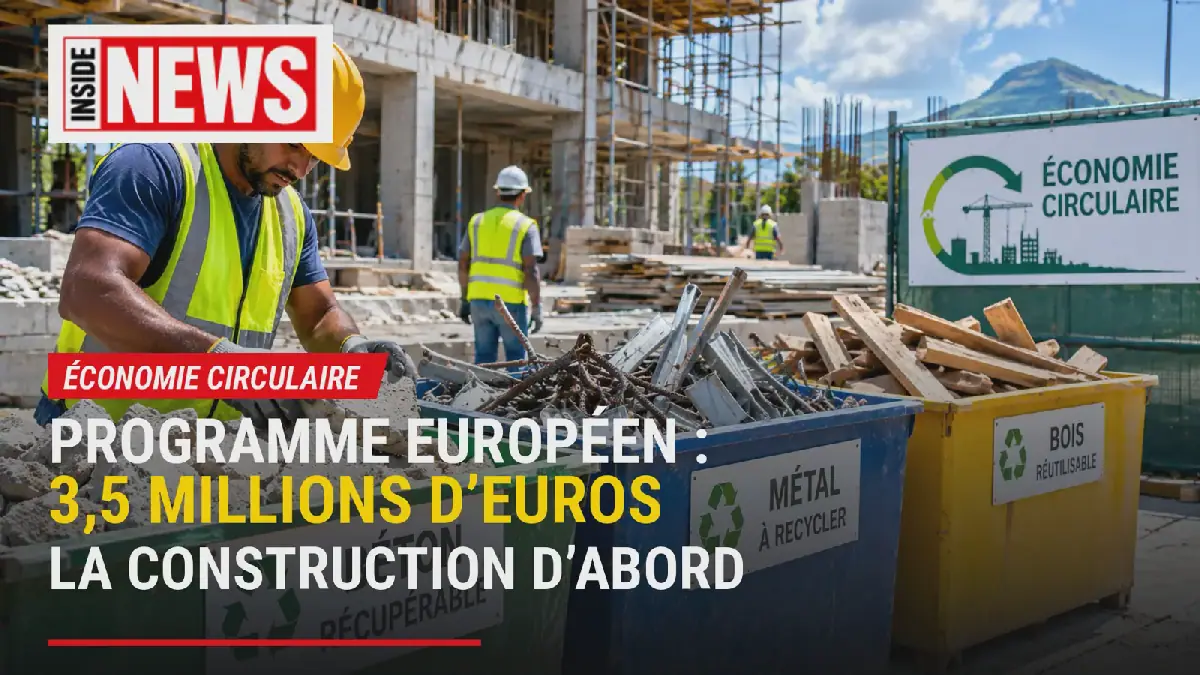
The construction and real estate sectors have been identified as the primary areas of focus for the program. This is due to the significant environmental impact of the building industry, which consumes materials, generates waste, and utilizes resources over several decades. A circular economy policy in this sector can aim to promote the reuse of materials, design buildings that can be easily dismantled, sort construction waste, recover materials, and extend the lifespan of buildings.
While the details of the program are still being finalized, the government has indicated that a comprehensive legislation is being prepared as part of the EU support program. However, the specifics of the obligations that will apply to developers, contractors, and property owners are yet to be announced. The 3.5 million euros in funding will be used to support the program over 46 months, but this figure should not be confused with the actual savings or investments that will be generated.
The program's success will depend on the development of clear indicators to measure its impact, including the volume of materials reused, waste diverted from landfills, and the number of businesses and pilot projects supported. The government will also need to establish clear responsibilities, material standards, reporting requirements, and waste management rules for the construction sector. Public procurement processes may also be used as a lever to promote circular economy practices.
Businesses in the construction sector will need to closely monitor the development of the program and the upcoming legislation. They will need to adapt to new requirements and standards, including the potential integration of reuse and recycled content criteria into public procurement processes. The credibility of the program will depend on its ability to deliver tangible results and improvements in waste management and resource efficiency.
The next step in the process will be the publication of the draft law and the monitoring system. Until these documents are available, it is premature to announce new obligations for businesses or individuals. The government has indicated that it will provide regular updates on the program's progress and will engage with stakeholders to ensure a smooth implementation process.
The circular economy program is part of a broader effort to promote sustainable development in Mauritius. The program's focus on the construction sector reflects the significant environmental impact of this industry and the potential for improvement through the adoption of circular economy practices. With the support of the European Union and Expertise France, the government of Mauritius is well-positioned to make progress on this important initiative.
Key points
- The program aims to support Mauritius in implementing its circular economy roadmap until July 2029.
- The construction and real estate sectors have been identified as the primary areas of focus for the program.
- The program's success will depend on the development of clear indicators to measure its impact.