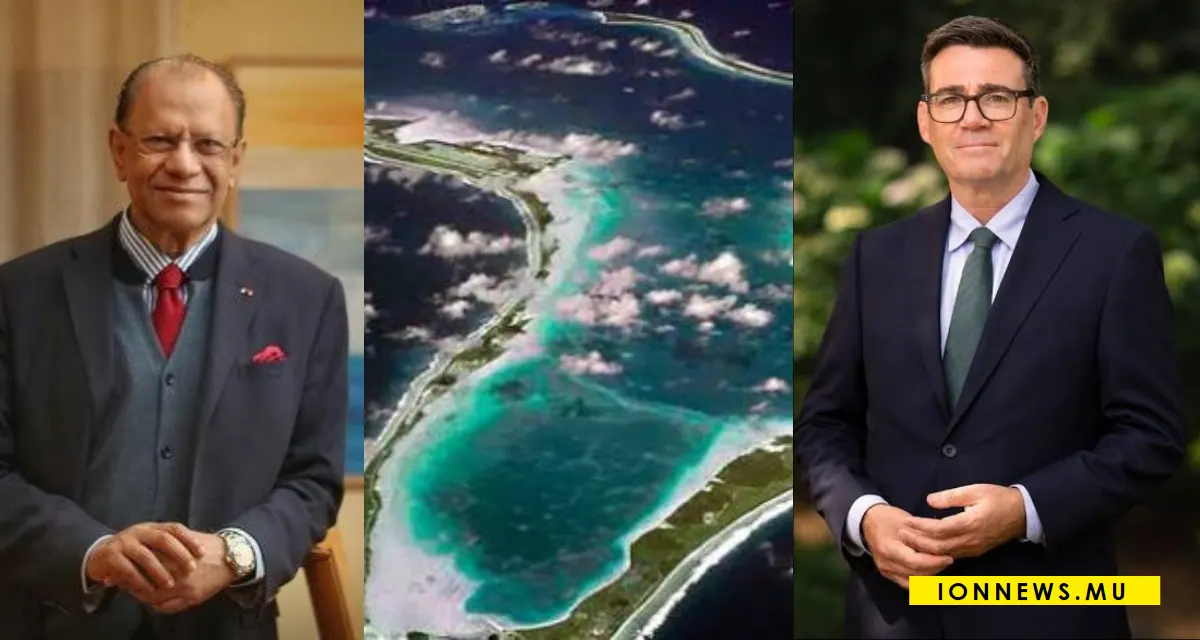
In a recent shift, Mauritius' approach to the Chagos dispute appears to have changed. Prime Minister Navin Ramgoolam, known for his discreet diplomatic approach, has taken a firmer stance with the UK. This change in strategy comes ahead of the 81st United Nations General Assembly, where Ramgoolam initially cited "quiet diplomacy" as the reason for his absence. He claimed that attending would have required him to publicly respond to US President Donald Trump, which he believed would not benefit Mauritius.
The "quiet diplomacy" approach was initially defended by the Attorney General, Gavin Glover, who encouraged patience and letting diplomacy run its course. However, during a meeting with Jonathan Powell, a UK government advisor, Ramgoolam reportedly took a more assertive tone. He reaffirmed Mauritius' sovereignty over the Chagos Islands, emphasizing that it was not negotiable. Ramgoolam also stressed the need for the UK to ratify an agreement and warned that failure to do so within a reasonable timeframe could lead to legal action.
This new approach marks a significant departure from the "quiet diplomacy" strategy. By setting deadlines, threatening legal action, and vowing to defend Mauritius' rights "until the end," Ramgoolam's government has adopted a more confrontational tone. This shift raises questions about the effectiveness of the previous approach and the motivations behind the change. The move comes as the UK has announced its intention to re-examine the agreement, citing a lack of US support.
Three possible interpretations of this shift have emerged. The first suggests that "quiet diplomacy" was merely a justification for Ramgoolam's absence from the UN General Assembly, and that a firmer stance was always the government's intention. The second possibility is that the approach genuinely changed due to the lack of progress with the discreet method. A third interpretation is that both approaches coexist, with the threat of legal action serving as leverage in ongoing negotiations.
The changed approach comes at a challenging time for Mauritius. The agreement in question has been criticized by Trump as "terrible," and the UK has frozen payments to Mauritius. In this context, the threat of legal action can be seen as a legitimate attempt to pressure the UK into honoring its commitments or as an acknowledgment that diplomatic efforts have stalled.
The situation is further complicated by the involvement of the United States. Trump's criticism of the agreement and the UK's subsequent decision to re-examine it have created an unfavorable environment for Mauritius. Ramgoolam's government faces the task of navigating these complex international relationships while pursuing its goals.
As the situation unfolds, Mauritius' strategy will be closely watched. The country's approach must be clear and effective in achieving its objectives. With the dispute showing no signs of resolution, Ramgoolam's government will need to balance its diplomatic efforts with the threat of legal action, all while maintaining a strong stance on the sovereignty of the Chagos Islands.
Key points
- Mauritius has shifted from a "quiet diplomacy" approach to a firmer stance on the Chagos dispute.
- The change in approach comes ahead of a challenging diplomatic environment, with the UK re-examining the agreement and the US criticizing it.
- The situation requires a clear and effective strategy from Mauritius to achieve its objectives.