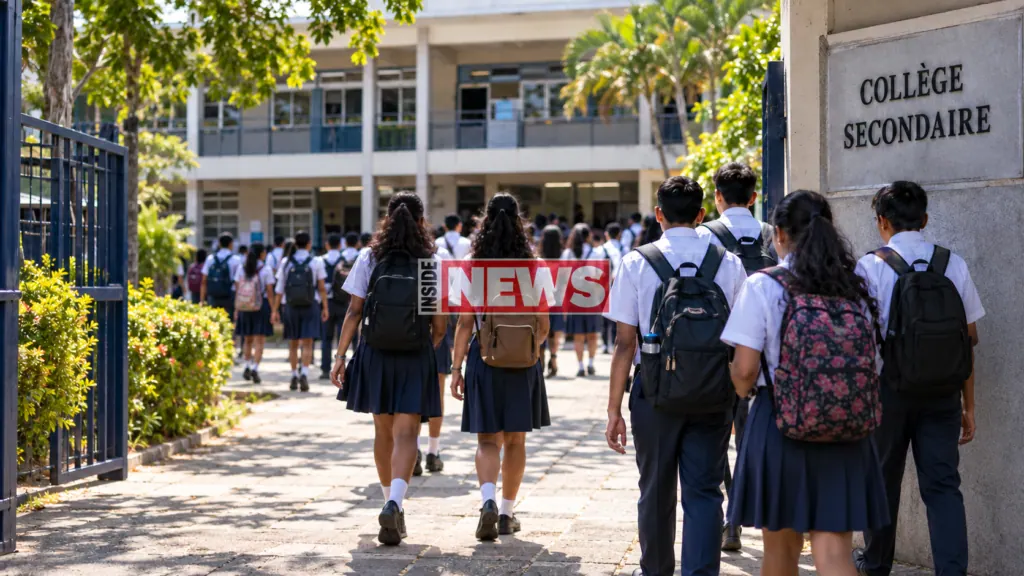
According to the latest Education Statistics report from Statistics Mauritius, the country's secondary schools had 88,468 students in March 2026, down from 92,597 in March 2025. This represents a decline of 4,129 students, or approximately 4.5%. The report also notes that there were 173 secondary schools in 2026, compared to 176 in 2025.
The decline in student enrollment raises questions about the capacity of schools to provide adequate resources and support. With fewer students, schools may need to adjust their staffing and facilities, potentially affecting the quality of education. The report highlights that the national average of 10 students per teacher remains unchanged, but this does not account for variations in class sizes and subject areas.
The secondary school sector is not the only area experiencing changes. At the primary level, student enrollment decreased from 82,974 in March 2025 to 82,514 in March 2026. Meanwhile, 134 secondary schools offered the Foundation Programme in Literacy, Numeracy and Skills for Grades 7 to 9 in 2026. This program aims to provide additional support for students who may need it.
The statistics also reveal that the number of teachers in secondary schools decreased from 8,986 in March 2025 to 8,805 in March 2026. While the national student-to-teacher ratio remains stable, individual schools and regions may face different challenges. To understand the impact of these changes, more detailed data on student enrollment and teacher distribution is needed.
For families, the key concern is ensuring continuity in their child's education. They want to know what subjects and pathways will be available, as well as the support and resources provided. School administrators and teachers, on the other hand, need to consider how to allocate resources effectively in response to changing student numbers.
The decline in student enrollment does not necessarily mean that schools will close. However, it does highlight the need for careful planning and resource allocation. To make informed decisions, policymakers and educators require more granular data on student enrollment, teacher distribution, and school resources.
Ultimately, the changes in Mauritius' education sector underscore the importance of monitoring and adapting to shifting student needs. By analyzing trends and statistics, educators and policymakers can work together to ensure that students receive the support and resources they need to succeed.
Key points
- A decline of 4,129 students in secondary schools in Mauritius between 2025 and 2026.
- The student-to-teacher ratio in secondary schools remains at 10:1 nationally.
- 134 secondary schools offered the Foundation Programme in Literacy, Numeracy and Skills in 2026.