The political landscape in Mauritius is witnessing a significant shift as the Parti travailliste (PTr), led by the government, is engaged in unofficial talks with former opponents to form a coalition. This move has raised concerns about a return to traditional politics, where personal interests and party loyalty take precedence over national interests. The PTr's efforts to forge new alliances come ahead of the next legislative elections.
The proposed coalition between the PTr and the Parti mauricien social-démocrate (PMSD) has sparked interest, given their historical rivalry. The two parties were on opposite sides in the last elections but are now exploring possibilities of working together. This potential alliance has been driven by the PTr's desire to bolster its position and address concerns about its leadership.
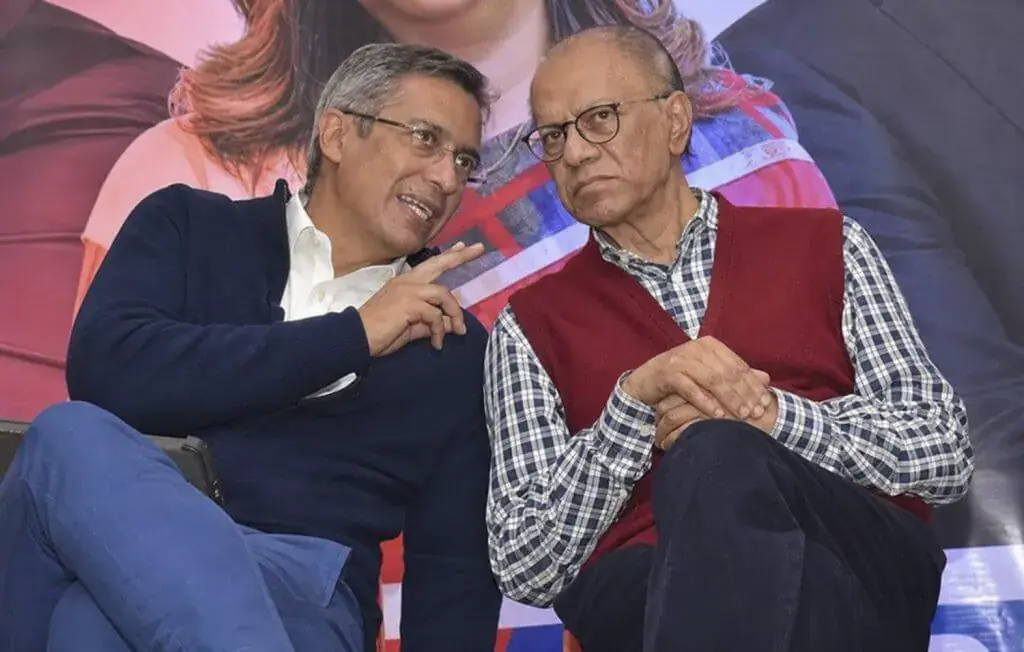
The PTr's move has been seen as an attempt to counterbalance its declining popularity following recent social unrest and criticism of its governance. The party's image has taken a hit, and it is seeking to regain credibility by forming alliances with other parties. The PMSD, led by Xavier Duval, has been a significant player in Mauritian politics and has historically been part of the ruling coalition.
A potential alliance between the PTr and PMSD would not be without controversy. The PMSD has been critical of the PTr's policies, particularly in education. However, the two parties share a common ideology, and their alliance could be seen as a strategic move to consolidate power. There have been rumors that Adrien Duval may resign as a deputy to take on the role of speaker, paving the way for his father, Xavier, to enter parliament.
The move has raised questions about the MMM and ReA's reaction to a potential blue presence in the government. The MMM has been critical of the PTr's leadership, but it is unlikely to strongly oppose the alliance. ReA, on the other hand, may be hesitant to leave the government, believing it can be more effective from within.
The permutations in Mauritian politics have been driven by a desire for power and survival. The traditional politics of alliances and realignments has raised concerns about the lack of principles and morality in politics. The focus on maintaining power has overshadowed the need for genuine change and reform.
The developments in Mauritian politics have significant implications for the country's future. The return to traditional politics has raised concerns about the ability of the government to address pressing issues and deliver on its promises. The PTr's efforts to form new alliances have sparked debate about the future of Mauritian politics and the need for a more principled approach to governance.
Key points
- The PTr is seeking new alliances with former opponents amid concerns of a return to traditional politics.
- A potential alliance between the PTr and PMSD could have significant implications for Mauritian politics.
- The developments have raised concerns about the lack of principles and morality in Mauritian politics.