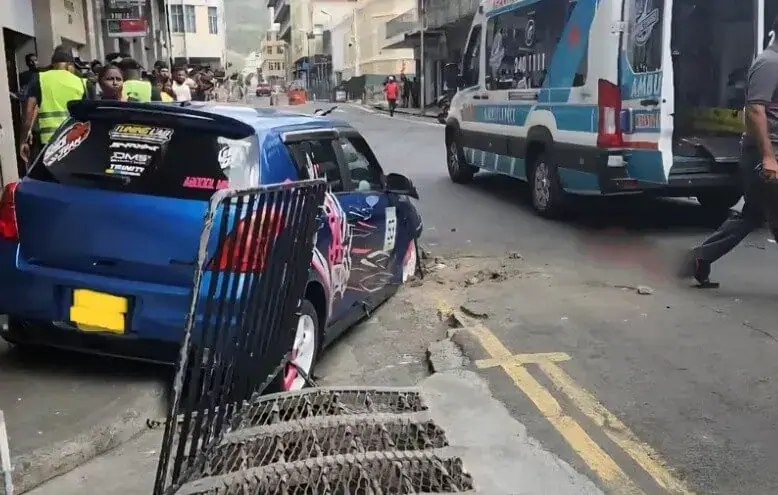
A rally car veered off course during the Grand Prix de Port-Louis on November 15, crashing into the Newton Tower and injuring three people who were transported to the hospital. The incident has sparked debate about the safety of such events in Mauritius. The accident has highlighted the need for improved safety measures to prevent similar incidents in the future.
The event's safety measures have been questioned, particularly the use of lightweight crowd barriers that were easily damaged in the crash. These barriers were not designed to absorb impact and did not provide adequate protection for spectators. In contrast, major racing events like those in Monaco have more robust safety features, including reinforced barriers and impact-absorbing blocks.
The location of the injured spectators is still unknown, raising further questions about the effectiveness of the event's safety planning. If they were in authorized areas, it suggests that these zones were not adequately protected. If they were in restricted areas, it is unclear how they gained access. The incident has highlighted the need for clearer communication about safety protocols and emergency procedures.
The incident has also raised questions about the course selection and design. The choice of route and speed limits have been questioned, particularly given the proximity to buildings and the lack of safety features such as chicanes to slow down vehicles. The event organizers have not provided a clear explanation for their decisions, fueling concerns about the prioritization of safety.
The qualifications and safety checks of drivers and vehicles have also been questioned. In major racing events, drivers and vehicles are subject to rigorous safety checks, including licensing, medical checks, and vehicle inspections. It is unclear whether similar checks were conducted for this event, and whether drivers and vehicles met the necessary safety standards.
The issue of insurance coverage for the event has also been raised, particularly in terms of liability and emergency response. It is unclear whether the event had adequate insurance coverage to protect spectators, participants, and emergency responders in the event of an accident. The response time and preparedness of emergency services have also been questioned, highlighting the need for more effective planning and coordination.
In response to the incident, calls have been made for improved safety measures at future events, including the publication of authorized and restricted zones, enhanced safety features, and more effective emergency response planning. Event organizers and authorities are urged to prioritize safety and take proactive steps to prevent similar incidents in the future. This includes ensuring that drivers and vehicles meet safety standards, providing adequate safety features and emergency response planning, and communicating clearly with spectators and participants about safety protocols.
Key points
- The incident highlights the need for improved safety measures at rally events in Mauritius, including enhanced safety features and more effective emergency response planning.