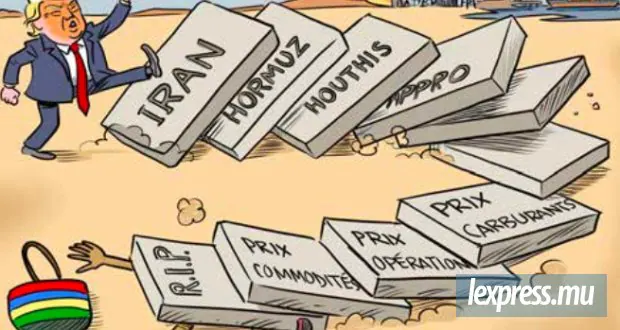
The recent petrol price hike in Mauritius has significant implications for the country's economy and population. The Petroleum Pricing Committee (PPC) announced a price increase on September 28, 2026, which came into effect on September 29. The new prices are Rs 77.70 per liter for petrol and Rs 78.35 per liter for diesel, a 10% increase. This rise is part of a series of price hikes since March 2026, when global oil markets began to fluctuate due to tensions in the Middle East.
The ongoing crisis in the Middle East has disrupted global oil supplies, causing a ripple effect on international markets. The Strait of Hormuz, a critical passage for oil and gas shipments, has been impacted, leading to concerns about supply availability and security. The situation has been further complicated by disruptions in the Bab-el-Mandeb Strait, which connects the Red Sea to the Gulf of Aden. These disruptions have increased transportation costs, insurance premiums, and delivery times, affecting not only oil but also commercial trade between Asia and Europe.
The impact of the petrol price hike is not limited to motorists; it affects the entire Mauritian population. With households already heavily indebted, the additional pressure on purchasing power could become unsustainable. The price increase has significant implications for food prices, transportation costs, and consumer goods. As a result, the Mauritian population may face a substantial increase in the cost of living.
The global implications of the petrol price hike are also significant. In France, the average price of diesel is €2.38 per liter, while petrol ranges from €2.15 to €2.22 per liter. These prices have led to protests from motorists, farmers, and fishermen. The French government has responded by strengthening its financial aid package, including an additional €450 million in support. Germany has also announced tax relief on fuel and initiated discussions with oil companies to consider price controls.
Other countries have also been affected by the petrol price hike. In India, the price of petrol in Delhi is ₹102.12 per liter, approximately Rs 50.53, while diesel costs ₹95.20 per liter, equivalent to Rs 47.11. In South Africa, petrol prices increased substantially in September, with a liter of petrol costing 26.05 rands, approximately Rs 75.36, and diesel at 28.24 rands, around Rs 82. In the United States, the average price of diesel has reached $6.50 per gallon, while petrol is around $4.50 per gallon, fueling concerns about inflation and the cost of living.
The Mauritian economy, being heavily dependent on imported petroleum products, is particularly vulnerable to these price fluctuations. As the crisis continues to unfold, it is essential for the government to consider measures to mitigate the impact on the population. This may include subsidies, price controls, or other forms of support to help households cope with the increased cost of living.
The petrol price hike has significant implications for the global economy, with many countries facing similar challenges. As tensions in the Middle East continue to escalate, it is crucial for governments and international organizations to work together to find a solution to the crisis. This may involve diplomatic efforts to resolve conflicts, as well as the development of alternative energy sources to reduce dependence on fossil fuels.
Key points
- The 33% petrol price hike in Mauritius since March 2026 has significant implications for the country's economy and population.
- The crisis in the Middle East has disrupted global oil supplies, causing a ripple effect on international markets.
- The petrol price hike affects not only motorists but also the entire population, with potential increases in food prices, transportation costs, and consumer goods.