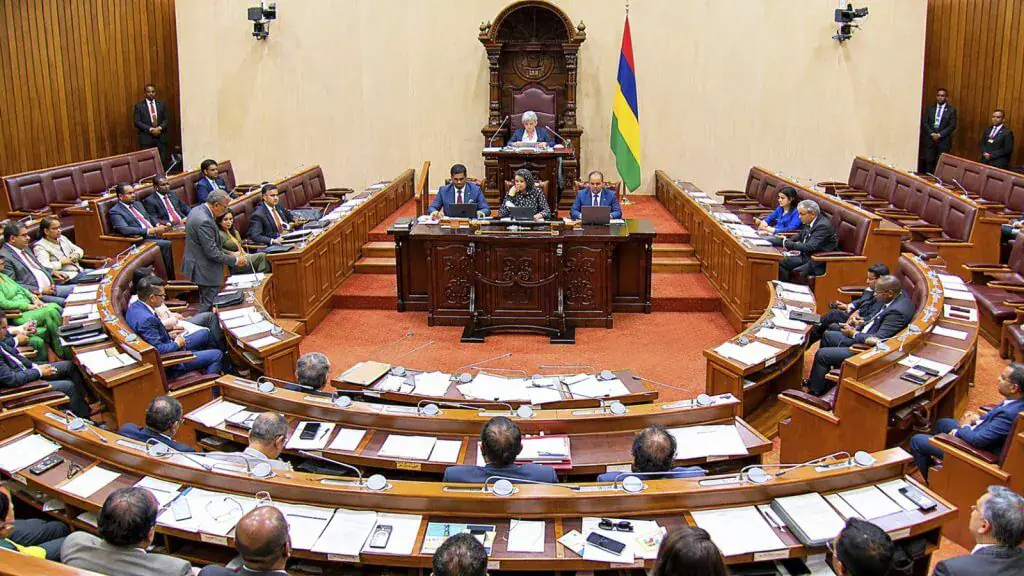
The Mauritius parliament is set to adjourn for the year-end recess, with only one or two more sessions scheduled. According to sources, the next parliamentary session, slated for December 1, may be the last one for the year. Alternatively, parliament may convene one more time on December 15, but this seems unlikely given the approaching festive season. If the parliament meets on December 15, it will have held 35 sessions for the year, down from 40 in 2025.
The reduced number of parliamentary sessions in 2026 is a notable trend. Since its resumption on October 20, parliament has only held five sessions, on October 20 and 27, and November 10, 17, and 24. This slow pace of work has raised concerns about the effectiveness of the parliament in addressing pressing national issues. In contrast, after the August 2025 recess, parliament held eight sessions until the end of the year.
Several important bills are pending, including the National Crime Agency Bill, which aims to strengthen the country's fight against financial and organized crime. Although the bill has been circulated, it is unlikely to be debated this year. On the other hand, several key reforms have been adopted in 2026, including the Domestic Abuse Act, the Criminal Code (Amendment) Act, and the Road Traffic (Amendment) Act.
The prolonged recesses and reduced parliamentary sessions have sparked concerns about the prioritization of lawmakers' time. While parliamentarians are paid annually, citizens cannot put their daily challenges and concerns on hold. The country's urgent economic, social, institutional, and security issues require prompt attention, but the parliament's slow pace is hindering progress.
The scheduling conflicts, including the upcoming 18th U.S.-Africa Business Summit from December 6 to 9, have limited the parliament's ability to hold more sessions. With the festive season approaching, it seems unlikely that parliament will convene again before the year-end recess. This has raised concerns about the impact on the country's governance and the delivery of essential services.
A review of the parliament's calendar reveals a pattern of prolonged recesses and sparse sessions. After the August 2026 recess, parliamentarians only reconvened for a single day on September 1, before adjourning again until October 20. This has resulted in a significant backlog of pending bills and critical issues that require urgent attention.
As the year draws to a close, citizens are expecting more from their lawmakers. With the parliament's slow pace and prolonged recesses, there are concerns about its effectiveness in addressing the country's pressing challenges. The government must balance the need for recess with the demands of governance, ensuring that essential work is not unduly delayed.
Key points
- The Mauritius parliament is set to adjourn for the year-end recess with only one or two more sessions scheduled.
- Several important bills, including the National Crime Agency Bill, are pending and unlikely to be debated this year.
- The prolonged recesses and reduced parliamentary sessions have sparked concerns about the prioritization of lawmakers' time and the impact on governance.