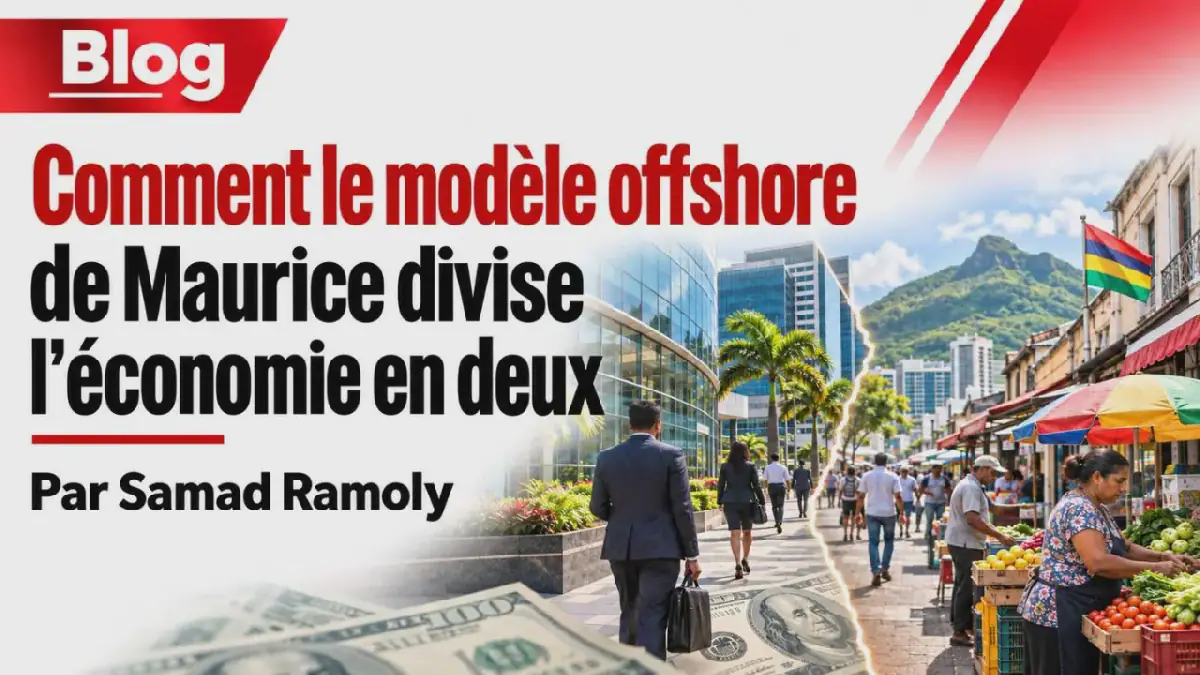
The Global Business Companies (GBC) sector in Mauritius has assets worth $741 billion, approximately 50 times the country's domestic GDP. However, this substantial wealth largely exists on paper, as the sector only contributes 8.4% to the local GDP. The International Monetary Fund has recommended that the country estimate the production of GBCs to reflect it in national export statistics. This anomaly has made Mauritius a unique and risky case among global financial centers.
Unlike other offshore financial centers, Mauritius does not peg its currency to the US dollar, instead allowing the rupee to float freely. This has led to a persistent depreciation of the rupee, which has lost about 64% of its value against the US dollar since 1994. When the US Federal Reserve and other global central banks raised interest rates, the Bank of Mauritius delayed corresponding rate hikes, triggering a capital flight and causing investors to transfer their assets to more lucrative foreign accounts.
The structure of Mauritius' offshore sector is fundamentally different from traditional financial centers. While Wall Street has a direct interest in the US economy, the Mauritian offshore sector is designed to operate outside the domestic economy. The sector benefits from a low effective tax rate of around 3% and is exempt from recent reforms on alternative minimum tax and fair share contribution. This has created a class of professionals and politicians who are protected by their connection to foreign currencies.
The consequences of this setup are severely imbalanced. The country faces a budget deficit of 9.8% of GDP and a public debt of 88.6%, with the burden of financing falling on resident banks, hotels, insurers, and ordinary citizens. In contrast, the GBC sector, with its substantial assets, generates a similar share of GDP with only about two directors per entity. This has led to a brain drain, with Mauritius ranking fifth globally and first in Africa for brain drain in 2024.
The economic divide in Mauritius is also reflected in the salaries of its citizens. While the protected class of professionals and politicians see their incomes rise with the depreciation of the rupee, ordinary Mauritians, who earn and spend in rupees, do not see their salaries adjust to global trends. Instead, they bear the brunt of imported inflation with each currency slide. This has created a two-speed economy, where the decline of the rupee acts as a hidden tax for the majority and a wealth generator for the isolated minority at the top.
The tourism, remittances, and foreign direct investments are currently supporting the local currency, rather than the substantial offshore sector. This has led to a situation where the rupee is sustained by a few sectors, while the GBC sector operates largely independently. The Mauritian economy is thus characterized by a disconnect between its offshore sector and the domestic economy.
The Human Flight and Brain Drain Index 2024 highlights the consequences of this economic model, with Mauritius ranking high in brain drain. The country's economic divide, fueled by its offshore sector, has significant implications for its economic stability and social equality. The government faces challenges in addressing these issues, as the current economic model continues to benefit a small elite while burdening the majority of citizens.
Key points
- Mauritius' offshore sector holds $741 billion in assets but contributes only 8.4% to the country's GDP.
- The country's economic divide is fueled by a protected class of professionals and politicians connected to foreign currencies.
- Mauritius ranks fifth globally and first in Africa for brain drain, according to the Human Flight and Brain Drain Index 2024.